What's inside
As an Amazon Associate I earn from qualifying purchases. This post may contain affiliate links at no extra cost to you.
Our Top Picks
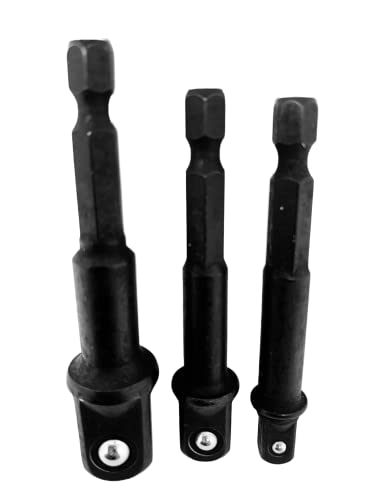 DeWalt Impact Driver Ready 3-Piece Socket Adapter Set3 Count (Pack of 1)6.5 x 4.3 x 0.3 inches0.2 poundsCheck on Amazon
 Milwaukee 48-32-5033 Power Drill Bit Extensions Shockwave SocketPack of 10.65 x 2.87 x 3.87 inches0.1 poundsCheck on Amazon


What an impact-rated hex adapter does
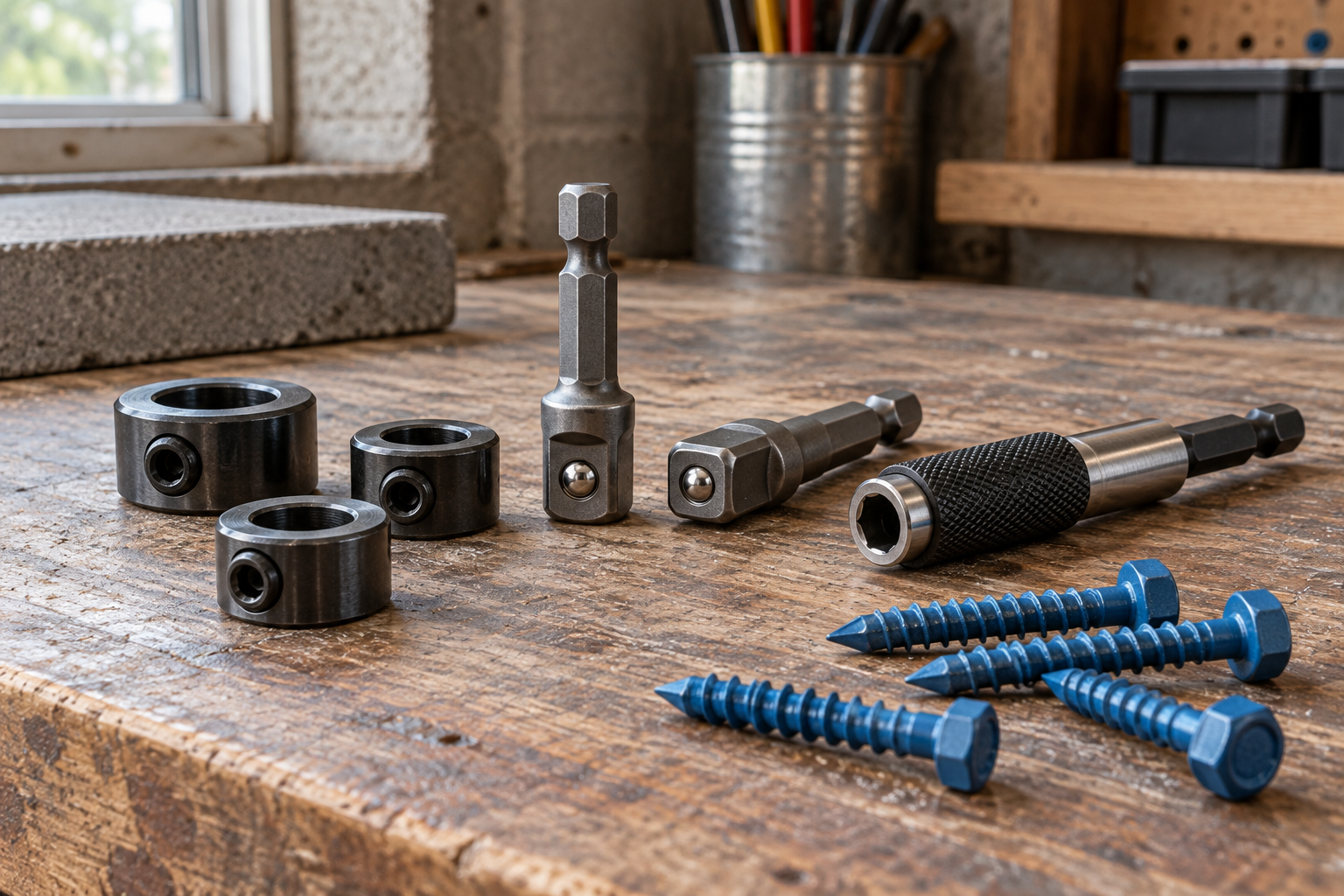
An impact-rated hex adapter lets an impact driver turn a socket, so you can drive or remove hex-head fasteners with sockets you may already own. The common setup is a 1/4-inch hex shank on one end and a 1/4-, 3/8-, or 1/2-inch square drive on the other. For most general DIY work, 3/8-inch square drive is the useful middle ground: it accepts a broad range of sockets without the bulk of a 1/2-inch adapter.
“Impact-rated” means the adapter is intended to handle the repeated twisting pulses of an impact tool. It does not mean it is unbreakable, or that every socket is safe to use at impact speeds. A standard chrome hand socket can crack or shed pieces under impact use. Pair the adapter with impact-rated sockets, especially for stubborn fasteners or prolonged work.
As an Amazon Associate we earn from qualifying purchases at no extra cost to you.


Best choice by job
For routine repairs, a short, impact-rated 3/8-inch adapter is the best first purchase. Choose a 1/4-inch drive version for small fasteners and tight spaces, or 1/2-inch drive when the socket size or torque demands it. If you regularly work on a particular fastener size, a direct hex-to-socket bit may be sturdier and shorter than stacking an adapter and socket.
Shop impact-rated 3/8-inch hex socket adapters and check that the listing specifies both the hex shank and square-drive size. A low price is reasonable for occasional work; for frequent use, look for a clearly stated impact rating and a retaining feature that holds the socket securely.
Adapter types compared
| Type | Best for | Trade-off |
|---|---|---|
| Short hex-to-square adapter | General use with interchangeable sockets | Socket adds length and can wobble or fall off if retention is weak |
| Long or wobble adapter | Recessed fasteners or access around an obstruction | More flex and leverage on the adapter; less control at the fastener |
| Direct hex-to-socket bit | One frequently used socket size | Compact and simple, but not versatile |
| Hand ratchet or breaker bar | High breakaway force and careful final tightening | Slower than an impact driver, but gives better feel and avoids impact abuse |
What to check before buying
First, match the square drive to your sockets. A 3/8-inch adapter will not fit a 1/2-inch socket without another piece, and stacking adapters adds length and potential failure points. Next, consider length: a short adapter keeps the socket close to the tool and reduces leverage on the shank. An extension can help reach a recessed bolt, but a long assembly can flex, chatter, and put more side load on the adapter.
Look for a detent ball or another socket-retention mechanism. The ball helps keep the socket on the adapter when you pull the tool away from a fastener. A retaining ring can hold more firmly, though changing sockets may take more effort. Neither feature guarantees the socket will stay put if it is worn, dirty, or poorly matched.
For a compact impact driver with a 1/4-inch hex collet, make sure the adapter has a standard 1/4-inch hex shank. Some versions include a groove or shoulder designed for a locking collet; a loose fit can cause the adapter to fall out or wobble. If the work is overhead, retention matters more because a dropped socket can damage a surface or injure someone below.
Using the adapter safely
Seat the hex shank fully in the collet, then tug it lightly to confirm it is locked. Push the socket onto the square drive and check that it engages the detent. Keep the tool straight with the fastener. An angled socket puts bending force on the adapter, and a long extension makes that problem worse.
Impact drivers can produce short bursts of high torque. On small fasteners, start at low speed and use brief trigger pulls. Stop if the adapter twists, the socket rocks, or the fastener head begins to round. For final tightening on a wheel, engine, or other torque-critical assembly, use the specified torque wrench rather than relying on the driver’s sound or feel. An impact driver is useful for running a fastener in; it is not a precise torque-measuring tool.
A common failure is a cracked adapter at the transition from hex shank to square drive. This can happen after repeated heavy impacts, with a long extension, or when using a non-impact-rated part. Another is a damaged socket: chrome sockets may split under impact, while worn square-drive openings can loosen and slip. Inspect both pieces before use and replace anything cracked, visibly twisted, or badly rounded.
When cheaper is fine
A basic short adapter is usually enough for occasional furniture assembly, light automotive work, or driving small socket-head fasteners. You do not need a large set of extensions and wobble adapters if you only use one socket size a few times a year. A simple 3/8-inch adapter can be the better buy than a multi-piece kit full of parts that stay in the case.
Spend more when the adapter sees regular use, when secure socket retention matters, or when the job requires a longer reach. A small set can be practical if it replaces a hand full of mismatched extensions, but avoid choosing by piece count alone. Confirm the drive sizes, the shank fit, and whether the parts are rated for impact duty. If you already own impact sockets, an adapter is often all you need; if you only have chrome hand sockets, budget for suitable sockets too.
Compare impact-rated adapters in other drive sizes if your sockets are mostly 1/4-inch or 1/2-inch drive. Choose the shortest setup that reaches the fastener, and switch to a ratchet or torque wrench when control matters more than speed.