What's inside
As an Amazon Associate I earn from qualifying purchases. This post may contain affiliate links at no extra cost to you.
Our Top Picks
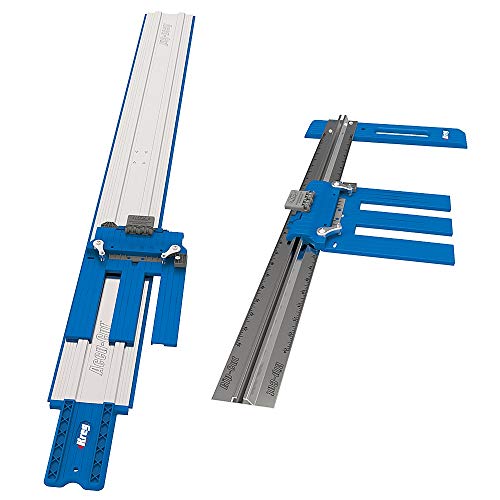 Kreg KMA2700 Accu-Cut 48-Inch Guide Track System With9.1 x 9.1 x 9.1 inches4.21 poundsCheck on Amazon



What you are actually comparing
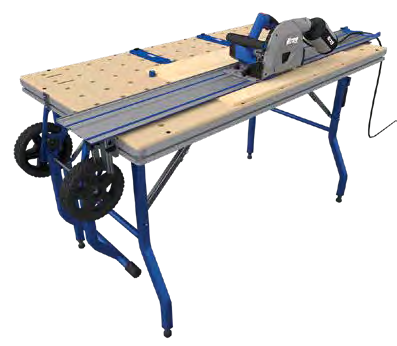
The Kreg ACS3000 and Bora WTX are not two identical track-saw tables. They are portable cutting systems that use a guide rail and a support surface to turn a sheet of plywood or a workbench into a cutting station.
The Kreg ACS3000 is built around Kreg’s Adaptive Cutting System plunge saw and track. Its strength is repeatable, guided cutting: the saw runs on the rail, the rail sits on the workpiece, and the system is intended to work as part of a larger Kreg setup.
As an Amazon Associate we earn from qualifying purchases at no extra cost to you.


The Bora WTX system is more of a universal guide-and-support solution. Depending on the package, the WTX components include a clamp edge or rail, saw plate, and accessories for supporting or guiding a conventional circular saw. That makes it attractive if you already own a saw and do not want to buy into a complete proprietary system.
For this comparison, “easier to configure” means how quickly you can go from a loose sheet to a safe, accurate cut—not which system has the most accessories.
Kreg ACS3000 vs Bora WTX at a glance
| Factor | Kreg ACS3000 | Bora WTX |
|---|---|---|
| Basic approach | Purpose-built plunge-saw and track system | Universal guide system for a compatible circular saw |
| Initial setup | Faster once the saw and rail are assembled | More measuring and fitting before the first accurate cut |
| Best use | Repeatable sheet-goods cutting | Occasional straight cuts with an existing saw |
| Adjustment risk | Low after calibration | Higher; saw fit, rail position, and clamps matter |
| Portability | Good, but more system-specific | Good and generally more adaptable |
| Cost logic | Justified for frequent track-saw work | Better when reusing a circular saw |
Why the Kreg is easier to configure
The ACS3000 has the advantage of being designed as one system. You fit the saw to the track, calibrate the guide once, and then the cut line is established by the rail’s splinter guard. After that, setup is mostly a matter of marking the cut, aligning the rail, and securing the workpiece.
That matters when cutting a 4-by-8-foot panel. A track that is even 1/16 inch out of position at one end can produce a visibly poor cabinet joint. With the Kreg arrangement, the rail itself defines the path, and the plunge action makes it easier to start and stop without tipping a circular saw into the panel.
The main failure mode is assuming calibration is permanent. If you change blades, remove and reinstall the saw, or allow the saw carriage to develop play, check the cut line on scrap. Also make sure the rail is fully supported. A track hanging over the end of a panel can flex as the saw passes across it.
For a dedicated setup, a Kreg Adaptive Cutting System track saw is the more straightforward category choice. It costs more than adapting a regular circular saw, but the time saved in alignment is real if you make several sheet cuts in a session.
Where the Bora WTX takes more work
The Bora WTX can be easier to justify financially, but it is not usually the faster system to configure from scratch. You must install or position the saw plate, confirm that your circular saw fits securely, set the guide parallel to the desired cut, and clamp the guide without moving it.
The guide can be accurate, but the result depends more heavily on the saw. A saw with a narrow or flexible base, a poorly adjusted plate, or a blade that is not square to the base can steer away from the guide. Check the saw’s shoe against a square before blaming the rail.
Another common problem is confusing the guide’s edge with the blade’s cut line. Make a test cut in scrap and measure the result. If the cut is consistently off by 1/8 inch, do not compensate by eyeballing every panel; adjust the saw plate or mark an offset that you can repeat.
The Bora is a sensible choice when you already have a reliable 7-1/4-inch circular saw and make straight cuts only occasionally. It is also more appealing if you need a guide that can work with different saws over time. Search for Bora WTX guide components if you are building around an existing saw rather than buying a complete plunge-saw system.
The table or work surface still matters
Neither guide makes a bad work surface safe or accurate. Support the panel on sacrificial foam, rigid insulation, or evenly spaced supports. The material should not sag more than a small fraction of an inch under the saw. If the panel bows between supports, the cut can pinch the blade after the rail has passed.
Keep the offcut supported until the blade clears it, but do not let a support press upward into the kerf. A pinched blade can kick back, especially with a conventional circular saw mounted to a guide plate.
Use at least two clamps when the guide allows it, and place them where they cannot obstruct the saw. On a long cut, verify the rail at both ends and in the middle. A quick measurement from the rail to the panel edge at three points catches a rotated guide before you cut.
Which system is easier for your work?
Choose the Kreg ACS3000 if you want the least fiddly configuration, make cabinet or furniture parts regularly, and value a plunge saw that starts cleanly on a panel. It is the easier system for repeatable work, particularly when paired with a dedicated track-saw work table or a well-supported shop bench.
Choose the Bora WTX if the cheaper route is important, you already own a good circular saw, and your cuts are mainly construction work, shelving, or occasional plywood breakdown. For two or three straight cuts a month, its extra setup is usually a reasonable trade-off.
The practical dividing line is frequency. The Bora is fine when you are willing to spend a few minutes checking alignment. The Kreg earns its higher cost when that checking becomes repetitive, or when a 1/16-inch error on every panel creates more waste than the system saved.