What's inside
- Impact Driver vs. Drill Driver for Installing Long Deck Screws in Wet Lumber
- Which Tool Has More Driving Power?
- Head-to-Head Comparison
- When an Impact Driver Is the Better Buy
- When a Drill Driver Is the Better Choice
- Pilot Holes, Bits, and Screw Selection
- The Best Method on the Job
- The Practical Buying Decision
As an Amazon Associate I earn from qualifying purchases. This post may contain affiliate links at no extra cost to you.
Our Top Picks
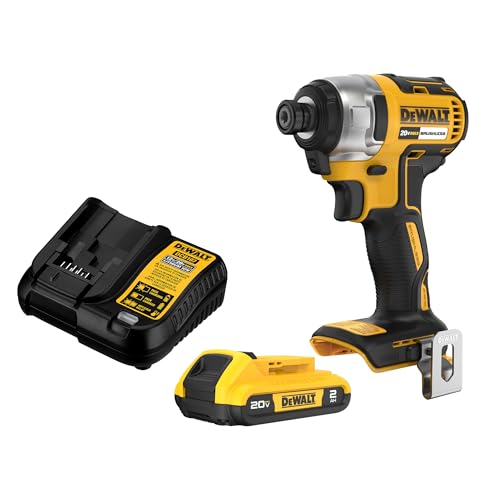
 DEWALT 20V MAX Cordless Drill and Impact DriverOne Size15.06 x 6.4 x 9.88 inches3.6 poundsCheck on Amazon




Impact Driver vs. Drill Driver for Installing Long Deck Screws in Wet Lumber
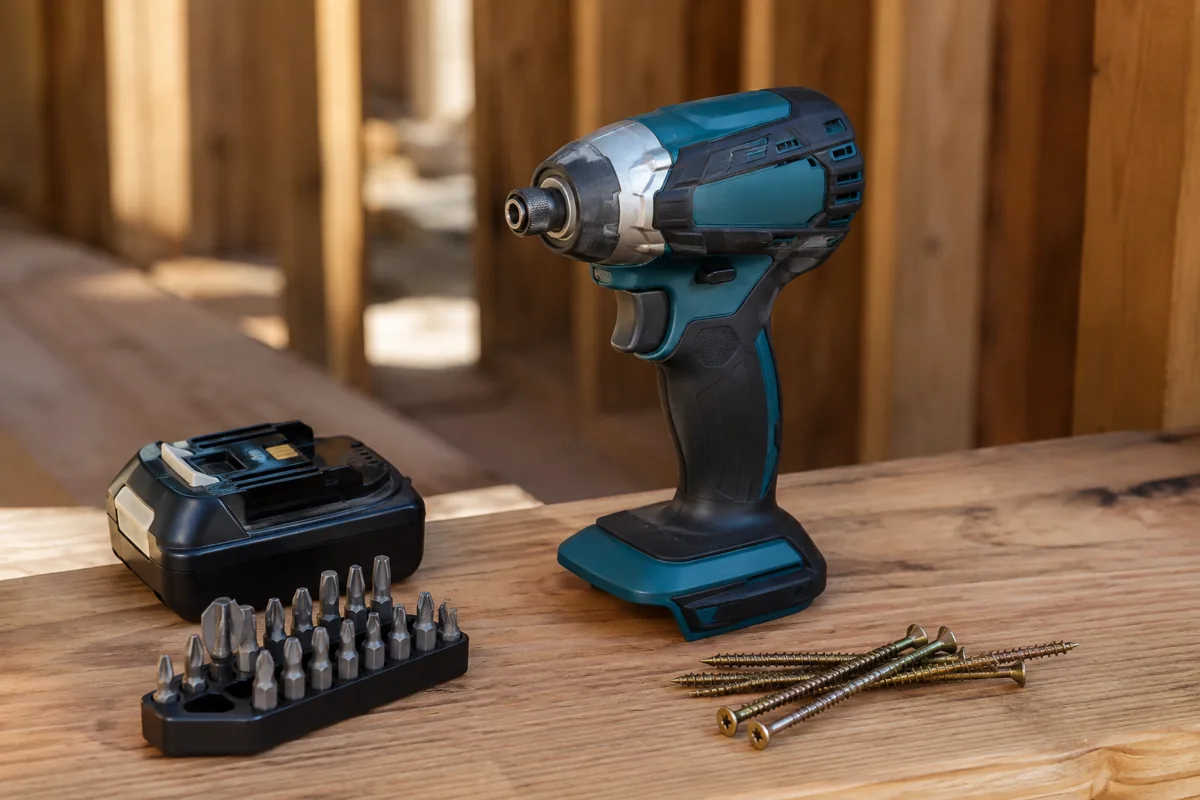
For long deck screws in wet lumber, an impact driver is usually the easier tool to use. Its hammering action helps drive 3- to 4-inch screws through dense, wet boards without forcing your wrist to absorb all the torque. A drill driver can still do the job, and it may be the better choice when you need clean, controlled driving or already own one.
The important distinction is not simply power. It is control, screw-bit durability, noise, and the likelihood of splitting the wood or stripping the screw head. Wet lumber is often tougher to drive than dry lumber because it can be dense, heavy, and prone to squeezing tightly around the screw threads. Pressure-treated boards also vary widely in density.
As an Amazon Associate we earn from qualifying purchases at no extra cost to you.


Which Tool Has More Driving Power?
A drill driver applies steady rotational torque. When a long screw binds in wet lumber, the motor and gearbox continue pushing until the clutch slips, the bit cams out, the screw strips, or your wrist twists.
An impact driver applies rotational force in rapid pulses. The motor spins the screw, while an internal hammer mechanism delivers repeated impacts when resistance rises. This lets the driver produce high peak torque without transmitting the same continuous twisting force to your hand.
That matters most with structural or framing screws longer than about 3 inches, especially when fastening through a deck board into a joist. An impact driver will generally sink these screws faster and with less physical effort. It is also less likely to stall when the screw encounters a knot or a particularly wet section of wood.
However, maximum torque is not always an advantage. A high-powered impact driver can snap a screw, bury the head too deeply, or drive a coated deck screw below the surface. It can also damage the bit quickly if you use the wrong bit or keep driving after the screw is seated.
Head-to-Head Comparison
| Factor | Impact driver | Drill driver |
|---|---|---|
| Long screws in wet lumber | Faster and easier under high resistance | Capable, but slower and more likely to stall |
| Control near the surface | Requires practice; easy to overdrive | Better control with clutch settings |
| Risk of wrist torque | Low | Moderate to high when the bit binds |
| Noise | Very loud during hammering | Much quieter |
| Chuck and bit compatibility | Uses 1/4-inch hex shanks | Accepts round and hex-shank bits |
| Best use | Repeated structural fastening | Controlled driving, drilling, and general-purpose work |
When an Impact Driver Is the Better Buy
Choose an 18V or 20V cordless impact driver if you are installing dozens or hundreds of long screws. The reduced kickback becomes noticeable after the first few dozen fasteners, and the tool is less likely to bog down in wet joists.
Use a low or medium speed setting if the tool has one. Start slowly enough to keep the bit fully engaged in the screw recess, then increase speed once the threads have started. Stop as soon as the screw head reaches the intended depth. Do not rely on the impact mechanism to tell you when the screw is seated; by then, the head may already be too deep.
An impact driver is also useful when working overhead or at awkward angles. Its compact nose and low reaction torque make it easier to hold in line with the screw. Keeping the tool straight is critical. A tilted bit increases cam-out, which rounds the recess and can make the screw impossible to remove.
When a Drill Driver Is the Better Choice
A drill driver is fine for a small deck repair, a few replacement boards, or any project where you already own one. For screws around 2 1/2 to 3 inches, a reasonably powerful drill with a good battery usually has enough capacity, particularly if the lumber is not unusually dense.
The drill driver’s clutch gives it an important advantage: repeatable control. Set the clutch low, drive a test screw, and increase the setting until the screw seats flush without crushing the surface. This is slower than an impact driver, but it can produce a neater result on visible decking.
A drill driver is also the better tool if you need to drill pilot holes, countersinks, and clearance holes during the same job. Its standard chuck accepts deck screw driver bit sets, drill bits, and countersink bits without changing adapters.
Pilot Holes, Bits, and Screw Selection
Do not assume an impact driver eliminates pilot holes. Pre-drilling is worthwhile near board ends, in dense species, and when using screws 4 inches or longer. A pilot hole reduces splitting and lowers the torque required to drive the screw. Drill through the top board when you want it pulled tightly against the joist; drill only the lower member when you mainly need to prevent splitting.
For a typical 5/4 or 2-inch deck board, a 3-inch screw is common when the screw must pass through the board and achieve useful penetration into the joist. Avoid excessive penetration. A screw should not extend so far through the joist that it creates a snagging hazard or unnecessary corrosion exposure.
Use exterior-rated, corrosion-resistant screws made for pressure-treated lumber. Galvanized or coated screws are common; stainless steel is a better choice in coastal or highly corrosive environments but costs more. Wet lumber and treatment chemicals can accelerate corrosion, so ordinary interior wood screws are not an acceptable bargain.
Use impact-rated driver bits in an impact driver. Standard brittle bits can twist or shatter under repeated impacts. Keep a fresh bit available. If the recess begins to deform, replace the bit rather than pushing harder. A worn bit is a common cause of stripped deck screws.
The Best Method on the Job
Lay out the screw locations so fasteners are centered in the joist and spaced consistently. Start the screw at low speed with firm, straight pressure. Once the threads have engaged, keep the tool aligned and let the screw pull itself down. Stop at flush or at the manufacturer’s recommended depth; do not use the screw to clamp a badly bowed board into place.
For a drill driver, test the clutch on scrap from the same lumber. For an impact driver, use short trigger pulls near the final depth. If a screw stops before seating, back it out, inspect the bit and screw, and check for a knot or obstruction. Continuing to hammer can break the screw below the surface, leaving a difficult extraction problem.
The Practical Buying Decision
Buy an impact driver if long screws are a regular part of your work, you are fastening a full deck, or wrist fatigue is a concern. Buy a drill driver if you need one versatile tool, value quieter operation and precise clutch control, or are installing only a small number of fasteners.
For many homeowners, the most useful combination is a drill driver for pilot holes and countersinking, plus an impact driver for final screw installation. If you can buy only one, choose based on the work rather than the advertised torque: an cordless drill driver is the cheaper all-rounder, while an brushless impact driver earns its cost when long, corrosion-resistant deck screws are installed by the boxful.