What's inside
As an Amazon Associate I earn from qualifying purchases. This post may contain affiliate links at no extra cost to you.
A Forstner bit burns hardwood when its cutting edge spends too long rubbing in a deep, tight hole. The usual causes are a dull or dirty bit, too much speed, packed chips, or pressure that stalls the drill. Fix those before blaming the wood. A sharp bit and a controlled drilling routine matter more than buying the most expensive bit on the shelf.
Why Forstner bits burn
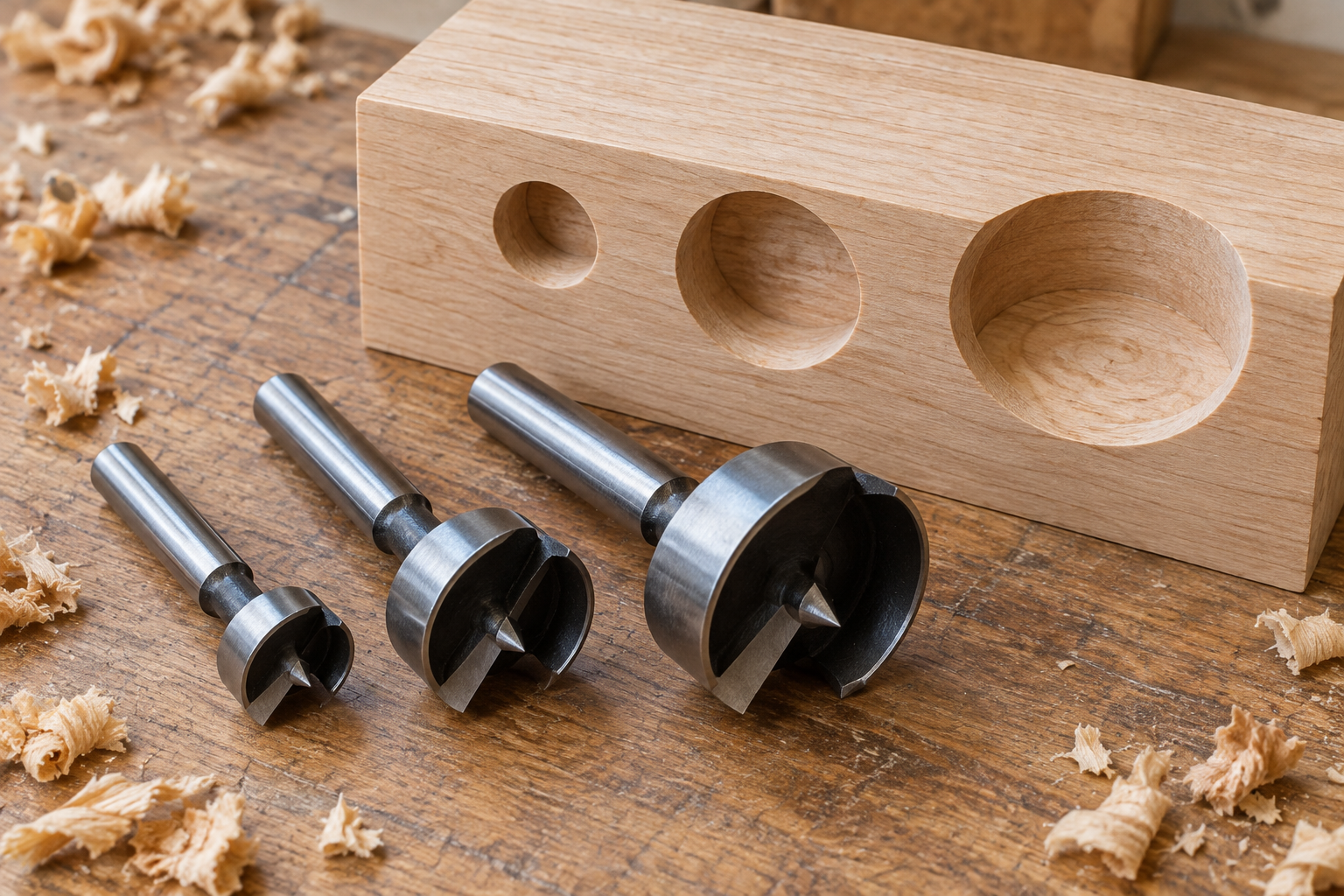
A Forstner bit cuts across the bottom of the hole and around its rim. In a deep bore, the rim stays in contact with the wood while chips have limited room to escape. Friction builds quickly, especially in dense species such as maple, oak, and cherry. A dark ring on the hole wall, smoke, a scorched smell, or a bit that comes out too hot to handle are signs to stop and clear the cut.
Burning can also come from a bit that is dull, resin-coated, or damaged. If it burns one side of the hole, check for a chipped edge, runout, or a tilted setup. Pressing harder is rarely the cure: it can slow the bit, overload the drill, and make the heat problem worse.
Choose the right setup
For deep or wide holes, a drill press is easier to control than a handheld drill. It keeps the bit square and lets you apply steady feed pressure. A powerful corded drill can work for occasional holes, but it is harder to hold square and may twist your wrist if the bit catches. Clamp the work securely either way; never hold a small workpiece by hand.
Forstner bits vary in cutting geometry and chip clearance. Standard bits are often adequate for shallow holes and occasional work. For repeated deep bores, a well-made bit with cleanly ground edges and a layout that clears chips efficiently is worth considering. Compare Forstner bit sets by the sizes you actually need, edge quality, and whether replacement bits are available—not by the number of pieces alone.
Set speed and feed deliberately
Use a lower speed as bit diameter increases. As a practical starting point in hardwood, many woodworkers run a 1-inch bit around 500–700 rpm and a 2-inch bit around 250–400 rpm. These are starting ranges, not universal limits: the bit maker’s guidance, wood species, drill capacity, and cut depth all matter. If your drill cannot run slowly enough, do not compensate by forcing the feed.
Feed steadily enough that the cutting edges make chips, but ease off if the motor slows sharply or the bit chatters. Fine dust instead of distinct chips can mean a dull edge, excessive speed, or a light rubbing feed. If the bit squeals, smokes, or leaves a hot, darkened rim, stop immediately. Let the bit cool, clear the chips, and inspect the cutting edge before continuing.
Clear chips during deep boring
Do not drill a deep hole in one uninterrupted push. Bore about 1/4 to 1/2 inch at a time, then withdraw the bit far enough to release the chips. For deeper work in dense hardwood, clear chips more often. Keep the drill running while withdrawing when it is safe to do so; this helps carry loose chips out. Stop the machine before brushing chips away or touching the bit.
A shop vacuum can help remove debris from the hole between passes. A short burst of compressed air also works, but wear eye protection and avoid blasting chips toward yourself. If the hole is deeper than the bit’s cutting length or chips keep packing, drill from both sides when the layout allows. Mark the meeting point carefully to avoid a step in the middle.
Compare ways to control heat
| Approach | Best for | Trade-off |
|---|---|---|
| Drill press, short pecking passes | Accurate, repeated, or deep holes | Needs a stable setup and enough throat depth |
| Handheld drill, careful chip clearing | Occasional holes or work too large for a press | Harder to keep square; greater risk of catching |
| New, sharper bit | Burning that persists after speed and chip clearing are corrected | Costs more than cleaning or sharpening an otherwise sound bit |
For a few shallow holes, a budget bit can be fine if it arrives sharp and you work patiently. If you are making many deep holes, look at a higher-quality individual Forstner bit in the sizes you use most. Buying several premium sizes you will rarely use is not automatically better value.
Inspect and maintain the bit
Before drilling, clean pitch and resin from the rim and cutters with a suitable bit cleaner, then dry the bit. Buildup makes the edge rub rather than cut. Check that the rim is not chipped and that the cutting edges are even. A damaged or badly dulled bit can burn even at a sensible speed. Sharpening Forstner bits takes care: avoid changing the shape or height of the cutting edges. If you are unsure, use a sharpening service or replace an inexpensive bit.
Do not apply oil to the wood hole as a heat fix; it can stain the work and does not solve poor chip clearance. Keep the bit sharp, slow down for larger diameters, and back out often. If burning continues after those changes, stop and check the bit, drill alignment, and workpiece restraint before making another pass.