What's inside
As an Amazon Associate I earn from qualifying purchases. This post may contain affiliate links at no extra cost to you.
Our Top Picks


What you’re comparing
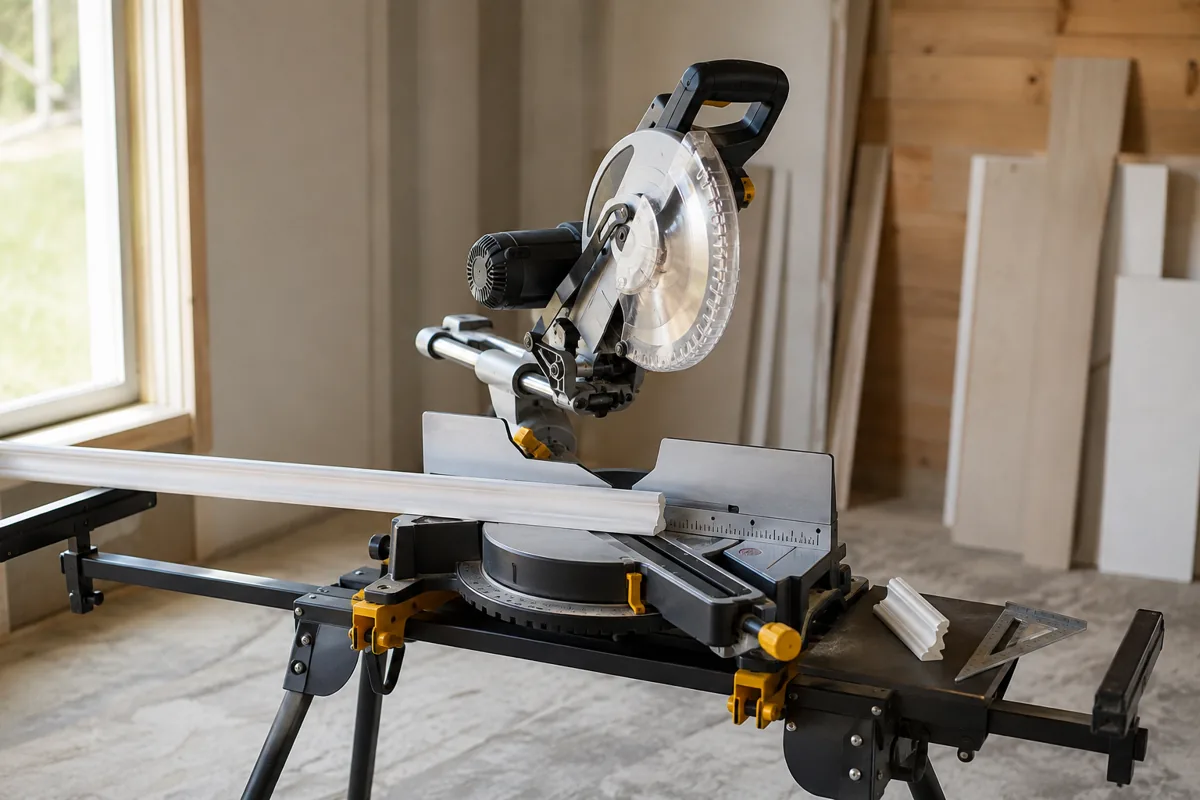
The Festool Kapex KS 120 and Bosch GCM12SD are 12-inch sliding compound miter saws aimed at accurate trim and furniture work. Both have enough capacity for common framing and finish jobs, but their designs differ: the Kapex uses conventional sliding rails, while Bosch’s Axial-Glide arms fold and move with the saw head. That makes the Bosch notably easier to fit on a shallow bench. The Festool’s main appeal is its thoughtful adjustment system and dust setup—not a guarantee that every cut will be more accurate.
Both saws can produce clean, repeatable cuts when properly set up with a sharp blade, a stable stand, and a supported workpiece. Neither can compensate for a loose fence, a blade that has wandered out of square, or stock that shifts during the cut.
As an Amazon Associate we earn from qualifying purchases at no extra cost to you.

Quick comparison
| Feature | Festool Kapex KS 120 | Bosch GCM12SD |
|---|---|---|
| Blade | 12-inch | 12-inch |
| Slide design | Rear sliding rails | Axial-Glide articulated arms |
| Dust features | Shroud, dust port and optional collection accessories | Rear dust chute and bag or vacuum connection |
| Cut-line aid | Dual-line laser | Shadow-based cut-line indicator |
| Best fit | Trim and finish work where adjustment and collection matter | Shallow benches and broad general-purpose use |
Capacity depends on the angle and workpiece orientation, so check the manufacturer’s capacity chart before buying for a specific molding or board. A nominal 12-inch blade does not mean either saw can cut every 12-inch-wide board in one pass.
Dust collection: the Kapex has the edge, with limits
Dust collection is a relative advantage for the Kapex. Festool shaped the rear shroud to follow the blade and helps direct chips toward the extraction port. Connected to a suitable shop vacuum or extractor, it generally captures more of the dust at the source than the Bosch’s basic rear chute-and-bag arrangement. That matters indoors, where fine dust settles on nearby shelves and trim, and where cleanup between finish cuts can become a nuisance.
But “better collection” does not mean dust-free. A miter saw throws material forward and down as well as toward its port, especially during bevel cuts or when the workpiece leaves a gap around the shroud. A high-flow extractor, a close-fitting hose, and a properly positioned workpiece all help. Expect dust to escape; don’t treat either saw’s collection system as a substitute for appropriate respiratory protection.
The Bosch can collect acceptably when connected to a vacuum, but its chute is less effective at corralling the spray from the blade. With only the included bag, both saws leave a noticeable mess. If you work mainly outside or cut rough lumber, this difference may not justify paying more for the Festool. For repeated indoor finish work, the Kapex is the more appealing starting point. Compare miter saw dust extractors if you need to add collection to either setup.
Cut accuracy: setup beats the logo
The Kapex is designed for fine adjustment. Its dual-line laser marks both sides of the blade kerf, which helps you place a cut without guessing where the blade will land. It also offers controls for tuning bevel and miter settings. Those features are useful when fitting trim to a wall or sneaking up on a short piece, but the laser must be checked against the actual blade cut. A laser can be misaligned, and the line it shows can be hard to read in bright light.
The Bosch uses a shadow-style cut-line indicator: the blade casts a line on the workpiece. It avoids the alignment drift possible with a laser and remains useful as the blade wears, though visibility depends on the lighting and the work surface. Neither indicator replaces a test cut. For critical joinery, cut scrap from the same stock, check the result with a reliable square, then adjust the saw or work method as needed.
Both saws benefit from a careful initial check: verify the blade is square to the table at 0 degrees, check the fence for alignment, and confirm that the saw returns consistently to its detents. A small error becomes obvious across a wide casing joint. Dust between the fence and stock, a bowed board, or inconsistent pressure against the fence can also cause a cut to look inaccurate even when the saw is set correctly.
Workspace, capacity and value
The Bosch’s Axial-Glide mechanism is a practical advantage in cramped shops. Because the head moves on folding arms rather than long rear rails, the saw can sit closer to a wall. It still needs room for the workpiece and for the head to travel, but it avoids the deep clearance required behind many sliding saws. The trade-off is a distinctive mechanism that buyers should inspect for smooth, consistent movement and keep clean.
The Kapex costs substantially more in many markets. That premium makes most sense for a shop where accurate trim work and better dust capture are daily priorities, and where the owner will use its adjustments rather than simply rely on the laser. If you cut framing lumber, occasional flooring, or general DIY stock, the Bosch is capable of accurate work for less money. It is not a consolation prize; its compact slide design and useful cut-line shadow are real strengths.
Before choosing, price the whole setup: stand or bench, blade, vacuum hose, and any adapters. A sharp, appropriate 12-inch fine-finish miter-saw blade can improve the cut surface on either machine, but check the blade’s bore, tooth count, and material rating against the saw and the work.
Which one to buy
Choose the Festool Kapex KS 120 if you regularly cut finished trim indoors, value more effective dust capture, and want adjustment features for dialing in repeat cuts. It still needs a vacuum, calibration checks, and careful work support to deliver its best results.
Choose the Bosch GCM12SD if budget and bench depth matter more, or if the saw will handle a mix of DIY and jobsite-style work. Its dust collection is less convincing, but that is a manageable compromise for outdoor work or occasional use. For either saw, make a test cut and measure the result before committing expensive material.