What's inside
As an Amazon Associate I earn from qualifying purchases. This post may contain affiliate links at no extra cost to you.
For fast, clean hardwood holes, the cutter shape matters—but so do the drill, feed rate and workholding. A sawtooth Forstner bit and a wave-cutter Forstner bit can both bore flat-bottomed holes, yet they remove wood differently. The right choice depends on hole size, depth and whether speed or a clean rim matters most.
As an Amazon Associate we earn from qualifying purchases at no extra cost to you.


Our Top Picks


How the cutters differ
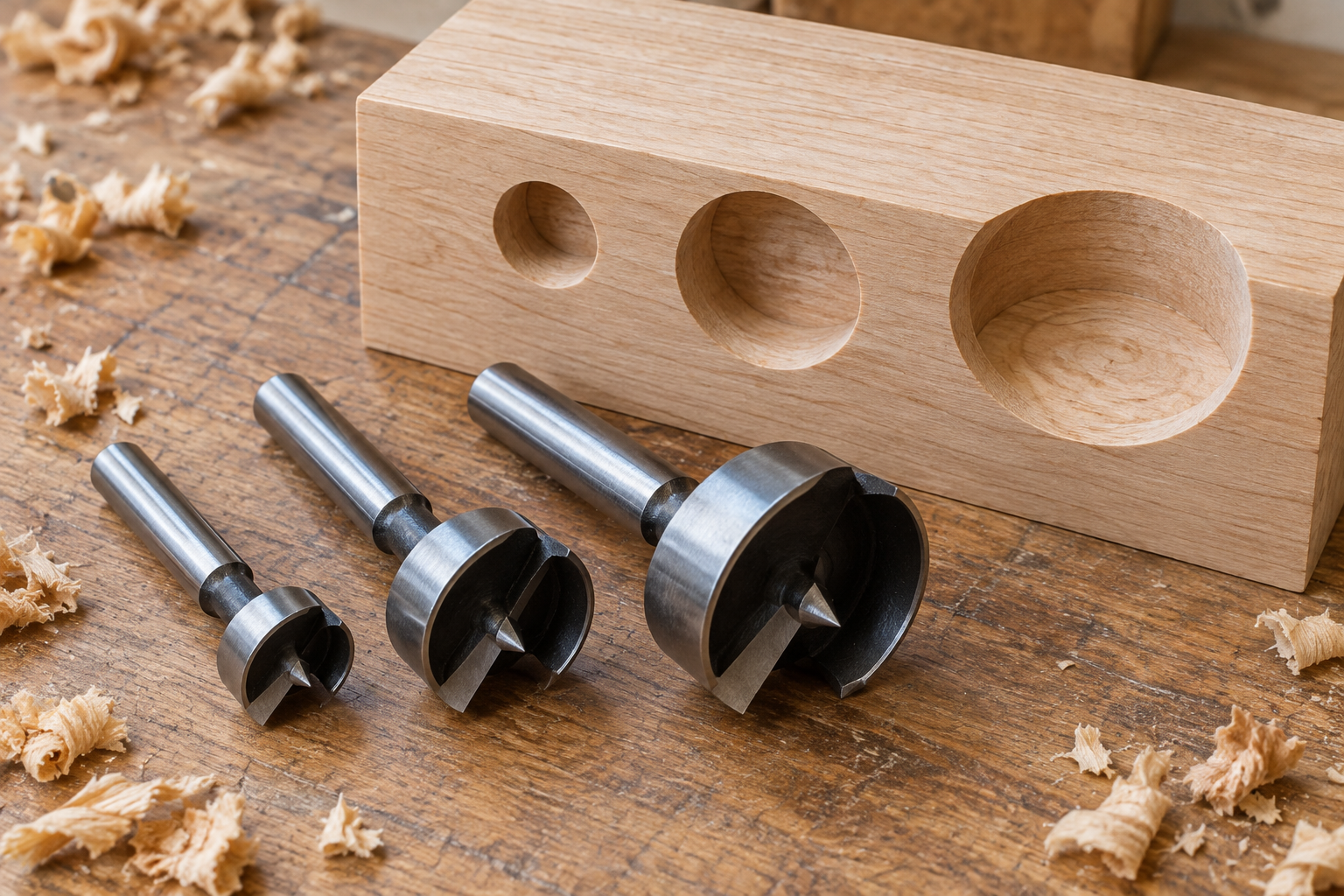
A sawtooth Forstner bit has teeth around its rim, much like a small hole saw, plus a center point and cutting edges that pare the bottom. The teeth score the hole perimeter and break the waste into chips. This makes the bit an effective choice for deeper holes and tougher stock, where a continuous rim can rub and heat up.
A wave-cutter Forstner bit has a wavy, continuous perimeter rather than distinct teeth. The shaped rim slices around the circumference, leaving a clean edge and producing a flat-bottomed hole when the bit is guided squarely. It is often the better choice for visible work, such as shelf-pin holes or hardware recesses, where tear-out at the rim is unwelcome.
Neither name guarantees the same geometry across every brand. Tooth size, rim sharpness and the design of the center spur vary. Treat the cutter style as a useful clue, not a promise of performance.
Side-by-side comparison
| Factor | Sawtooth | Wave-cutter |
|---|---|---|
| Best fit | Deeper holes and efficient waste removal | Clean-edged holes in cabinet and furniture work |
| Hardwood behavior | Teeth can bite aggressively; clear chips often | Slices smoothly when sharp, but can heat if forced |
| Edge finish | Can leave a slightly rougher rim, especially with dull teeth | Usually leaves a clean perimeter in sound stock |
| Risk under high feed | Grab, chatter or tear-out | Burning, rubbing or a stalled drill |
| Good tool pairing | Drill press or firmly supported drill | Drill press for precision; hand drill for smaller sizes and shallow holes |
Which one is faster in hardwood?
For a deep hole, a sawtooth bit often clears waste more readily. The teeth cut the perimeter in short bites, and the gaps help chips escape. That advantage disappears if you bury the bit in a deep hole without backing out to clear chips. Packed sawdust raises friction, scorches the wall and can stop the bit abruptly.
A wave-cutter can feel faster in a shallow hole because its rim slices continuously and leaves less cleanup. But a continuous cutting edge has more contact with the wood. If you push too hard, especially in dense maple, oak or beech, it can rub hot instead of cutting cleanly. Back the bit out every 1/4 to 1/2 inch in deeper work, even if the bit seems to be progressing well.
Use a drill press when you can. For a 1-inch bit in hardwood, start around 500 to 800 rpm and adjust based on the bit maker’s guidance, cut quality and heat. Larger bits generally need slower speeds; smaller bits can run faster. A hand drill makes speed control and keeping the bit square more difficult, particularly with bits over about 1 inch. Clamp the work securely, and do not rely on your free hand to resist a sudden grab.
Keeping the hole clean
For a clean entry, clamp a sacrificial backer tightly against the workpiece. This supports the fibers when the bit breaks through and reduces exit tear-out. If you need a flat-bottomed blind hole, set a depth stop or mark the bit; do not judge depth by eye when drilling a row of hardware holes.
On thin stock, a Forstner bit can tear out badly as its center point and rim emerge. One option is to stop when the center point just appears on the back, turn the board over, and finish from that side using the small exit hole as a guide. For a blind hole in figured or brittle hardwood, score the outline first with a knife or use a sharp, purpose-made bit rather than forcing a dull cutter through the surface.
If the rim scorches, stop. Let the bit cool, clear the chips and inspect the cutting edge. More pressure is not the fix. A dull bit, excessive speed, poor chip clearance or a wobbly setup is more likely. Burn marks also make the hole harder to clean up without changing its diameter.
What to buy
Choose a sawtooth Forstner bit for deep hardwood bores, repeated rougher work or a setup where clearing chips is the main concern. It is a sensible pick for concealed holes where a slightly less polished rim will not matter. Check that the shank matches your drill chuck and that the bit is rated for the speed you intend to use.
Choose a wave-cutter Forstner bit when the perimeter finish matters more, such as visible recesses in furniture or cabinet doors. For occasional shallow holes in softer hardwood, an inexpensive bit can be adequate if it is sharp and you keep the feed controlled. A premium set is not automatically worth the cost for a few holes a year.
If you bore a range of diameters, compare the size range and replacement cost before buying a set. A set that skips the diameter you use most often is poor value, even if it contains more pieces. For a single job, buying one suitable bit is usually cheaper than paying for sizes that will stay unused.
Make the choice by the job
For speed in deep, chip-heavy hardwood work, start with sawtooth. For a cleaner rim in shallow, visible holes, start with wave-cutter. In either case, sharpness and setup often matter more than the label: clamp the board, keep the bit square, use a moderate speed and clear chips before they pack. If your current bit cuts without burning or tearing the edge, there may be no reason to replace it just to change cutter style.