What's inside
As an Amazon Associate I earn from qualifying purchases. This post may contain affiliate links at no extra cost to you.
Our Top Picks
 DEWALT DCS374P2 20V Max Deep Cut Band SawOne Size22.08 x 7.88 x 17.75 inches24.97 PoundsCheck on Amazon


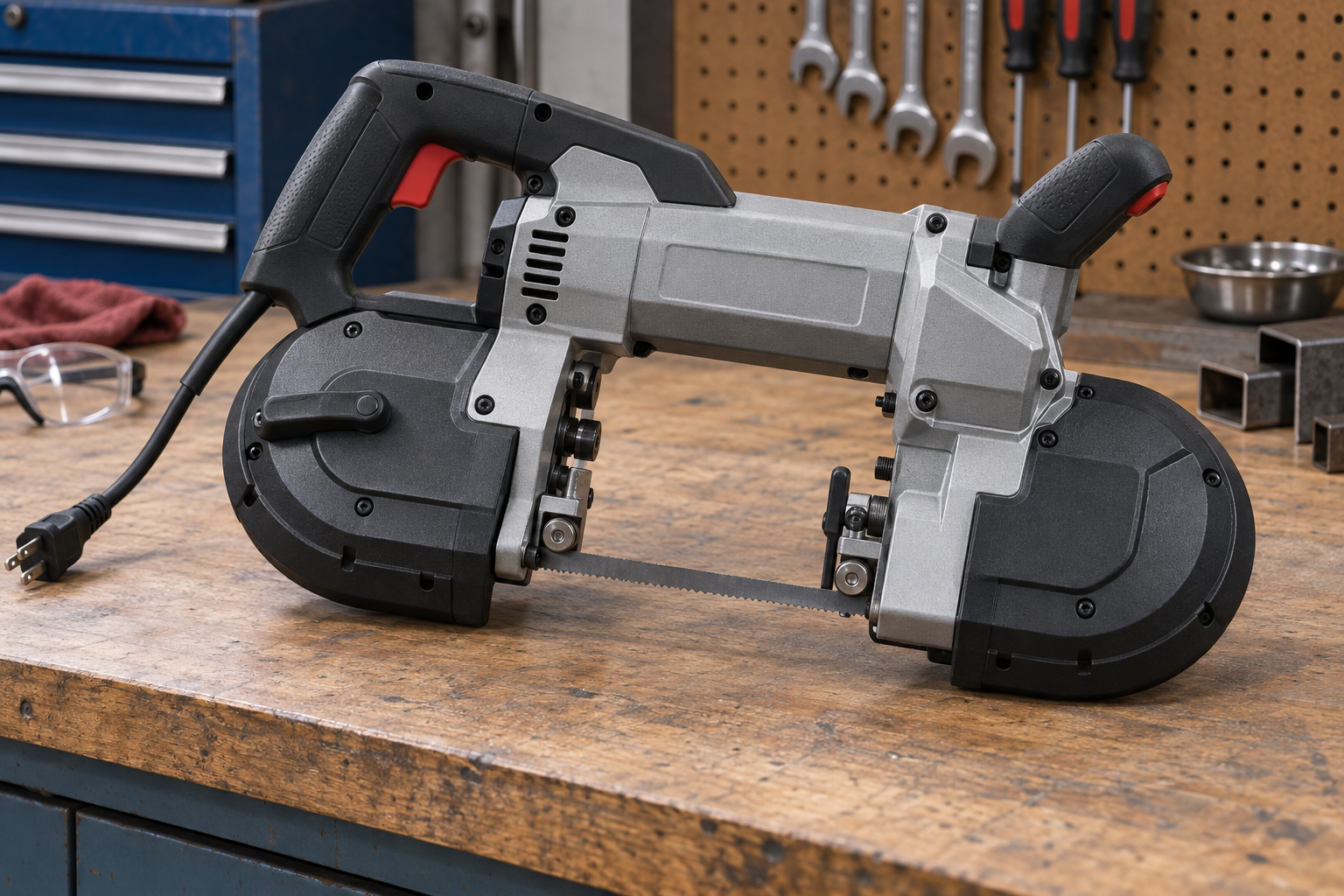
Hacksaw vs Portable Band Saw for Cutting Steel Conduit on Site
Both tools can cut steel conduit, but they suit very different site conditions. A hacksaw is inexpensive, portable, and dependable when you only need a few cuts. A portable band saw is faster, cleaner, and easier on your arms when conduit cutting becomes a repeated task.
The right choice depends less on the maximum thickness each tool can handle and more on how many cuts you need, whether power is available, and how accurately you can support the conduit. A poorly supported conduit can make either tool bind, wander, or produce a dangerous snag.
As an Amazon Associate we earn from qualifying purchases at no extra cost to you.


Quick comparison
| Factor | Hacksaw | Portable band saw |
|---|---|---|
| Typical purchase cost | About $15–$40 for a usable frame | About $150–$400, depending on corded or cordless |
| Best use | Occasional cuts, tight spaces, no power | Repeated cuts, production work, thicker conduit |
| Cut speed | Roughly 1–4 minutes per cut | Often 10–30 seconds per cut |
| Cut quality | Good with care; more likely to wander | Usually square and consistent |
| Noise and mess | Quiet, with minimal sparks | Moderate noise; little sparking with the correct blade |
| Main failure mode | Broken blade, crooked cut, hand fatigue | Pinched blade, stripped teeth, dead battery, or overcutting |
When a hacksaw is the better buy
A hacksaw is the sensible choice for a small number of conduit cuts. If you are installing a short run of 1/2-inch or 3/4-inch EMT and expect fewer than 10 cuts, the low purchase price is hard to beat. It needs no battery, charger, extension cord, or motor maintenance, and it can be used in a cramped ceiling space where a power tool will not fit.
Use a rigid frame rather than a flimsy adjustable frame. Fit a 24-tooth-per-inch or 32-tooth-per-inch bi-metal blade for thin-wall conduit. A 14-tooth-per-inch blade can cut faster in heavier material, but its large teeth are more likely to grab thin EMT and break.
Clamp or firmly support the conduit before cutting. Mark the cut all the way around with a pencil or marker, then start with short, light strokes to establish a groove. Keep the blade square and use long strokes that engage most of the blade. Heavy downward pressure bends the blade and rounds the cut rather than speeding it up.
The main disadvantage is labor. Ten cuts through 3/4-inch EMT can leave your forearm tired, especially if you are working overhead. Fatigue also increases the chance of a crooked cut or slipping hand. A hacksaw is cheap, but buying a spare bi-metal hacksaw blade set is worthwhile because a dull blade produces more heat and requires excessive force.
When a portable band saw pays off
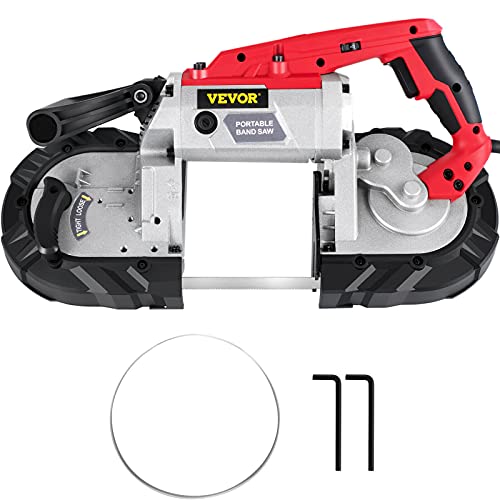
A portable band saw earns its cost when conduit cutting is frequent. It is particularly useful for commercial electrical work, prefabrication, maintenance, and jobs involving multiple sizes of rigid conduit or larger steel tubing. The blade forms a continuous loop, so it does not have the reciprocating action that causes a hacksaw to snag at the end of a cut.
For site work, a compact cordless saw is convenient, but battery capacity matters. A small battery may handle a modest batch of EMT cuts, then leave you waiting for a charge. If you already use a battery platform, buying a bare tool can make the price more reasonable. A corded model avoids that limitation but requires a safe power source and a cord that will not become a trip hazard.
Choose a model with a throat capacity larger than the conduit you normally cut. A 2-1/2-inch or 3-1/2-inch capacity gives useful clearance around common conduit sizes and lets you cut shallow strut, threaded rod, and small pipe. Use a blade intended for metal, commonly in the 14-to-18 TPI range for general steel work. Finer blades make smoother cuts in thin conduit; coarser blades remove material faster from thick wall.
Do not force the saw. Set the blade on the mark, start at low pressure, and let the teeth establish a track. Excessive force can stall the motor, overheat the blade, or strip teeth. A band saw cuts with little sparking, but the workpiece and freshly cut edge remain hot and sharp. Wear eye protection and deburr the end before pulling conductors.
Cut quality and deburring
A band saw generally produces the better square cut, which matters when conduit must fit a connector without a visible gap. The hacksaw can match it, but you need a clear mark, a rigid grip, and steady pressure. Cutting only from one side without checking alignment commonly creates a tapered end.
Neither tool replaces deburring. A cut edge can damage wire insulation, scrape your hands, or prevent a connector from seating correctly. Use a conduit reaming and deburring tool to remove the inside lip, then lightly clean the outside edge with a file. On larger rigid conduit, inspect the threads or use the correct threading procedure rather than assuming a rough cut is acceptable.
Safety and site practicalities
Secure loose conduit in a vise, with a clamp, or against a stable work surface. Never hold a short piece in your hand while operating a band saw. Keep fingers away from the blade path and do not reach under the tool to catch the offcut. The offcut can drop suddenly as the blade breaks through.
For a hacksaw, replace a blade when the teeth are rounded, missing, or require excessive force. For a band saw, replace it when it cuts slowly despite proper pressure, wanders from the mark, or shows damaged teeth. A portable band saw should be kept clear of chips around the guides and wheels; packed debris can make the blade track poorly.
Which one should you buy?
Buy a hacksaw if the job involves occasional conduit work, a tight budget, limited access, or no dependable power. Spending $20–$40 on a solid frame and spare blades is enough for many homeowner and light-maintenance jobs.
Buy a portable band saw if you expect dozens of cuts, work with conduit every week, or need repeatable square ends without exhausting yourself. A cordless portable band saw is the most convenient site option when you already own compatible batteries. If your cutting volume is low, however, the cheaper hacksaw is not a compromise—it is the more economical tool.