What's inside
As an Amazon Associate I earn from qualifying purchases. This post may contain affiliate links at no extra cost to you.
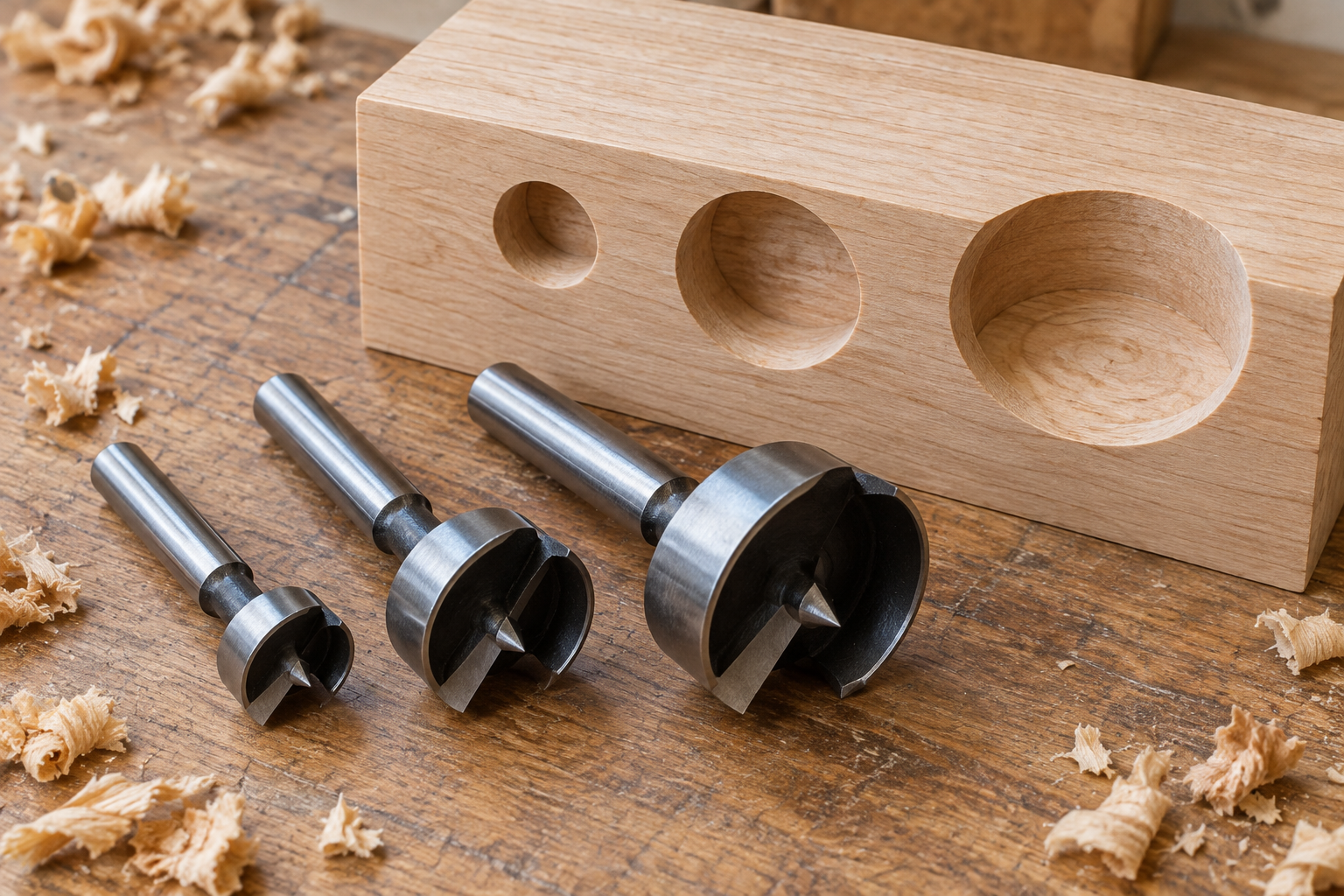
A flat-bottom hole for a cabinet-door hinge is usually a 35 mm cup, cut just deep enough to hold the hinge without breaking through the door face. The bit matters, but so do the drill press, depth stop and door material. For occasional hinge work, an inexpensive set can be adequate. For repeated, clean cuts, a sharp carbide-tipped bit or a good-quality Forstner set is easier to control and lasts longer.
As an Amazon Associate we earn from qualifying purchases at no extra cost to you.


Our Top Picks


What to buy for cabinet doors
First check the hinge specification. Many concealed European-style hinges use a 35 mm cup, but some hardware calls for a different diameter or a particular boring depth. Measure the door thickness and read the hinge instructions before ordering. A standard 18–20 mm-thick door often needs a cup around 12–13 mm deep, but the hinge—not a rule of thumb—sets the final depth.
If you only need that common cup size, a dedicated 35 mm hinge-boring bit is a sensible purchase. If you also make shelf-pin holes, recesses or other furniture parts, a set covering several diameters offers more use for the money. Look for a center point, outer cutting rim and spurs that are visibly sharp and even. A bargain set with rough edges can still drill a hole, but may leave a ragged rim or burn the wood.
For a one-off repair, an individual 35 mm hinge-boring bit may be all you need. For broader furniture work, compare it with a Forstner bit set for woodworking rather than paying for diameters you will never use.
Set types compared
| Option | Best for | Trade-off |
|---|---|---|
| Budget high-speed-steel set | Occasional holes in softwood or plywood | Usually cheaper; edges dull sooner and may need more cleanup |
| Carbide-tipped set | Repeated work, harder woods, or longer service life | Higher upfront cost; carbide can chip if mishandled |
| Single 35 mm bit | Installing a few concealed hinges | Lowest spend when one size is enough; limited versatility |
“Forstner set” does not guarantee equal performance. Sets vary in steel, tooth geometry, shank length and case quality. A larger selection is not automatically better: check the actual sizes and whether the set includes 35 mm. For cabinet work, a useful 35 mm bit and a reliable depth-control method matter more than owning a dozen sizes.
Material, shank and drill choice
High-speed steel is generally fine for occasional holes in pine, poplar and many plywood doors, especially if you keep the bit sharp and avoid overheating. Carbide-tipped bits tend to hold an edge longer in demanding use, but they are not indestructible. Dropping one on a hard floor or catching it at an angle can chip its cutting edge. For a shop fitting many kitchens, paying more for a durable bit is easier to justify than for a single repair.
Check the shank against your drill chuck. A 35 mm bit needs a drill with enough torque and a secure grip; a small, lightweight cordless drill can stall or twist in your hands as the rim bites. A drill press is the more controlled choice because it keeps the hole perpendicular and makes depth repeatable. If using a handheld drill, brace the door firmly, keep both hands on the drill and work at a controlled speed. Do not force the bit when it stops cutting cleanly.
How to get a clean, flat-bottom hole
Mark the hinge center from the hardware template and clamp the door to a stable bench. A Forstner bit’s center point helps locate the hole, but it is not a substitute for careful layout. Set a depth stop or use a drill-press stop. If you lack either, wrap tape around the bit as a visible guide, but treat it as a backup: tape does not stop the bit from going too deep.
Start the cut square to the face. On a drill press, feed steadily without leaning on the handle. With a handheld drill, pause if the bit begins to wander. Clear chips periodically, especially in deep or resinous stock; packed waste creates heat and can scorch the hole. A sharp bit should cut rather than polish the wood. Smoke, a burnt smell, dark marks or a squealing sound are signs to stop, clear the cut and inspect the edge.
Test the depth and fit on an offcut of the same thickness if possible. The hinge cup should sit flush without needing to be hammered in. A hole that is too shallow prevents the hinge from seating; one that is too deep can weaken the door or break through the face. On thin doors, leave a safe margin rather than assuming the nominal door thickness is all usable depth—some faces or cores are uneven.
Common mistakes and when to spend more
The most common failures are a tilted cup, a splintered rim and an over-deep cut. Tilting often comes from starting freehand without a guide or from a door that moves under the drill. Splintering can come from dull spurs, excessive feed pressure or a fragile veneer. Clamp the work, use a backing board where practical, and let the cutters do the work. Veneered doors deserve a test cut: even a sharp bit can lift a thin face layer if it catches.
A cheap set is fine if you need a few holes in forgiving material and can accept a little sanding or cleanup. Spend more when you need consistent hinge cups across many doors, work in dense hardwood, or cannot afford to stop and replace a dull bit. If buying a set, prioritize a useful size range, clean cutting edges and a secure case over a large piece count. For a small cabinet job, one correctly sized, sharp bit and careful depth control will usually beat a large set used without a plan.