What's inside
As an Amazon Associate I earn from qualifying purchases. This post may contain affiliate links at no extra cost to you.
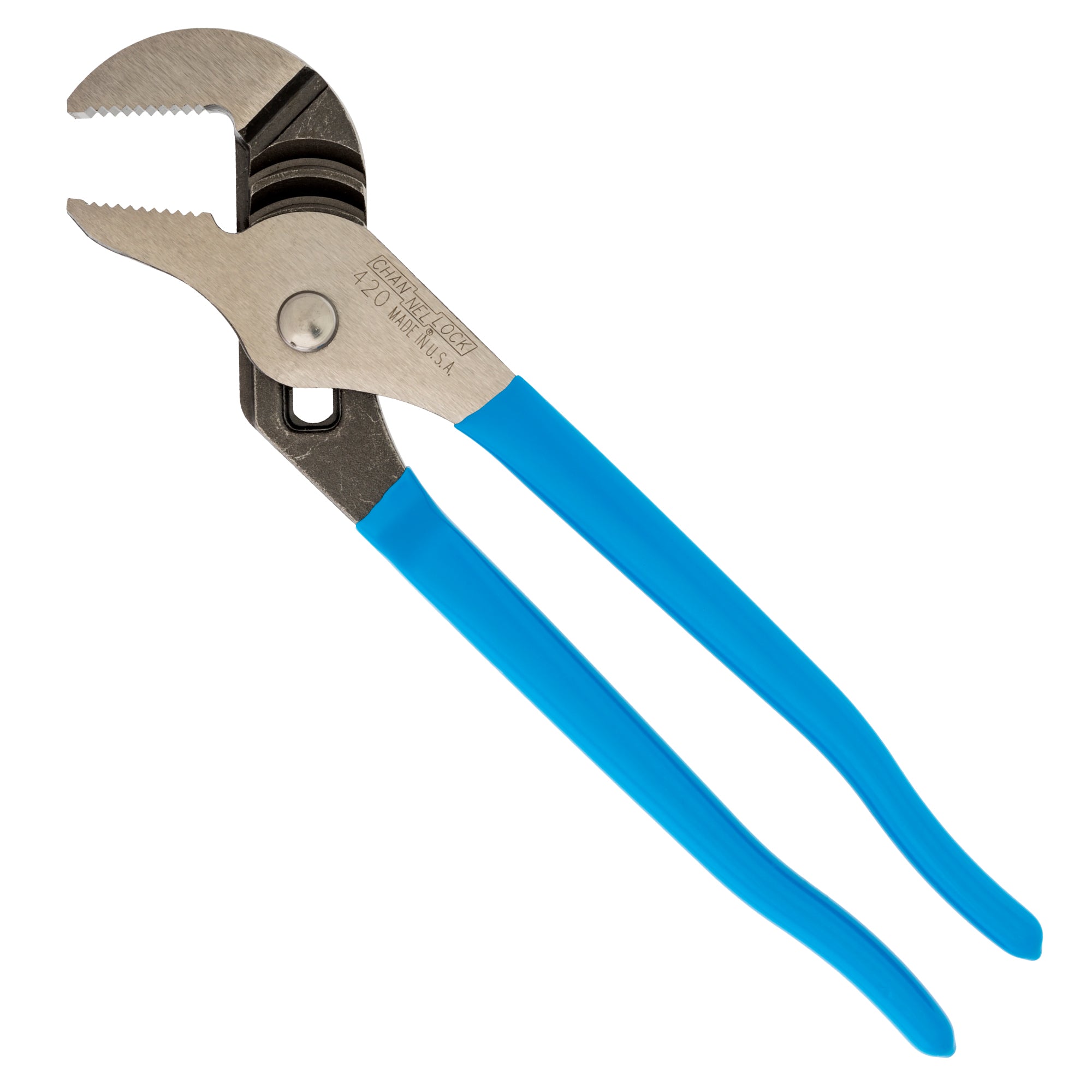
Tongue-and-groove pliers are often sold by overall length, but jaw capacity is the measurement that determines whether they will actually work on a plumbing repair. A pair that opens wide enough for a 1-inch pipe may still be awkward on a 2-inch drain fitting, while an oversized pair can crush thin plastic or slip in a cramped cabinet.
Choose capacity based on the largest fitting you expect to grip, then select the shortest handle that provides enough leverage. For most household repairs, that means starting with an 8- or 10-inch pair rather than buying the largest pliers available.
What jaw capacity means
Jaw capacity is the maximum opening between the gripping surfaces. Manufacturers may list it in inches, millimeters, or as a pipe size. These numbers are not always directly comparable. A stated 2-inch capacity may refer to the physical opening, while another brand may describe the largest nominal pipe or fitting it can hold.
Nominal pipe size also does not equal outside diameter. A 1-inch nominal steel pipe has an outside diameter of about 1.315 inches. A 1-inch PVC fitting can be substantially larger than the pipe it joins. For that reason, do not choose pliers based only on the label printed on the plumbing part.
Look for the manufacturer’s maximum jaw opening and compare it with the outside diameter of the fitting. The jaws should engage solidly on opposite sides, with enough tooth contact to prevent rocking. A tool that only catches the tips of its jaws technically reaches the fitting, but it is not safely sized for the job.
Common tongue-and-groove plier sizes
| Plier length | Typical useful capacity | Best plumbing uses | Main limitation |
|---|---|---|---|
| 6 inches | About 1 to 1 1/4 inches | Small compression nuts, supply fittings, tight cabinets | Limited leverage and narrow opening |
| 8 inches | About 1 1/2 to 2 inches | Faucet connections, traps, small valves, household repairs | May not reach larger drain fittings |
| 10 inches | About 2 to 2 1/2 inches | General-purpose plumbing and larger slip-joint work | Can be bulky around faucets and shutoff valves |
| 12 inches | About 2 1/2 to 3 inches | Large traps, unions, exposed pipe and heavier fittings | More likely to damage plastic or chrome |
| 16 inches and larger | About 3 1/2 inches or more | Large pipe, outdoor plumbing, heavy loosening jobs | Poor control in confined spaces; excessive leverage |
These are useful ranges, not universal specifications. Check the actual listing before buying. A short pair with a carefully shaped jaw may open farther than a longer, inexpensive pair.
Match capacity to the repair
For faucet supply connections and small compression fittings, 6- or 8-inch pliers are usually enough. They fit between the bowl and the cabinet wall better than larger tools. A smaller tool also makes it easier to feel when a nut is starting to turn instead of twisting the entire valve or supply tube.
For sink traps and slip-joint nuts, 8- or 10-inch pliers are the practical middle ground. Plastic trap nuts are usually hand-tight or only lightly snug. If the nut needs pliers, use the lightest grip that moves it. Oversized jaws and long handles can crack the nut, distort its threads, or damage the washer seat.
For 1 1/2-inch and 2-inch drain fittings, a 10- or 12-inch pair normally provides better jaw engagement. Larger jaws help when the fitting is corroded or stuck, but they also need clearance. Measure the space around the fitting, not just the fitting itself. A tool that opens wide but cannot be positioned squarely is less useful than a smaller pair.
Large 16-inch tongue-and-groove pliers make sense for exposed drain piping, outdoor hose connections, and heavy repairs where there is room to pull. They are usually excessive for a bathroom vanity. If you routinely work on large pipe, consider 16-inch tongue-and-groove pliers, but do not use their extra leverage as a substitute for the correct wrench.
Avoid damage and slipping
Jaw capacity is only useful when the jaw shape matches the material. Deep, sharp teeth grip galvanized steel and iron well, but can mark copper, brass, chrome-plated nuts, and plastic. On finished fittings, wrap the part with a thin leather pad or use a smooth-jaw tool. Padding reduces grip, so it may require a wider contact area and more careful positioning.
Keep the plier jaws at a right angle to the fitting. If the handles point sharply off to one side, the tool can walk off the nut as you pull. A slipping tool can round corners, pinch fingers, or strike nearby tubing. Never extend the handles with a pipe for extra leverage; the pliers may break, or the fitting may fail before the tool does.
Do not use tongue-and-groove pliers to hold a pipe while tightening a threaded connection unless the jaws are on a sacrificial or suitably protected section. Twisting against a thin copper tube can kink it. When a fitting must be held stationary, a second correctly sized wrench is often safer.
Buy one pair or a set?
If you are assembling a basic home plumbing kit, an 8-inch pair is the cheaper sensible starting point. It handles many faucet, supply-line, and small trap jobs. An 8- and 10-inch combination covers most indoor repairs without taking much space. Look for an 8- and 10-inch plier set when the price is close to buying one pair.
A cheap pair is fine for occasional light work if the jaws close evenly, the adjustment joint is not loose, and the teeth are sharply defined. The trade-off is usually rougher adjustment, less comfortable handles, and jaws that may spread under high load. For frequent repairs, paying more for a forged tool with a guarded, nonslip adjustment joint is worthwhile.
Buy a 12-inch pair when your repairs regularly include larger drain fittings or seized outdoor connections. Do not buy a 16-inch pair simply because it has the largest advertised capacity. Its leverage can turn a minor plumbing job into a broken plastic fitting or twisted valve body. For specialized large pipe work, heavy-duty 12-inch tongue-and-groove pliers are often the more controllable choice.
Final selection check
Before ordering, measure the fitting’s outside diameter, add room for the jaws to seat, and check the tool’s maximum opening. Confirm that the handles will fit in the working area. For most homeowners, an 8-inch pair for confined work plus a 10- or 12-inch pair for drain fittings is a more useful combination than one oversized tool. Capacity gets the jaws onto the fitting; control and correct contact are what prevent the repair from becoming a replacement job.