What's inside
As an Amazon Associate I earn from qualifying purchases. This post may contain affiliate links at no extra cost to you.
Our Top Picks
 Milwaukee 2415-20 M12 12-Volt Lithium-Ion Cordless Right AngleMedium0 x 0 x 0 inches2.23 poundsCheck on Amazon


The Short Answer
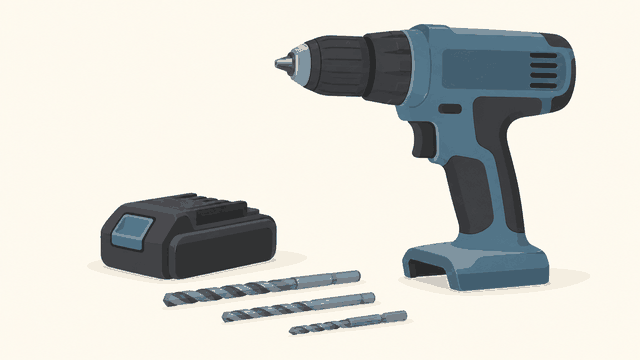
For occasional boring between floor joists, a standard drill driver is usually the better buy. It costs less, handles ordinary drilling and driving, and is easier to control. Add a short bit extension or a right-angle attachment when access is awkward.
A dedicated right-angle drill becomes the better tool when you regularly drill large holes in framing, work in a narrow floor bay, or need to keep the tool body out of the way. It gives you a shorter, more usable package, but it is heavier, more expensive, and less versatile for general repairs.
As an Amazon Associate we earn from qualifying purchases at no extra cost to you.


What Boring Between Joists Actually Requires
Most floor-joist work involves drilling holes for cable, pipe, low-voltage wiring, or fasteners. The difficulty is not simply making a hole. You need to line up the bit in a confined space, keep it square enough to avoid wandering, and prevent the chuck or tool housing from hitting the joists.
For small holes up to about 1/2 inch, either tool is generally easy to use. A standard twist bit, brad-point bit, or short auger bit puts little load on the drill. Holes from 5/8 to 1-1/4 inches demand more torque, especially in construction lumber. A 1-1/2-inch or larger hole saw or self-feed bit can stop a weak drill abruptly, twist your wrist, or overheat the motor.
Before drilling, locate plumbing, electrical cables, HVAC ducts, blocking, and metal protection plates. Do not assume an empty-looking joist bay is safe. If drilling through a joist, follow local code requirements for hole location and size. As a general rule, holes belong near the center of the joist’s depth, not close to the top or bottom edge, and large holes may be prohibited altogether. Never drill through engineered I-joists without following the manufacturer’s hole chart.
Where a Drill Driver Works Best
A drill driver is the sensible choice if you already own one. Its clutch makes it useful for screws, its two-speed gearbox handles both delicate bits and slower high-torque boring, and its removable battery platform may already power your other tools.
For wiring holes and small plumbing penetrations, a compact 18V or 20V drill driver with a 1/2-inch chuck is normally enough. Use low gear for large bits and high gear for small twist bits. Keep the side handle installed when the drill accepts one; a self-feed bit can catch suddenly even in soft lumber.
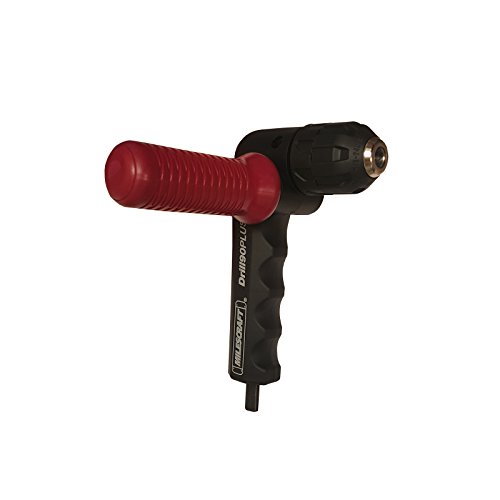
The main limitation is length. The motor, battery, and chuck extend behind the bit, so a drill driver may not fit between closely spaced joists or inside a shallow bay. You can improve access with a short bit, a flexible extension for suitable bits, or a compact right-angle attachment. These accessories are useful for light-duty holes, but they add runout and can reduce the torque the bit receives.
A drill driver is also the better option for mixed work. After boring the hole, you can switch to driving structural screws, mounting cable staples, or installing pipe supports without changing tools. If this is a one-room renovation rather than daily rough-in work, that versatility usually outweighs the access advantage of a specialty drill.
Where a Right-Angle Drill Wins
A right-angle drill turns the motor ninety degrees to the chuck. This keeps the long motor and battery alongside the joist instead of directly behind the bit. In a cramped bay, that shorter front-to-back profile can be the difference between drilling straight and working at an awkward angle.
Right-angle drills are particularly effective with auger bits, ship-auger bits, and self-feed bits used for repeated framing holes. Their gearboxes are designed for high torque, and many include a proper side handle or auxiliary grip. That control matters when boring 1-inch or larger holes in dense lumber.
The trade-off is bulk in another direction. The right-angle head and side handle can be wide, and the tool may be heavier than a compact drill driver. Some models are also slower and less comfortable for ordinary screwdriving. A right-angle drill is a specialist purchase, not automatically an upgrade for every drilling task.
If you routinely drill overhead from below, check the tool’s balance before buying. A heavy battery at the end of the motor can make extended work tiring. A corded right-angle drill may offer sustained power for a long rough-in, but managing the cord between joists introduces its own nuisance and safety concerns.
Drill Driver vs. Right-Angle Drill
| Factor | Drill driver | Right-angle drill |
|---|---|---|
| Best use | General drilling, driving, and occasional framing holes | Repeated boring in tight framing spaces |
| Access | Longer tool; can contact nearby joists | Shorter nose-to-back profile at the hole |
| Large-bit control | Good with a side handle and low gear | Usually better torque and leverage |
| Versatility | Excellent for drilling and screwdriving | Mostly a drilling tool |
| Cost | Lower if you already own the battery platform | Higher for a comparable cordless tool |
| Best buyer | Homeowner or occasional remodeler | Electrician, plumber, or frequent remodeler |
Bits, Technique, and Failure Modes
Use a bit suited to the material and hole size. A twist bit is efficient for small holes. An auger bit clears chips well in wood. A self-feed bit cuts quickly but can grab hard. Hole saws are useful when the hole’s diameter matters, but they generate more friction and may need frequent clearing.
Start slowly until the cutting edges establish the hole. Then increase speed only as the bit manufacturer recommends. With auger and self-feed bits, withdraw the bit periodically to clear chips, especially in wet or resinous lumber. Do not force a stalled bit by leaning your full weight on the tool. Release the trigger, let the motor stop, and remove the bit by reversing briefly if the bit design permits it.
Common failures include burning the bit, stripping the chuck, tripping the drill’s overload protection, and twisting a wrist when a bit catches on a nail. A nail detector can help, but it is not infallible. Wear eye protection, avoid loose clothing, and keep your free hand away from the rotating chuck and bit.
What to Buy
If you need a general-purpose tool, choose a compact 18V or 20V brushless drill driver with a side handle. Look for a 1/2-inch chuck, low gear, and a comfortable battery position. Brushless is helpful for repeated large-hole work, but it is not essential for a few cable holes.
If access is the only problem, a right-angle drill attachment can be a cheaper solution for small bits and light loads. Avoid using a light-duty attachment with large self-feed bits; the gears and shaft may not tolerate the torque.
For frequent framing work, buy a dedicated cordless right-angle drill with a side handle. It earns its cost when it saves repeated repositioning and gives predictable control with large bits. For one or two projects, however, the drill driver you already own is usually the cheaper and more practical answer.
Final Verdict
Choose the drill driver for occasional holes, mixed remodeling tasks, and holes no larger than roughly 1 inch in accessible joist bays. Choose the right-angle drill when the work is frequent, the bays are genuinely cramped, or large holes make a standard drill awkward and hard to control.
The tool does not make unsafe framing acceptable. Confirm the joist type, permitted hole size, and location before drilling. In structural or engineered flooring, the correct decision may be to stop drilling and reroute the cable or pipe instead.