What's inside
As an Amazon Associate I earn from qualifying purchases. This post may contain affiliate links at no extra cost to you.
Our Top Picks


Knipex Cobra vs Channellock Tongue-and-Groove Pliers for Pipe Work
Both Knipex Cobra and Channellock tongue-and-groove pliers can handle common plumbing jobs, but they behave differently on the pipe. The choice comes down to whether you value fast, precise jaw adjustment or a simpler, wider-opening tool that costs less and tolerates rough work.
For most home repairs, a 10-inch class pair is the useful starting point. It is large enough for typical shutoff valves, compression fittings, traps, and small threaded pipe, while still fitting under sinks. Larger 12- or 16-inch pliers provide more leverage, but they can damage plated fittings and are awkward in cramped cabinets.
As an Amazon Associate we earn from qualifying purchases at no extra cost to you.


Jaw design and adjustment
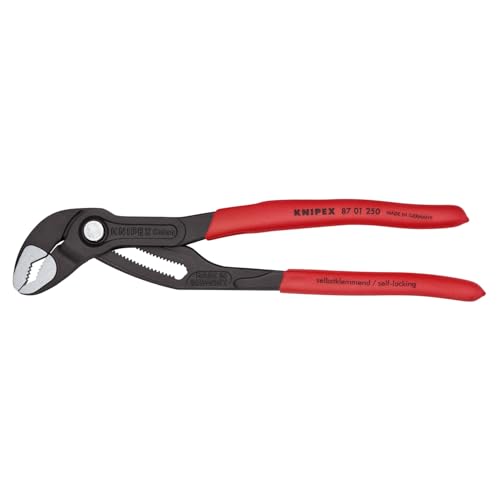
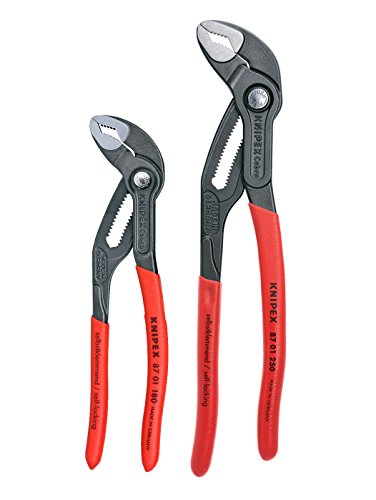
Knipex Cobra pliers use a push-button adjustment. You press the button, slide the lower jaw, and release it into a chosen position. The jaws are relatively narrow, sharply toothed, and shaped to bite round objects. That makes the Cobra quick to position on a pipe or fitting without repeatedly opening and closing the handles.
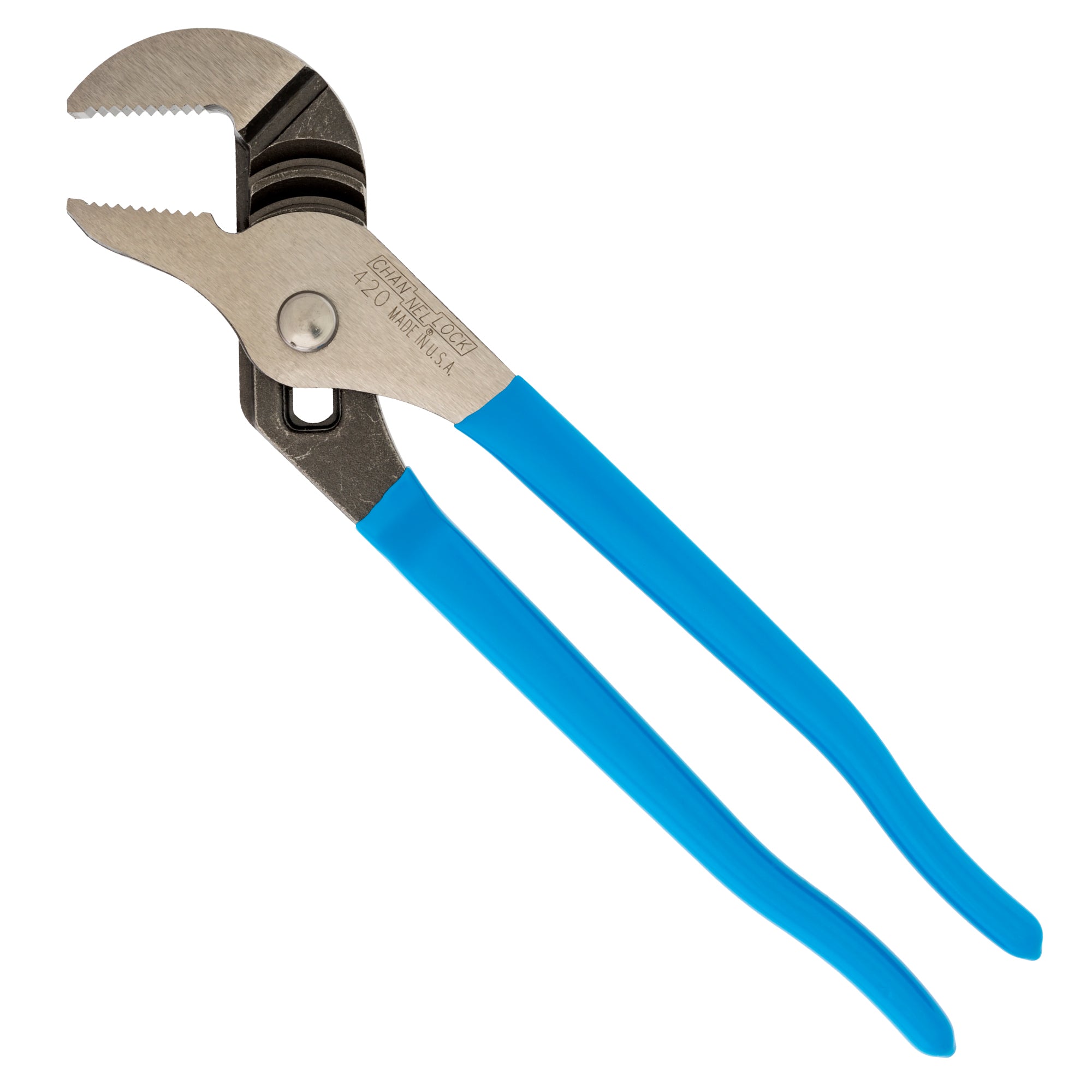
Channellock tongue-and-groove pliers use the familiar series of slots. To adjust them, you open the handles, move the tongue into another groove, and close the tool around the work. This is slower than the Cobra when you are moving between several pipe sizes, but the system is mechanically simple and has worked reliably for decades.
The Cobra’s adjustment button is not a magic lock. If the jaws are set too wide or the tool is loaded at an awkward angle, the handles can still shift or the jaws can slip. Set the pliers so the jaws contact the work firmly with the handles roughly 30 to 45 degrees apart. Do not rely on the tool to compensate for a poor fit.
| Feature | Knipex Cobra | Channellock tongue-and-groove |
|---|---|---|
| Adjustment | Push-button, quick and precise | Groove positions, simple and proven |
| Grip on round pipe | Very strong with focused teeth | Strong, with a broader jaw profile |
| Risk of marking fittings | High if used directly on finished surfaces | High, especially with heavy force |
| Best advantage | Fast setup and excellent bite | Lower price and straightforward durability |
| Typical weakness | Higher cost; teeth can be aggressive | Slower adjustment; easier to choose a poor jaw position |
Performance on common plumbing jobs
On a threaded steel or galvanized fitting, the Cobra usually feels more secure. Its teeth bite quickly, and the narrow jaws make it easier to position on a hex or round section. This is useful when removing an old shower arm, loosening a corroded union, or holding one pipe while turning another wrench.
Channellock pliers are fully capable of the same work when correctly adjusted. Their broader jaws can feel less positive on small round tubing, particularly if only the tips contact the pipe. Move the pliers until the jaws sit squarely around the work rather than gripping at the end of the teeth.
Neither tool should be your first choice for installing a polished chrome faucet nut, brass compression fitting, or plastic drain fitting. The teeth can leave permanent marks, and excessive force can deform soft brass or split plastic. Use a basin wrench, adjustable wrench, strap wrench, or a smooth-jaw plumbing strap wrench when the finish matters.
For plastic PVC fittings, use the lightest force that works. A 10-inch pair can generate far more torque than a plastic fitting needs. If a glued fitting will not turn, it is usually not meant to turn at all; cut it out rather than crushing it with larger pliers.
Leverage, size, and access
A 10-inch pair gives useful leverage without becoming unwieldy. For a tight 1-inch threaded connection, both brands may need help from penetrating oil, heat where safe, or a second wrench to prevent the pipe from twisting. Jumping straight to a 16-inch pair increases the chance of bending thin pipe, breaking a valve body, or damaging a cabinet.
In a cramped sink cabinet, the Cobra’s fast adjustment is a practical advantage. You can set it with one hand, particularly when the other hand is holding a light or stabilizing a fitting. Channellock’s adjustment takes more hand movement, though its large handles can be comfortable when there is room to work.
For repeated professional use, consider buying a Knipex Cobra water-pump pliers in the size you use most, rather than carrying one oversized pair. A smaller tool that fits the work correctly is safer than a large tool used at the end of its jaws.
Durability and maintenance
Both tools are built for years of ordinary service. The important failure points are usually misuse, not normal wear. Pipe-thread sealant, rust, and grit can make the adjustment mechanism stiff. Rinse dirty pliers, dry them, and apply a small amount of light oil to the joint. Keep the teeth free of brass or plastic buildup.
Do not hammer on either handle to break loose a fitting. This can chip the teeth, distort the joint, or transmit a shock into a valve or pipe buried in the wall. If the fitting needs that much force, use properly sized pipe wrenches or replace the corroded section.
Channellock is often the better value for occasional homeowners who use pliers a few times a year. The cheaper option is fine for replacing a trap, tightening a hose connection, or holding a pipe while another wrench turns a nut. If you want the quickest adjustment and often work in tight spaces, the Cobra’s extra cost is easier to justify. Check current pricing on Channellock tongue-and-groove pliers before buying; sales can narrow the gap considerably.
Which one should you buy?
Choose Knipex Cobra if you frequently work on round pipe, need rapid one-handed adjustment, or want the most confident bite on stubborn fittings. Choose Channellock if price, simple construction, and dependable general-purpose performance matter more than speed.
Whichever brand you choose, buy the right size and protect finished surfaces. For a basic home plumbing kit, pair the pliers with a smooth-jaw adjustable wrench and a basin wrench for plumbing. That combination handles more real repairs with less damage than using toothed pliers for every connection.