What's inside
As an Amazon Associate I earn from qualifying purchases. This post may contain affiliate links at no extra cost to you.
When you need to hold round steel pipe, the choice between tongue-and-groove pliers and a pipe wrench comes down to grip, access, and how much force the job requires. Both tools can bite into steel, but they do not behave the same way. Tongue-and-groove pliers are quicker to position and more versatile. A pipe wrench produces a stronger, more secure grip on round pipe, especially when the pipe is large, smooth, or under significant torque.
As an Amazon Associate we earn from qualifying purchases at no extra cost to you.


Our Top Picks
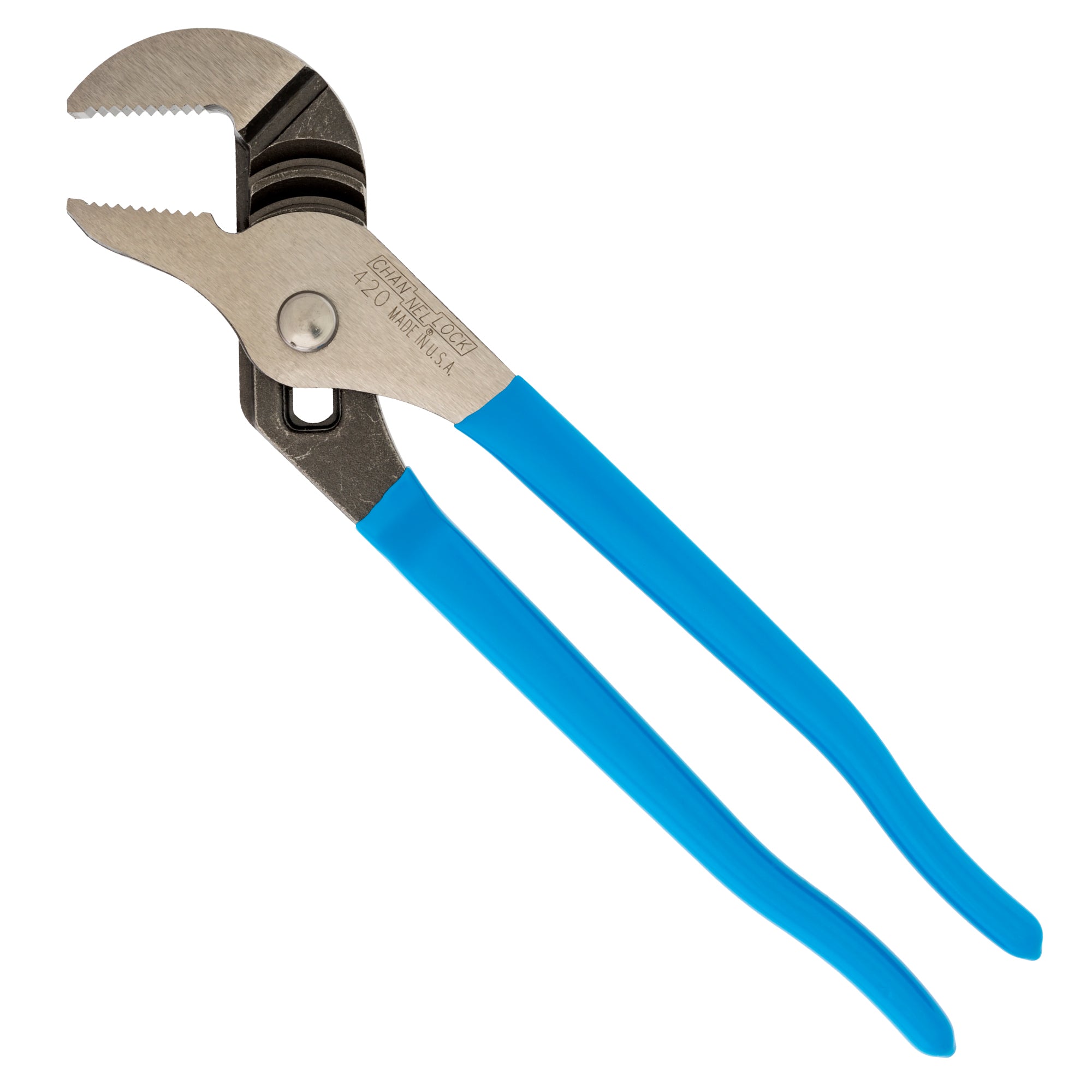
 Channellock Tongue and Groove Plier 420-1.5-Inch Jaw Capacity1.50-Inch Jaw Capacity12 x 4 x 0.1 inches0.79 poundsCheck on Amazon


Quick answer
Use 10-inch tongue-and-groove pliers for light holding, fitting, and short jobs where access matters. Use a 14-inch pipe wrench when you need to resist twisting, break a tight threaded fitting loose, or hold pipe securely while another tool applies force.
For most ordinary steel pipe work, a pipe wrench is the better tool. Tongue-and-groove pliers are the better cheap, general-purpose option when the pipe is small and the load is modest.
How the grip differs
Tongue-and-groove pliers have two serrated jaws that open to several positions. The jaws remain roughly parallel, and hand pressure squeezes the pipe between them. Their grip depends heavily on the operator’s hand strength and the friction of the jaw teeth.
A pipe wrench has an adjustable upper jaw and a fixed lower jaw. As you pull on the handle, the jaw geometry cams tighter against the pipe. More torque generally makes the wrench bite harder. This self-tightening action is the main reason a pipe wrench holds round steel pipe better.
That advantage has a cost: pipe-wrench teeth are aggressive. They will normally leave crescent-shaped marks or deep scratches in painted, plated, stainless, or finished pipe. Tongue-and-groove pliers can also mark steel, but usually with less concentrated damage if they are not overloaded.
Tongue-and-groove pliers vs. pipe wrench
| Factor | Tongue-and-groove pliers | Pipe wrench |
|---|---|---|
| Best use | Light holding, fittings, nuts, and quick adjustments | Heavy holding, threaded pipe, and high torque |
| Typical useful size | 8 to 12 inches | 10 to 18 inches |
| Grip on round pipe | Good on small pipe with moderate force | Excellent when properly sized and positioned |
| Surface damage | Moderate; can slip and scuff | High; teeth commonly mark the pipe |
| Access | Fast adjustment and useful in cramped areas | Needs room for the head and handle swing |
| Risk of slipping | Higher under twisting or heavy load | Lower, provided the wrench fits correctly |
When tongue-and-groove pliers are enough
Pliers are fine for holding thin-wall steel tube while you drill, align, deburr, or tighten a light-duty clamp. They are also convenient for pipe under roughly 1 inch in diameter when the fitting is not seized and you are working with hand-tight or lightly tightened connections.
A pair in the 10- to 12-inch range usually offers a useful balance of reach and control. Smaller 8-inch pliers fit tight spaces but provide less leverage. Larger 16-inch versions can hold bigger pipe, but the long handles do not turn them into a true substitute for a pipe wrench. The jaws can still slip because they do not lock onto round stock in the same way.
Pliers are the cheaper option, and they are often the sensible purchase for occasional household work. If you only need to stop a short piece of pipe from rotating while installing a bracket, spending more on a pipe wrench may add little value. Choose pliers with hardened, sharply defined teeth and a comfortable non-slip handle.
When a pipe wrench wins
Choose a pipe wrench for threaded steel pipe, large-diameter pipe, or any connection that requires meaningful torque. A 14-inch wrench is a practical general-purpose size for many home and workshop jobs. A 10-inch wrench is easier to control on smaller pipe, while an 18-inch wrench gives more leverage but is heavier and more likely to damage thin-wall material or fittings.
Pipe wrenches are particularly useful when one wrench holds the pipe and a second wrench turns a coupling, valve, or elbow. The holding wrench should be placed close to the joint, but not so close that it interferes with the other wrench. If the pipe is unsupported, excessive force can bend it, pull it out of a fitting, or damage the structure it is attached to.
Do not extend the handle with a cheater bar unless the wrench manufacturer specifically permits it. Added leverage can snap a jaw, spread the wrench, crush thin-wall pipe, or cause a sudden slip. If a properly sized wrench will not move the fitting, penetrating oil, heat where safe, a larger correctly rated wrench, or a different repair method is preferable.
Avoiding slip and damage
Clean oil, paint flakes, and rust scale from the gripping area before starting. Set tongue-and-groove pliers so the pipe sits deep in the jaws, not near the tips. Keep the handles aligned with the direction of force and avoid squeezing at an angle. If the pliers begin to walk around the pipe, stop; increasing hand pressure usually makes the slip more sudden, not more secure.
For a pipe wrench, adjust the movable jaw so the wrench contacts the pipe firmly with a small amount of clearance. Keep both jaws fully engaged. Pull rather than push whenever possible, and keep your body out of the line of a potential slip. Never use either tool on energized, pressurized, or hot pipe.
If the pipe surface must remain presentable, neither standard tool is ideal. Use a strap wrench, padded pipe-holding tool, or a purpose-built vise with soft jaws. Padding a pipe wrench with thick material can reduce bite and make slipping more likely, so it is not a reliable substitute for a non-marring tool.
Which one should you buy?
Buy tongue-and-groove pliers if your work is mostly light repairs, small tubing, hardware, and general gripping. They cost less, adjust faster, and do more jobs around the house. Buy a pipe wrench if you regularly install or remove steel pipe, work on threaded fittings, or need a dependable hold while applying torque.
If your budget allows only one tool and round steel pipe is the priority, choose a 14-inch pipe wrench. If your jobs are occasional and the pipe is small, quality tongue-and-groove pliers are sufficient. The important distinction is not the handle length alone: it is whether the tool can hold the pipe without slipping at the force your job demands.