What's inside
As an Amazon Associate I earn from qualifying purchases. This post may contain affiliate links at no extra cost to you.
For shop fabrication, both the Bosch GWS13-50 and Metabo WEV15-125 are serious 5-inch angle grinders, but they are aimed at different work habits. The Bosch is a straightforward, high-speed 13-amp grinder for cutting, grinding, and flap-disc work. The Metabo adds variable speed and more electronic protection, which matters when you use wire wheels, sanding discs, stainless steel accessories, or spend long sessions shaping metal.
As an Amazon Associate we earn from qualifying purchases at no extra cost to you.


Our Top Picks
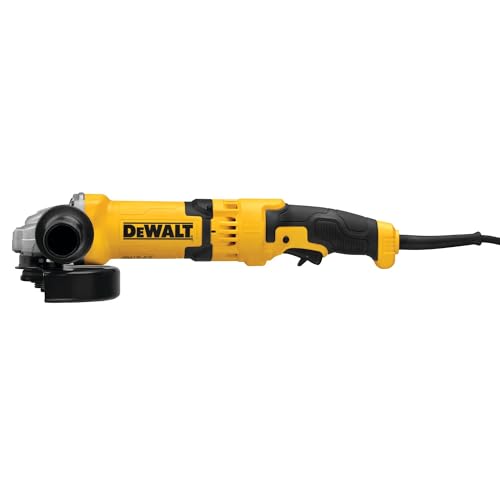
Bosch GWS13-50 vs. Metabo WEV15-125 at a glance
| Feature | Bosch GWS13-50 | Metabo WEV15-125 |
|---|---|---|
| Wheel size | 5 inches | 5 inches / 125 mm |
| Motor input | 13 amps | About 13.5 amps / 1,550 watts |
| No-load speed | 11,500 rpm | 3,500–11,000 rpm |
| Speed control | Fixed speed | Variable speed dial |
| Electronic protection | Direct, relatively simple design | Soft start, restart protection, overload protection, and electronic clutch functions |
| Best fit | Fast cutting and general grinding | Mixed fabrication, finishing, and controlled material removal |
Cutting and heavy grinding performance
The Bosch’s 13-amp motor gives it enough power for normal shop fabrication: cutting mild-steel tube, beveling welds, cleaning mill scale, and running flap discs. Its 11,500-rpm speed keeps a thin cutoff wheel cutting aggressively. That is useful when making many cuts in 1/8-inch wall tubing or sheet steel, where a slower grinder can feel unnecessarily dull.
The Bosch is also easy to understand. There is no speed setting to adjust and no electronic behavior to learn. Squeeze the switch, keep the wheel moving, and let the abrasive do the work. That simplicity is an advantage for a grinder used mainly with standard bonded grinding wheels, cutoff wheels, and flap discs rated for the grinder’s speed.
The Metabo has slightly more motor input and generally feels less stressed when you lean into a grinding wheel or use a large flap disc. The difference is not night and day; both tools can remove metal quickly. The Metabo’s real advantage is control. Its speed range lets you slow the wheel for heat-sensitive work, finishing, or accessories that work better below maximum speed.
For example, grinding stainless steel too aggressively can discolor the surface and load a flap disc. A reduced speed can make it easier to blend a weld without turning the surrounding metal blue. The same control helps when polishing, brushing, or working close to a visible finished surface.
Variable speed is useful—but not free
Variable speed does not make the Metabo automatically better for every job. It adds electronics, cost, and another setting that can be misused. A wire wheel, sanding disc, or polishing accessory must still be operated within its marked maximum rpm. Lowering the grinder’s speed does not make an underrated accessory safe at full load, and it does not compensate for a damaged wheel.
The Bosch is the better match if your shop mostly uses 5-inch metal cutoff and grinding wheels and values a lower purchase price. For general steel fabrication, fixed high speed is often all you need. Buy wheels with a maximum speed above the grinder’s 11,500 rpm rating, inspect them before use, and avoid forcing the wheel sideways during a cut.
The Metabo makes more sense if one grinder must cover fabrication and finishing. It can run at a more manageable speed for wire brushing and surface work, while still delivering full speed for cutting. That versatility is especially valuable in a small shop where buying a dedicated low-speed polisher or finishing tool would cost more space and money.
Handling, controls, and failure modes
Both grinders are compact enough for one-handed positioning, but two-handed control is the safer choice for cutting and heavy grinding. Use the side handle, keep the guard installed, and position the guard between your hands and the wheel. A cutoff wheel can catch in a closing kerf and kick the grinder back with surprising force.
The Bosch’s simpler construction can be a benefit in dusty fabrication environments because there are fewer electronic functions to depend on. Its weakness is the lack of speed adjustment and more advanced overload behavior. If you repeatedly stall the wheel, run a loaded disc, or work with inadequate ventilation, heat becomes the limiting factor. Letting the motor recover between demanding passes is cheaper than replacing it.
The Metabo’s soft start reduces the initial jerk when the motor starts. Restart protection is useful after a power interruption: the grinder should not simply come alive when power returns. Its electronic clutch and overload functions can reduce the severity of a bind, but they are not a substitute for correct technique. A seized wheel can still damage the workpiece, wheel, or operator.
Both tools can fail early if abrasive dust gets into the switch or ventilation paths, if the cord is repeatedly bent at the housing, or if the grinder is used with wheels larger than its rated size. Keep the air openings clear and replace wheels that are cracked, dropped, or heavily worn.
Which grinder should you buy?
Choose the Bosch GWS13-50 when your priority is fast, uncomplicated metalwork at the lowest sensible cost. It is a good buy for a fabrication bench that mainly cuts and grinds mild steel, and for users who would rather put the savings toward a supply of quality abrasive wheels. It is not a compromise for ordinary tube work, weld cleanup, or bracket fabrication.
Choose the Metabo WEV15-125 when you regularly switch between cutting, grinding, brushing, sanding, and finishing. The variable-speed control and electronic protections justify the extra money when surface appearance, stainless steel, aluminum, or long work sessions matter. If you are shopping for accessories to take advantage of that range, look for 5-inch grinder finishing accessories rated for the intended speed.
For a first shop grinder used almost exclusively on structural steel, buy the Bosch and spend the difference on a proper face shield, hearing protection, and better discs. For one tool expected to handle both aggressive fabrication and controlled finishing, the Metabo is the more capable choice—and its extra control is something you can use on nearly every material.