What's inside
As an Amazon Associate I earn from qualifying purchases. This post may contain affiliate links at no extra cost to you.
Our Top Picks
 DEWALT 20V MAX XR 3/4 Inch Cordless ImpactOne Size10.7 x 4.5 x 11.1 inches9.04 poundsCheck on Amazon
 VEVOR 1/2" Drive Impact Socket Set 65 Piece1/2" 65 PCS21.06 x 16.85 x 2.68 inches31.99 PoundsCheck on Amazon


DeWalt DCF900 vs Milwaukee 2967: the short version
The DeWalt DCF900 and Milwaukee 2967 are both large, cordless 1/2-inch impact wrenches built for jobs where a compact impact driver or mid-torque wrench runs out of force. They are aimed at truck lug nuts, seized suspension hardware, construction fasteners, and other stubborn bolts.
The DeWalt claims up to 1,400 lb-ft of breakaway torque and 1,030 lb-ft of fastening torque. The Milwaukee 2967 claims 1,200 lb-ft of nut-busting torque and 750 lb-ft of fastening torque. Those headline figures are not directly comparable laboratory measurements, but they do point to the basic difference: the DCF900 has the higher published maximum, while the 2967 emphasizes control, speed, and Milwaukee’s M18 battery platform.
As an Amazon Associate we earn from qualifying purchases at no extra cost to you.


For maximum loosening force, choose the DCF900. For a shop that already uses M18 batteries, or for users who want more refined electronic control and a strong service ecosystem, the 2967 is often the better buy. Neither should be used to final-tighten critical fasteners without a calibrated torque wrench.
Key specifications
| Feature | DeWalt DCF900 | Milwaukee 2967 |
|---|---|---|
| Drive | 1/2-inch friction ring | 1/2-inch friction ring |
| Published fastening torque | Up to 1,030 lb-ft | Up to 750 lb-ft |
| Published breakaway/nut-busting torque | Up to 1,400 lb-ft | Up to 1,200 lb-ft |
| Speed | Up to 2,300 rpm; up to 2,200 impacts per minute | Up to 2,000 rpm; up to 2,400 impacts per minute |
| Weight | About 7.2 lb bare | About 7.5 lb bare |
| Battery platform | DeWalt 20V Max | Milwaukee M18 |
| Control features | Four-mode speed and torque control, LED light | Four-mode control, auto shut-off and bolt-removal control |
Published torque numbers are best treated as capability indicators, not promises that every bolt will see that force. Fastener size, rust, thread damage, socket condition, battery charge, and how the tool is braced all change the result.
Performance on stubborn bolts
The DCF900 has the edge when the main problem is a heavily rusted or over-tightened fastener. Its higher breakaway rating gives it more reserve before you need a breaker bar, penetrating oil, heat, or a larger pneumatic tool. That matters on trailer hardware, agricultural equipment, and older trucks where corrosion is part of the job.
The Milwaukee 2967 is not a weak alternative. It removes ordinary truck and SUV lug nuts quickly and has enough power for many suspension and driveline repairs. In practical use, the difference is most noticeable at the extreme end: a bolt that comes free after several seconds with the Milwaukee may come free sooner with the DeWalt, while a bolt locked by severe corrosion may defeat both.
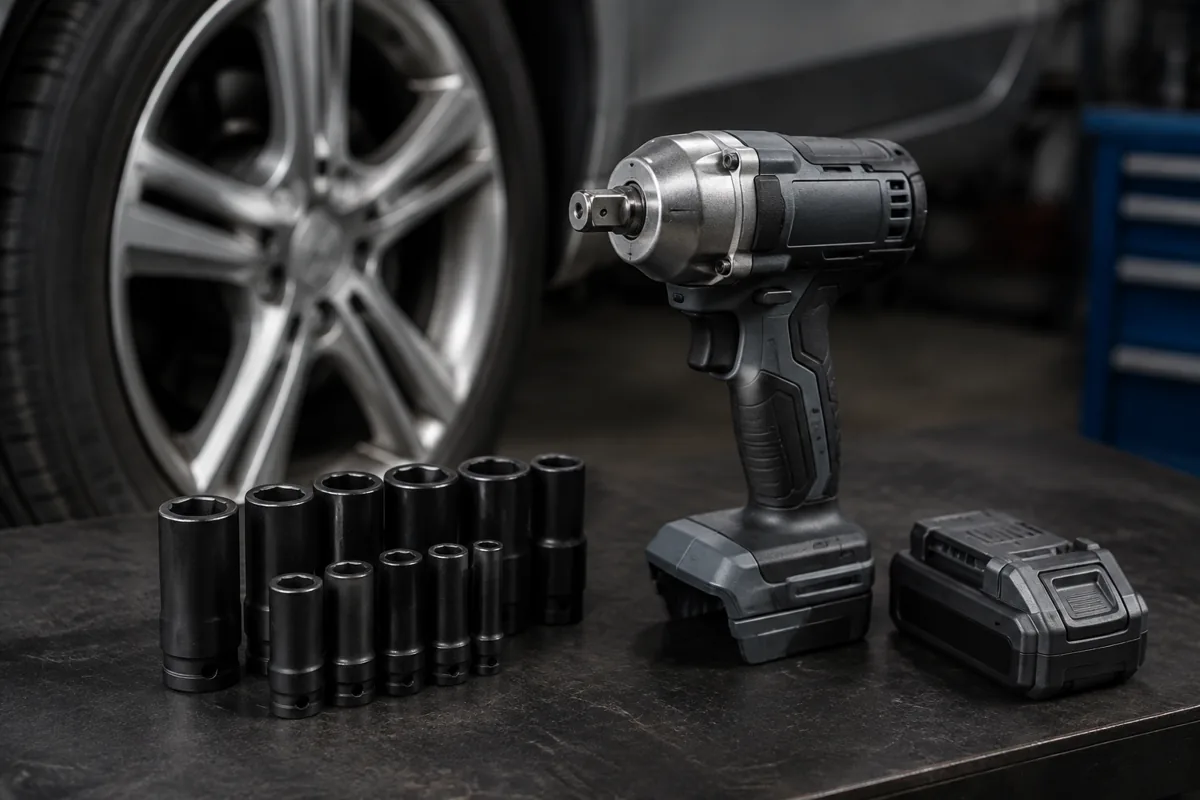
Use impact-rated sockets only. A chrome hand-tool socket can crack or shatter under impact loading. A long extension also reduces the force reaching the fastener and can twist under load. If the tool hammers without moving the bolt, stop rather than holding the trigger indefinitely. You can round the fastener, overheat the tool, or damage the threads.
Control, speed, and tightening
High torque is useful for removal but dangerous during installation. Either wrench can exceed the specification for wheel lugs, suspension bolts, and smaller threaded hardware. The safest workflow is to run the fastener down on a low setting, then use a torque wrench for the final value.
The DCF900’s mode selector gives useful control over output and speed, and its higher fastening rating can save time on large structural fasteners. The Milwaukee 2967 adds more job-focused electronic behavior, including a mode intended to prevent over-tightening and another that helps stop a removed bolt from spinning away at full speed. These features are valuable when working around delicate threads or when repeatedly removing and installing fasteners.
Neither tool replaces a torque wrench. Impact wrenches are affected by joint stiffness, lubrication, bolt condition, and impact time, so using one as a precision tightening instrument produces inconsistent results.
Handling, batteries, and access
Both are big tools. Their length and motor housings can make access difficult around exhaust components, frame rails, and crowded engine bays. A high-torque wrench is also tiring overhead. If most of your work involves smaller bolts or confined spaces, a 1/2-inch mid-torque impact wrench is usually a better everyday choice.
Battery choice affects balance as much as runtime. A large 8Ah or 10Ah pack provides more sustained output, but adds noticeable weight. A compact pack makes the wrench easier to hold but may deliver fewer full-power removals, especially on repeated heavy work. Expect the tool to be most effective with a healthy, fully charged high-output battery rather than an old, nearly empty pack.
The deciding factor for many buyers is the battery system. DeWalt owners can use existing 20V Max packs, chargers, and jobsite batteries with the DCF900. Milwaukee users get the same advantage with M18 packs and chargers. Buying into a second platform makes little financial sense unless this wrench fills a real gap in your current tools.
Which impact wrench should you buy?
Choose the DeWalt DCF900 if you regularly remove severely stuck fasteners, work on trucks or heavy equipment, or want the highest published torque of the two. It is the more convincing choice when maximum breakaway ability matters more than compactness or fine control.
Choose the Milwaukee 2967 if you already own M18 batteries, value its bolt-removal and auto-shut-off modes, or want a high-torque wrench that is easier to manage during repeated service work. Its lower published fastening torque is not a problem for normal automotive jobs.
If you only change wheels, repair brakes, or service common passenger vehicles, the cheaper option is fine—and either high-torque model may be more tool than you need. A less expensive automotive impact wrench kit can handle routine lug nuts, while a 1/2-inch impact socket set is a more important purchase than chasing a slightly higher torque number.
What matters on the job
For a genuinely seized bolt, neither wrench guarantees success. Clean exposed threads, apply penetrating oil, use heat only where it is safe, and keep a breaker bar and correct-size socket nearby. The DCF900 gives you more mechanical reserve; the 2967 gives you strong real-world performance with particularly useful electronic control. Match the wrench to your battery platform and workload, then spend the savings on quality impact sockets and a torque wrench.