What's inside
As an Amazon Associate I earn from qualifying purchases. This post may contain affiliate links at no extra cost to you.
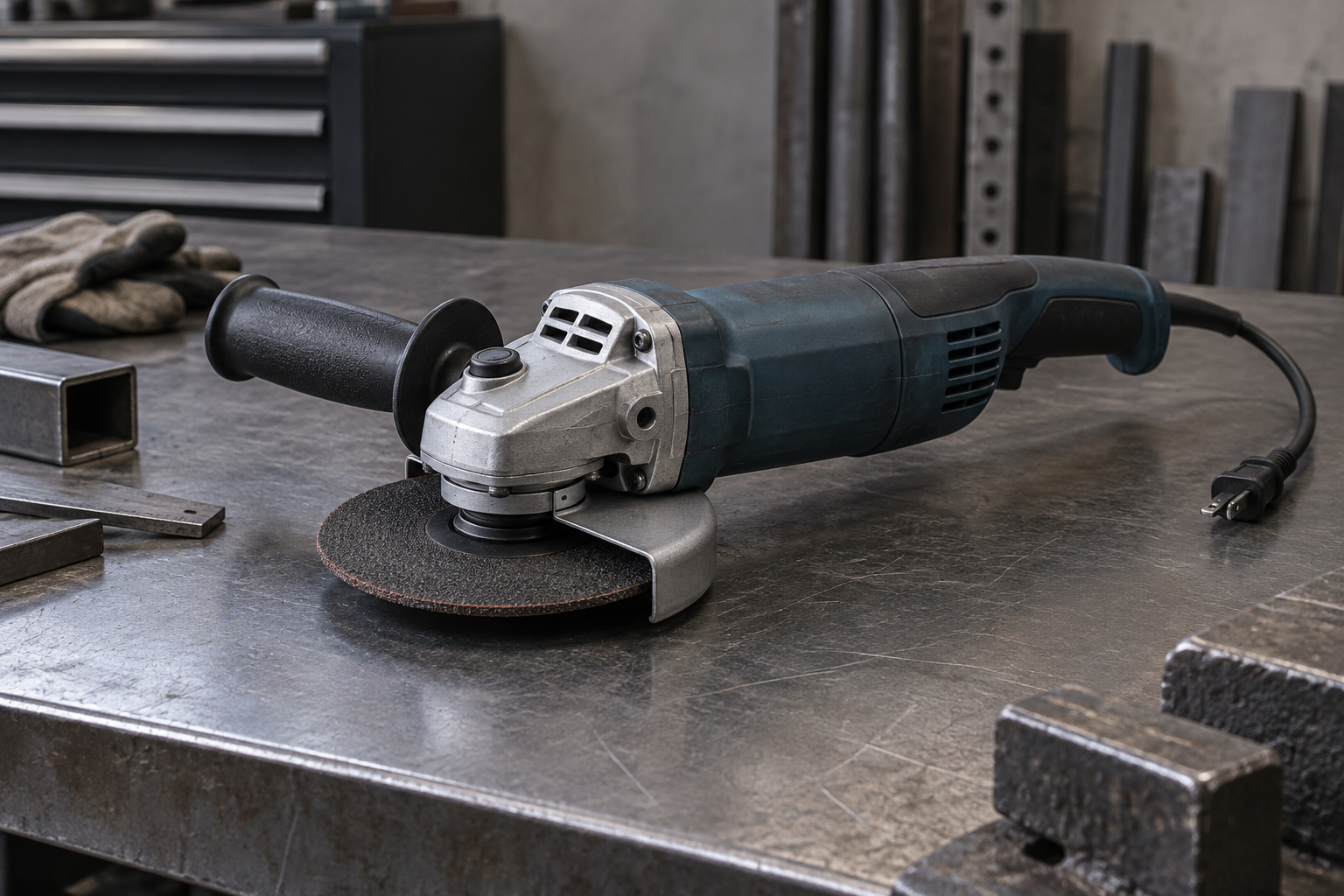
A 4½-inch grinder is usually the easier tool to control; a 5-inch grinder can cut deeper, but the gain is smaller than the half-inch difference in wheel diameter suggests. For thin stock, tile, and routine cutoff work, the smaller grinder is often enough. If you regularly cut thicker bar or masonry, the extra reach of a 5-inch wheel can save time and repositioning.
What the size difference means in practice
Typical 4½-inch and 5-inch grinders use wheels with outside diameters of 115 mm and 125 mm, respectively. A wheel’s theoretical reach from its edge to its center increases by only 5 mm—about 0.2 inch—when moving from 4½ to 5 inches. Actual cutting depth is less than the wheel radius because the spindle and guard get in the way.
Manufacturers’ specifications vary, but many 4½-inch grinders list maximum cutting depths around 1 to 1⅜ inches, while 5-inch models commonly reach roughly 1½ to 1⅝ inches. Check the specific grinder’s manual: guard design and wheel type affect the usable depth. Neither size will cut through a thick workpiece from one side just because its nominal diameter sounds large.
A larger wheel also doesn’t automatically mean a more powerful grinder. Compare the tool’s rated speed and power, not just its diameter. A grinder must be rated for the wheel size you install; don’t put a 5-inch wheel on a 4½-inch grinder unless the manufacturer explicitly permits it.
At-a-glance comparison
| Factor | 4½-inch grinder | 5-inch grinder |
|---|---|---|
| Typical wheel diameter | 115 mm (4½ in) | 125 mm (5 in) |
| Typical maximum cut depth | About 1–1⅜ in | About 1½–1⅝ in |
| Handling | Usually lighter and easier in tight spaces | Often a little heavier and bulkier |
| Best fit | Sheet metal, small tube, light fabrication, general home use | Thicker stock, deeper cuts, frequent work where fewer passes help |
| Wheel availability | Very broad selection | Broad selection, but check local stock and tool compatibility |
Cut depth: where 5 inches earns its keep
Consider a 1-inch steel bar. Either grinder can generally cut it from one side, assuming a suitable cutoff wheel and adequate clearance. On a thicker piece—say, 1½-inch stock—the 4½-inch grinder may not reach through in one pass. You may need to turn the workpiece, cut from another side, or use a different tool. A 5-inch grinder gives more access and can reduce those workarounds.
That extra reach matters more on large tube, angle iron, and masonry edges than on thin sheet. For a long cut in sheet metal, a grinder is often a rough, heat-producing choice regardless of wheel size; shears or a suitable saw may give a cleaner edge. For thick steel plate or repeated deep cuts, a portable band saw, metal-cutting saw, or larger grinder may be a better fit.
Cutting depth also depends on the wheel. Abrasive cutoff wheels wear down as they’re used, reducing their reach. Don’t force a worn wheel deeper into a cut: binding can crack the wheel or kick the grinder back. Use the wheel type and maximum speed specified for the tool and material, and never remove the guard to gain clearance.
Handling: the smaller grinder is easier to place
For overhead work, short cuts, and grinding in cramped corners, a 4½-inch grinder is generally less tiring. The difference between models may be only a few ounces, but the longer lever arm and larger guard on some 5-inch tools can make accurate positioning harder. Grip size and balance matter as much as the listed weight, so hold the tool before buying if possible.
Both sizes can produce a strong reaction if a cutoff wheel catches. Clamp the work securely, keep both hands on the grinder, and position yourself out of the wheel’s path. A side handle and intact guard are not optional conveniences. Wear eye and face protection, hearing protection, and suitable clothing; sparks can ignite dust, solvents, or nearby debris.
For a first grinder, a manageable 4½-inch model with a comfortable grip and a dependable guard is often the safer practical choice. If the work routinely demands the extra reach, select a 5-inch model designed for that wheel size rather than trying to adapt a smaller one.
Cost, wheels, and compatibility
Four-and-a-half-inch grinders and wheels are common, so replacement discs are easy to find in general hardware stores. Five-inch wheels are also widely available, but selection can be narrower in some shops. Check the arbor size, wheel type, and maximum RPM before buying replacements. A wheel rated below the grinder’s no-load speed is unsafe.
Don’t buy a 5-inch grinder solely to use larger wheels if your tasks are mostly thin material. The tool and consumables may cost more, while the extra depth goes unused. Conversely, if you often cut stock near the 4½-inch grinder’s practical depth limit, a 5-inch tool can be worth the added bulk. Compare 4½-inch angle grinders and 5-inch angle grinders by rated speed, tool weight, guard adjustment, and whether a side handle is included.
Which one should you buy?
Choose a 4½-inch grinder if you want a general-purpose tool for occasional metal cutting, deburring, and light grinding, especially when low weight and easy control matter. It is the cheaper choice that makes sense for many DIY users, and its shallower cut is rarely a problem on thin stock.
Choose a 5-inch grinder if you regularly need cuts around 1½ inches deep, work with thicker sections, or want to reduce the number of repositioning cuts. Confirm the exact cutting-depth specification before purchase rather than relying on wheel diameter alone. If neither size reaches the work safely, switch to a tool designed for that cut instead of removing the guard, forcing the wheel, or making an unstable multi-sided cut.