What's inside
As an Amazon Associate I earn from qualifying purchases. This post may contain affiliate links at no extra cost to you.
Choosing a masonry bit is less about finding the toughest-looking one and more about matching its cutting edge and drilling method to the material. Tile can crack under hammer action, while a blunt bit in concrete may overheat without making progress. Check the material, hole size, and drill type before buying.
Our Top Picks
 DYRECELVE 12-Piece Masonry Drill Bit Set and Concrete5.51 x 2.95 x 0.64 inches0.45 PoundsCheck on Amazon

Identify the material first
“Tile, brick, or concrete” covers very different jobs. Ceramic wall tile is relatively brittle; porcelain is denser and harder to penetrate. Soft brick drills readily but can crumble if you use too much force. Poured concrete and hard engineering brick need a carbide-tipped masonry bit, and larger holes may call for an SDS-plus rotary hammer rather than an ordinary drill.
If tile covers a wall, treat the tile and the backing as separate materials. Drill through the tile without hammer mode, then change to a masonry bit for the brick or concrete behind it. Switching bits—and switching modes—reduces the chance of chipping the tile.
Compare the common bit types
| Bit type | Best for | Use with | Main trade-off |
|---|---|---|---|
| Carbide-tipped masonry bit | Brick, block, and occasional concrete holes | Standard drill; hammer drill for suitable masonry | Affordable and versatile, but slower in hard concrete |
| Glass-and-tile spear-point bit | Small holes through ceramic tile and glass | Standard drill, hammer mode off | Controlled entry, but often slow and less suited to porcelain |
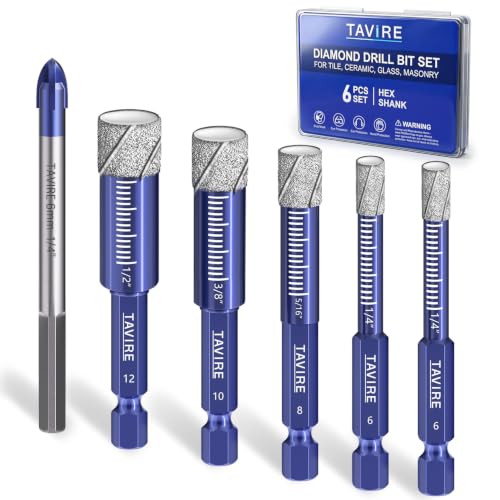
| Diamond-grit tile bit or hole saw | Porcelain, hard tile, or larger openings | Standard drill, usually with water cooling as directed | Costs more; can wear quickly if run dry or pushed hard |
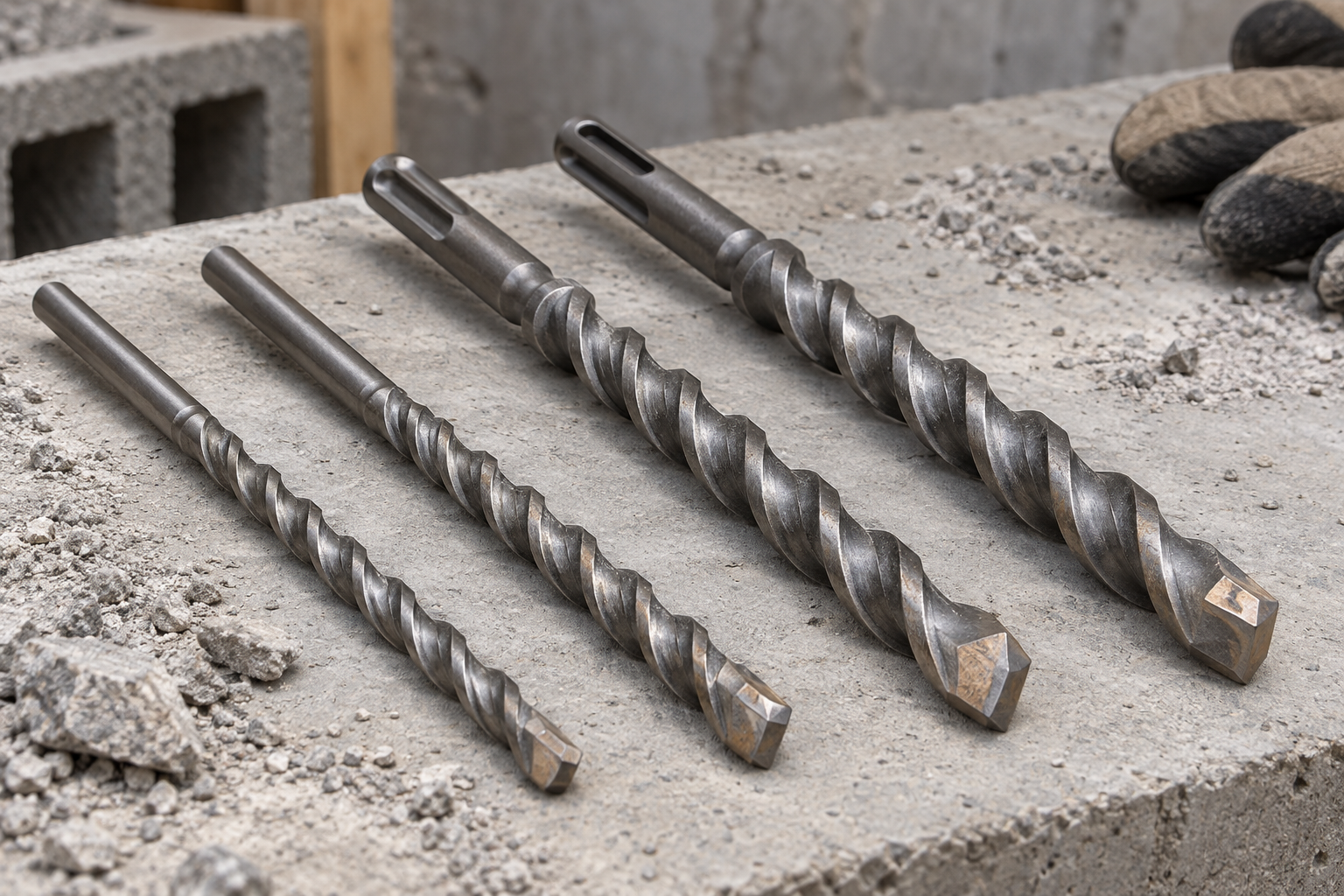
| SDS-plus masonry bit | Repeated or larger holes in concrete and hard masonry | SDS-plus rotary hammer | Fast in concrete, but requires a compatible chuck and tool |
A carbide-tipped bit is the sensible budget choice for a few small holes in brick or block. For a basic set, compare carbide-tipped masonry bit sets. Set quality varies: look for clearly marked diameters and tips that are centered, not visibly uneven. A cheap set is fine for occasional work, but expect faster wear in hard concrete.
For tile, keep hammer mode off
Use a tile-rated bit, a steady hand, and low-to-moderate speed. Start slowly so the tip does not skate across the glazed surface. A strip of masking tape can help with positioning, though it will not prevent cracking caused by excessive pressure or a hole too close to an edge. Keep the bit cool according to its instructions; some diamond bits require water, while others are rated for dry drilling.
Do not use a standard masonry bit on finished tile just because the wall behind it is masonry. Its blunt carbide tip can catch and chip the glaze. For common small fixture holes in ceramic, a spear-point tile bit is often economical; for porcelain or frequent drilling, a diamond bit is a better bet. Browse diamond tile drill bits and check whether each is intended for wet or dry use.
Once the bit passes through the tile, stop and clear dust before continuing. If the substrate is brick or concrete, install the appropriate masonry bit and use hammer action only when the substrate and drill call for it. This avoids using a tile bit as a masonry bit, which can ruin its cutting edge quickly.
For brick and concrete, match the bit to the drill
In soft brick, a sharp carbide masonry bit in a regular drill can be enough for small anchor holes. Hammer mode speeds the job but may break fragile brick faces or enlarge the hole. If the hole is for a masonry anchor, follow the anchor maker’s specified diameter; even a modestly oversized hole can leave the anchor loose.
Concrete is harder and more abrasive. A hammer drill with a suitable carbide bit works for occasional small holes, but drilling a run of holes—or making holes around 10 mm (3/8 inch) and larger—can be slow. An SDS-plus rotary hammer delivers the impact through a purpose-built mechanism and uses SDS bits that lock into its chuck. If you need repeated concrete holes, compare SDS-plus masonry bits with the hammer drill you own; the shank must match.
Let the bit cut rather than forcing it. Pull it out periodically to clear dust, especially in deeper holes. If progress stalls, the bit may be dull, packed with dust, or hitting aggregate or reinforcing steel. Stop if you suspect rebar: forcing a masonry bit can overheat it, and cutting reinforcement may compromise the structure.
Choose the size, then drill carefully
Buy the diameter specified for the fastener or anchor, not a “close enough” size. Check the bit’s usable drilling length as well as its overall length; a long bit may flex, wander, or bind in a deep hole. For a hole deeper than the working length, clear dust often and keep the drill aligned.
Before drilling, check for hidden wiring and plumbing, and avoid drilling near unsupported tile edges. Wear safety glasses and hearing protection; masonry dust is harmful, so use dust collection or suitable respiratory protection. Keep the workpiece or fixture steady, hold the drill with both hands when needed, and do not wear loose clothing near rotating tools.
A practical rule: use a tile bit for the tile, a carbide masonry bit for occasional holes in brick or block, and an SDS-plus bit with a rotary hammer for sustained work in concrete. Spend more when the material is harder, the hole is larger, or you have many holes to drill. For one small hole in soft brick, a basic masonry bit is usually enough.