What's inside
As an Amazon Associate I earn from qualifying purchases. This post may contain affiliate links at no extra cost to you.
Drilling a large hole in brick is less about brute force than controlling heat, vibration, and breakout. A rushed hole can crack the face of the brick, loosen mortar joints, or blow out a chunk around the exit. The safest method depends on the diameter, wall type, and whether the hole is for a pipe, vent, anchor, or cable.
Check the wall before drilling
Confirm that the hole is actually going through brick, not a concrete lintel, reinforced masonry, stone veneer, or a cavity containing wiring and plumbing. A stud finder is unreliable on masonry, so inspect both sides where possible and use a suitable detector before starting. Never drill close to the corners of a brick or directly across a heavily cracked area.
Keep the edge of the hole at least 1 1/2 to 2 inches from a visible brick edge when practical. Brick is strongest through its broad face and weakest near corners, thin sections, and damaged mortar. If the hole must be near an edge, a smaller diameter or a different location is usually safer than trying to compensate with a more powerful drill.
Mark the center with a pencil or masonry marker. For a large opening, make a template from plywood or cardboard. It helps you check clearances and gives the bit a firm starting guide.
Choose the right bit and drill
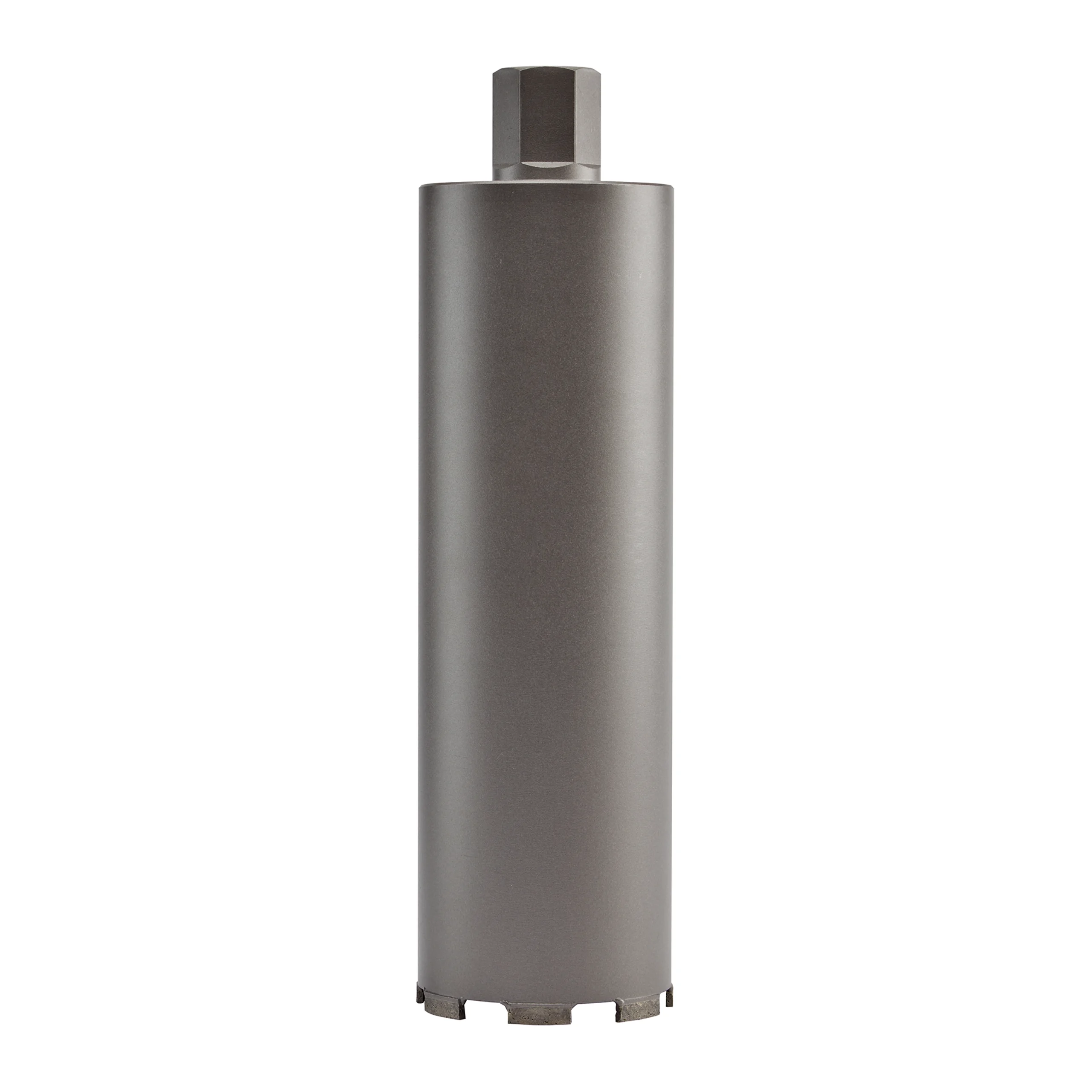
For holes up to about 1/2 inch, a carbide-tipped masonry bit in a hammer drill is usually the economical choice. For larger holes, use a diamond or carbide masonry core bit. A core bit removes a circular plug instead of grinding away the entire hole, so it cuts faster and produces less dust and heat.
| Hole size and material | Best tool | Advantages | Main drawback |
|---|---|---|---|
| Up to 1/2 inch in ordinary brick | Hammer drill with carbide masonry bit | Low cost, easy to find, suitable for anchors and small fasteners | Slow and prone to wandering as diameter increases |
| 1/2 to 2 inches | Carbide masonry core bit | Good value, removes a central plug, handles typical brick well | Needs controlled pressure and frequent cooling |
| 2 inches and larger, or repeated holes | Diamond core bit with a variable-speed drill | Cleanest cut, low vibration, effective on hard brick and block | Higher bit cost and requires careful water or dust management |
| Very hard masonry or deep drilling | SDS rotary hammer with a compatible core bit | High cutting power and better alignment than a standard drill | Too aggressive for fragile or old brick if used carelessly |
A regular hammer drill is adequate for occasional holes in soft clay brick. It is not automatically better to use an SDS rotary hammer. The stronger impact can chip the face or transmit cracks into brittle masonry. If buying for several large holes, compare diamond masonry core drill bits with carbide sets based on the brick, not just the advertised diameter.
Use a core bit designed for masonry, not a wood hole saw or a thin metal-cutting hole saw. For a clean opening, a diamond core bit is usually worth the extra cost. For one hole in common brick, a carbide bit may be the cheaper option that does the job adequately.
Set up to prevent cracking
Remove loose paint, render, or pointing around the mark. If the surface is dusty, brush it clean. Clamp a plywood guide over the area with two cutouts: one for the core bit and one for the pilot bit if your setup uses one. The guide prevents the bit from skating across the brick during the first few seconds.
Start with the drill in low speed and with hammer action off. Let the guide and the bit’s cutting edge establish a shallow ring, roughly 1/8 inch deep. This ring is important: it stops the outer edge from chipping when you apply more pressure. Once the groove is established, engage hammer action only if the bit manufacturer permits it.
Keep the drill square to the wall. A bit held at an angle cuts an oval hole and loads one side of the brick, which increases the chance of a radial crack. A simple level attached to the drill body or a second person checking alignment can help.
Drill the hole slowly and evenly
Use moderate pressure and let the cutting edges work. Excessive force does not make a core bit cut proportionally faster; it can seize the bit, break carbide teeth, or crush the brick face. For a 1- to 2-inch hole, drill for 10 to 20 seconds, then withdraw the bit to clear dust and cool the cutting edge.
Dry drilling is acceptable for some carbide bits and short holes, but stop if the bit becomes too hot to touch, the cutting slows sharply, or smoke appears. Diamond bits last longer when cooled with water, but water near a powered drill creates an electrical hazard and can stain masonry. Use only a system designed for wet drilling, with appropriate ground-fault protection, and keep water away from the motor and plugs.
For dust control, use a shroud connected to a suitable vacuum or have an assistant hold a vacuum nozzle directly below the bit. Do not rely on a paper mask alone. Fine masonry dust is hazardous to breathe, and dry drilling can fill a room quickly. Wear eye protection, hearing protection, and a properly fitted respirator rated for fine particulates.
Control the exit side
Most blowout happens when the bit breaks through the far face. Reduce pressure as soon as the pilot or core approaches the back of the wall. If you can access the opposite side, mark the center and finish the hole from there. Drilling halfway from each side produces a cleaner opening than forcing one bit through the final inch.
When only one side is accessible, stop just before breakthrough and remove the remaining thin shell carefully. A small masonry chisel used with light taps is safer than leaning harder on the drill. Do not hammer aggressively against the unsupported outer ring.
Finish and inspect the opening
Vacuum the hole and remove loose fragments. Test-fit the pipe, sleeve, or anchor without forcing it. A sleeve should not be used to hide a cracked or unstable edge; repair minor chips with suitable masonry repair material, but relocate the hole if a crack runs outward from it.
For repeated work, the best value is usually a variable-speed drill, a quality masonry core bit, a guide plate, and dust extraction. A masonry drill dust shroud costs less than repairing a damaged wall. If the brick is old, unusually hard, load-bearing, or already cracked, hiring a contractor with a wet diamond coring rig is often cheaper than replacing masonry after a failed attempt.