What's inside
As an Amazon Associate I earn from qualifying purchases. This post may contain affiliate links at no extra cost to you.
When you drive a wood chisel, the hammer face affects more than comfort. It controls how much force reaches the chisel, how quickly the handle and socket wear, and what happens when you miss. The right material depends on whether you are paring delicate joinery, chopping mortises, or using a chisel as a general-purpose demolition tool.
The short answer
For most woodworking, start with a wooden carving mallet. Its face is hard enough to deliver useful blows but forgiving enough to protect a chisel’s metal end and handle. A rawhide or leather-faced mallet is gentler and quieter, while a nylon or urethane-faced hammer gives more driving force with less rebound. A steel-faced hammer works for chisels designed to be struck, but it is a poor default for fine bench chisels.
The cheaper option is often fine: a basic beech or maple mallet costing roughly $20 to $40 can handle years of normal furniture and carpentry work. Spend more for a specialty face only when you have a specific problem, such as damaged chisel handles, excessive noise, or the need to remove stubborn waste quickly.
Hammer face materials compared
| Face material | Best use | Advantages | Drawbacks |
|---|---|---|---|
| Wood | General woodworking and bench chisels | Good feedback, low rebound, protects handles | Face dents and eventually needs replacement |
| Rawhide or leather | Fine joinery and controlled tapping | Quiet, forgiving, gentle on tools | Less driving force; wears faster |
| Nylon or urethane | Hard chopping and mixed shop work | Durable, strong impact, replaceable faces on some hammers | Can rebound; may mark soft wood |
| Rubber | Positioning and light adjustment | Very low marking and noise | Too soft for serious chopping; can bounce |
| Steel | Heavy-duty chisels and demolition | Maximum energy and durability | Peens chisel ends, damages handles, easy to overdo |
Wood faces: the best default
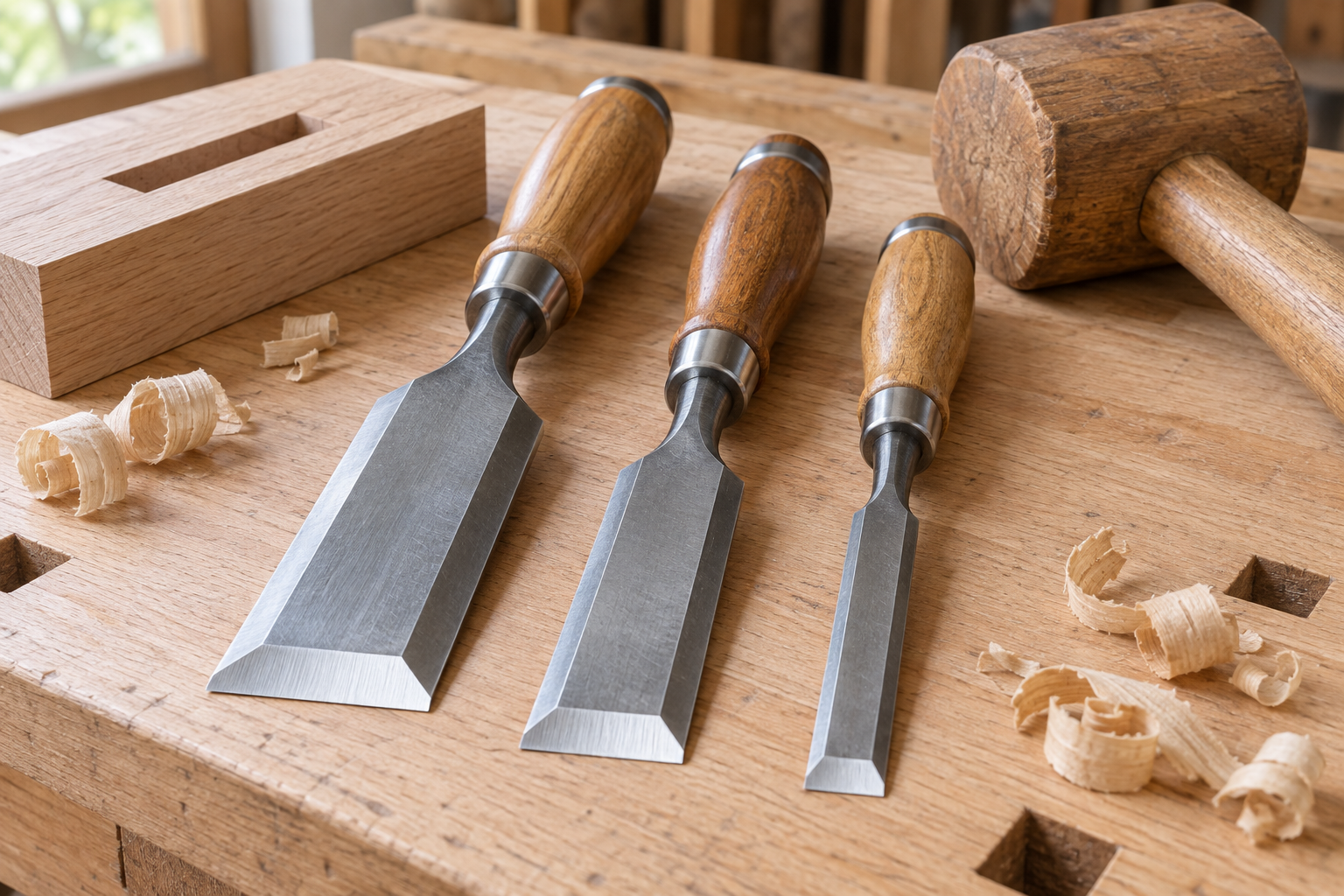
A wooden mallet is the traditional choice because it spreads impact without being so soft that the blow disappears. Beech, maple, and hornbeam are common choices. The face should be slightly crowned or gently rounded rather than hollowed or sharply beveled. A broad face also makes it easier to hit the chisel squarely.
Wood gives useful feedback. You can feel whether the chisel is cutting cleanly or bouncing off a knot. It also produces less rebound than many synthetic faces, so more of the swing goes into the chisel instead of back into your wrist. This matters during repeated mortise chopping, where hundreds of blows can expose poor balance or excessive vibration.
The failure mode is gradual face damage. Repeatedly hitting a hard steel chisel can mushroom the wood, split the mallet head, or create a deep hollow. Rotate or replace the mallet when the face becomes badly cupped. Do not keep using a head with cracks around the eye.
Rawhide and leather faces
Rawhide-faced mallets are useful when control and low marking matter more than maximum cutting speed. They are softer than wood and quieter in a small shop. A rawhide face can be a good match for paring chisels, delicate dovetail cleanup, or adjusting a joint one or two millimeters at a time.
They are not ideal for chopping a deep mortise in hard maple. The face compresses and absorbs some energy, so you will need more swings. Wet or poorly cured rawhide can also stretch, loosen, or deform. Leather faces have similar behavior and may leave oily or dark marks on very light wood, depending on how they were treated.
Choose a rawhide woodworking mallet when quiet operation and gentle contact justify its higher price. For ordinary bench work, a wooden mallet is usually the better value.
Nylon, urethane, and plastic faces
Synthetic faces occupy the middle ground between wood and steel. Nylon is relatively hard and transfers a strong blow. Urethane is usually more forgiving and less likely to leave a sharp dent. Many synthetic hammers have replaceable faces, which is useful if you work daily or use the same hammer for assembly and chiseling.
The main trade-off is rebound. A hard plastic face can bounce off a rounded or damaged chisel end, particularly if you strike at an angle. That wastes energy and can make the chisel skid into your hand or the workpiece. Keep the face clean, use a chisel with a flat striking surface, and replace a face once it becomes badly mushroomed.
Some plastic faces can mark soft pine, cedar, or freshly finished surfaces. Test the hammer on scrap first. A white or nonmarking face is preferable for light-colored work, but even a nonmarking face can compress fibers if the blow is heavy.
When a steel face makes sense
A steel-faced hammer is appropriate for heavy-duty chisels with reinforced handles, metal striking caps, or dedicated demolition designs. It delivers the most energy for a given hammer weight and is useful when cutting brick, removing dried adhesive, or chopping through construction timber where cosmetic damage is irrelevant.
For normal woodworking chisels, steel creates predictable damage. The striking end can mushroom, split, or develop sharp lips. A wooden handle can also loosen or crack after repeated heavy blows. Once the chisel end mushrooms, stop using it until you grind the metal back to a flat, safe profile. Wear eye protection: chips from a damaged striking cap can travel farther than expected.
If you need this level of force, buy a heavy-duty chisel set with metal striking caps rather than abusing your best bench chisels.
Match the face to the job
For paring, start with rawhide, leather, or a small wooden mallet weighing about 8 to 16 ounces. For general chopping, a 16- to 24-ounce wooden mallet is a practical range. Heavier than that can speed waste removal but increases fatigue and makes a miss more destructive.
For frequent mortising in hard timber, consider a 16- to 24-ounce nylon or urethane hammer with a replaceable face. For delicate joinery, choose wood or rawhide. Use rubber only for light positioning; its softness and rebound make it inefficient for driving a chisel more than a few millimeters.
What to inspect before buying
Check that the face is flat, securely attached, and slightly rounded at the edge. Avoid visible cracks, deep molding seams, loose caps, or a handle that twists in the head. The hammer should balance near the head without feeling nose-heavy. If you already own several chisels, match the face diameter to their striking ends: a face around 1 1/4 to 1 1/2 inches is versatile, while a tiny face demands greater accuracy.
A replaceable-face nylon or urethane replaceable-face hammer costs more initially but can be economical in a professional shop. For occasional DIY woodworking, buy the sound wooden mallet, keep the blows controlled, and put the savings toward better-sharpened chisels.