What's inside
As an Amazon Associate I earn from qualifying purchases. This post may contain affiliate links at no extra cost to you.
Choosing between a hand sledge and a drilling hammer for driving a masonry chisel comes down to force, control, and how long you can work accurately. Both tools can break brick, block, mortar, and small areas of concrete, but they are not interchangeable in use. A drilling hammer is compact and precise. A hand sledge delivers substantially more energy but is easier to overuse, harder to aim, and more tiring.
For most repair work—removing mortar joints, trimming a brick, opening a small channel, or chipping tile adhesive—a 2- to 4-pound drilling hammer is the better choice. A hand sledge becomes worthwhile when the material is thick, the chisel is large, or you need to remove a meaningful amount of concrete or masonry rather than make controlled cuts.
As an Amazon Associate we earn from qualifying purchases at no extra cost to you.


What Each Hammer Is Designed to Do
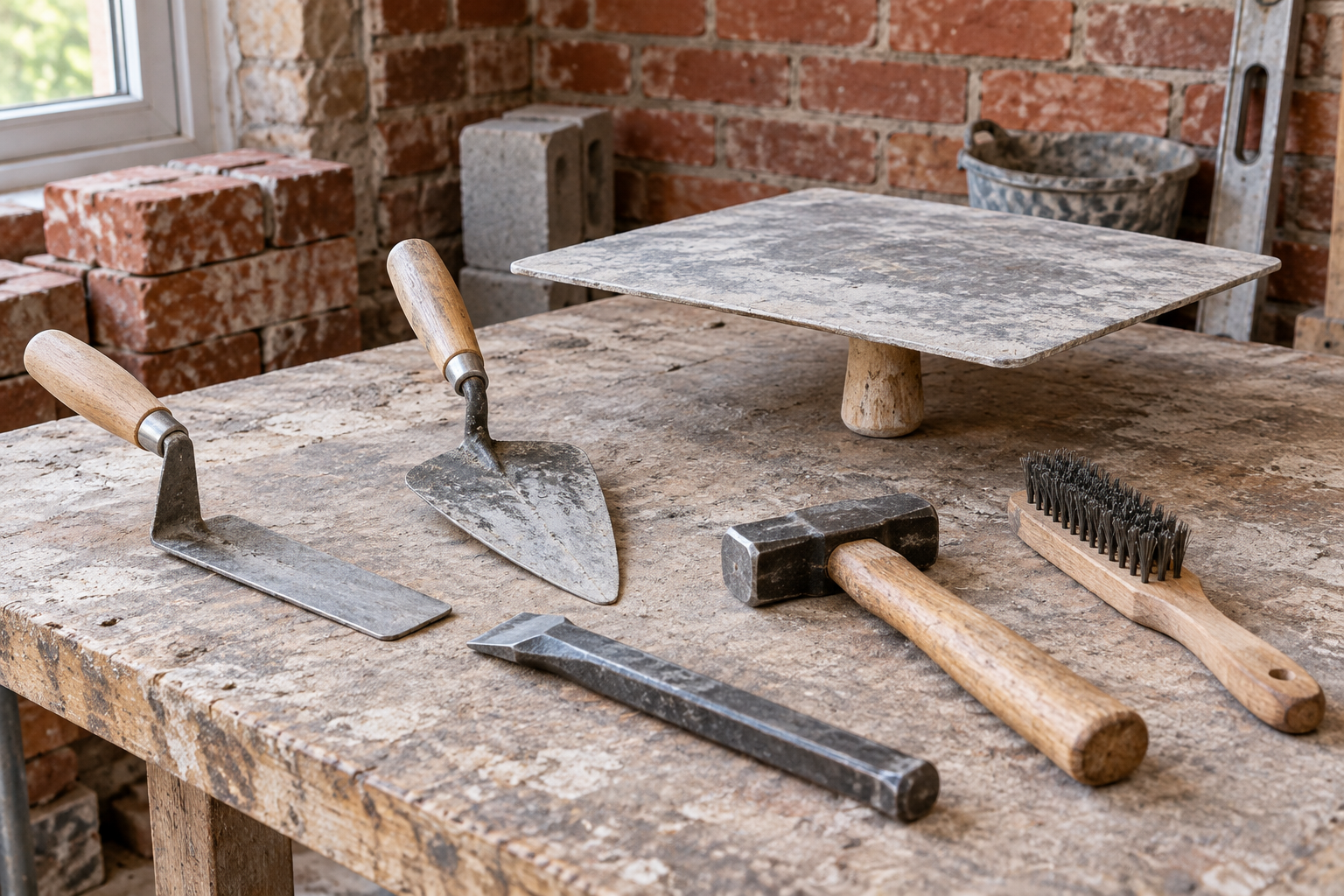
A drilling hammer, sometimes called a club hammer, usually weighs between 2 and 5 pounds. It has a short handle, commonly around 10 to 14 inches, and a relatively compact head. The short handle lets you keep your swing close to the work. You can strike a masonry chisel accurately without generating the full-body swing needed for a larger sledge.
A hand sledge generally weighs 6 to 12 pounds, with an 18- to 36-inch handle. It is built to drive stakes, break concrete, split block, and deliver heavy blows. The longer handle and heavier head produce more momentum. That extra energy is useful, but it also magnifies missed strikes, overcuts, and damage to the workpiece.
| Factor | Drilling hammer | Hand sledge |
|---|---|---|
| Typical weight | 2–5 lb | 6–12 lb |
| Handle length | 10–14 in. | 18–36 in. |
| Best use | Controlled chipping and light demolition | Heavy breaking and deep penetration |
| Control | High | Moderate to low |
| Fatigue | Lower for precision work | Higher, especially overhead or in tight spaces |
| Typical chisel size | Up to about 1 inch wide | 1 inch and wider |
When a Drilling Hammer Is the Right Buy
Choose a 3-pound drilling hammer when the job requires repeated, accurate strikes. It is the practical choice for cutting out individual bricks, removing a few inches of mortar, chasing a narrow groove for conduit, and breaking off thin concrete edges. You can work one-handed in some positions while holding the chisel with the other hand, although a chisel with a hand guard is safer.
The lighter hammer also helps preserve the chisel edge. Masonry chisels are made to take impact, but a glancing blow can mushroom the striking end, bend a narrow chisel, or send the edge sideways into good brick. With a drilling hammer, you can increase force gradually. Start with light taps to establish a line, then use firmer blows once the chisel is seated.
A 2-pound hammer is easier to control for brick and mortar. A 3- or 4-pound version is a better general-purpose size for concrete pavers, block, and small slabs. Beyond that, the gain in breaking force is often less useful than the loss of control for homeowner repair work.
When a Hand Sledge Makes Sense
A hand sledge earns its place when the material is strong, thick, or extensive. Use one for breaking a concrete step, driving a wide cold chisel into a slab, splitting large blocks, or removing a stubborn section that has already been weakened with several cuts. A 6-pound sledge is a reasonable starting point; an 8- or 10-pound tool is for heavier work where you have room to swing.
Do not assume the biggest sledge is fastest. A heavy head can crush the chisel into the work instead of producing a clean fracture. It can also damage the surrounding masonry several inches from the intended cut. In brickwork, that may turn a repair into a replacement job. In concrete, it can expose reinforcement or create a crack that runs beyond the area you meant to remove.
A hand sledge also needs a clear swing path. Avoid it in cramped wall cavities, near glass, around finished surfaces, or where the handle could strike plumbing and wiring. If you cannot stand squarely and control the return of the hammer, the tool is too large for that position.
Match the Hammer to the Chisel
The chisel matters as much as the hammer. A narrow masonry chisel concentrates force and cuts a groove effectively, but it is more likely to dig too deeply or chip the edge of a brick. A broad chisel removes material faster across a surface but needs a heavier blow to stay effective.
For a drilling hammer, pair the tool with a cold chisel or masonry chisel roughly 3/8 to 1 inch wide. For a hand sledge, use a larger, purpose-built masonry chisel with a thick shaft and a striking head designed for hammer blows. Do not use a wood chisel, screwdriver, punch, or damaged steel bar as a substitute.
Inspect the chisel before every session. Stop using it if the striking end is mushroomed, cracked, badly burred, or visibly bent. A mushroomed head can shed sharp metal fragments when struck. Dress it with a grinder or file if the damage is minor and the manufacturer permits it; replace it if cracks or deep deformation are present. A masonry chisel set with hand guards is a sensible upgrade for repeated work.
Technique and Safety
Mark the cut line clearly, then score it with light blows before trying to remove material. Hold the chisel at about 30 to 45 degrees when shaving or trimming, rather than driving it straight into the surface. For a deep break, make several shallow passes instead of forcing one massive strike.
Wear safety glasses with side protection, hearing protection, gloves, long sleeves, and sturdy footwear. Masonry chips can travel well beyond the immediate work area. Keep bystanders away, especially when using a hand sledge. If the chisel is held by hand, use a masonry chisel hand guard to protect your fingers from glancing blows.
Watch for hidden electrical cable, plumbing, reinforcing steel, and post-tensioned concrete. A hammer and chisel are not a safe way to investigate an unknown wall or slab. For large concrete removal, a rotary hammer or demolition hammer is usually faster and more controllable than swinging either hand tool for hours.
Which One Should You Buy?
Buy the drilling hammer if you are making occasional masonry repairs, working on brick or block, or need accuracy more than brute force. It costs less, stores easily, and covers the majority of small DIY chisel jobs. A 3-pound model is the best all-around compromise.
Buy a hand sledge only when you regularly break thick concrete or large masonry sections and have enough room for a controlled swing. If you rarely face that work, the cheaper drilling hammer is fine; rent a larger demolition tool when the job exceeds its practical limits. For many projects, owning a quality drilling hammer and renting a powered breaker is more useful than keeping a heavy sledge that is difficult to control.