What's inside
As an Amazon Associate I earn from qualifying purchases. This post may contain affiliate links at no extra cost to you.
Cabinet assembly punishes the wrong hammer. A steel claw hammer can bruise a face frame, compress a plywood edge, or leave a crescent-shaped mark in a finished panel after one careless tap. For most cabinetry work, the best choice is a small soft-face hammer with replaceable nylon or plastic faces, a comfortable handle, and enough weight to seat joints without requiring a hard swing.
That does not mean the softest hammer is always best. Very soft rubber can bounce, smear against painted surfaces, or fail to deliver enough force. A heavy dead-blow mallet can assemble stubborn joints, but it is awkward for aligning small parts. The right tool depends on whether you are tapping dowel joints, adjusting doors, seating confirmat screws, or knocking a cabinet into square.
As an Amazon Associate we earn from qualifying purchases at no extra cost to you.


Our Top Picks
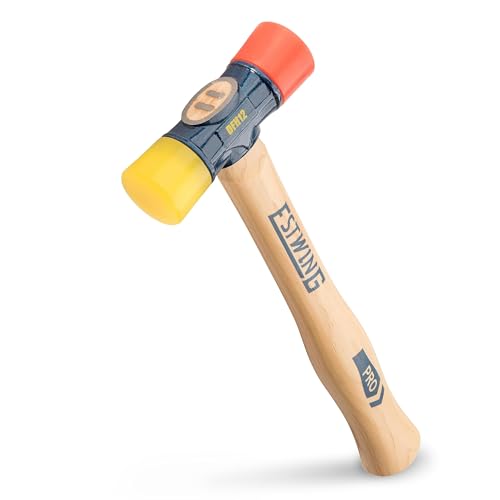
 YIYITOOLS 12oz Soft‑Face Hammer12oz Soft‑Face Hammer12.8 x 4.21 x 1.26 inches1.1 poundsCheck on Amazon


Best overall choice: a 12- to 16-ounce soft-face hammer
For general cabinet assembly, look for a dual-face hammer with nylon, plastic, or urethane faces. A head weighing about 12 to 16 ounces is a practical middle ground. It has enough mass to move a cabinet side or seat a tight joint, but it is still controllable when working near a finished edge.
Nylon faces are usually the best all-around option. They are firm enough to transfer force efficiently and tend to leave fewer marks than hard metal. Plastic faces are often slightly softer and cheaper, though low-quality plastic can chip or mushroom. Urethane faces offer good grip and shock absorption, but they can pick up finish or dirt and may leave a faint rub mark on some coatings.
A 12-ounce nylon soft-face hammer is a sensible starting point for frameless cabinets, drawer boxes, and knock-down furniture. Choose a replaceable-face design if you expect regular use. Once a face becomes dented or contaminated with glue, replacing the insert is cheaper than replacing the whole tool.
What to look for before buying
- Face hardness: Medium-firm nylon or plastic is more useful than an extremely soft rubber face. It transfers force without acting like a spring.
- Face diameter: A face around 1 to 1-1/4 inches gives reasonable accuracy while reducing the chance of catching a sharp edge.
- Weight: Twelve ounces suits most cabinet parts. Six to eight ounces is better for delicate trim; 20 ounces or more is useful for heavy carcass assembly but easier to misuse.
- Handle control: A slim fiberglass or steel-reinforced handle with a non-slip grip is preferable to a thick, padded handle that limits precision.
- Replaceable faces: These matter if you work with stained or painted parts. A damaged face can transfer black marks or raised ridges.
- Cleanliness: Soft faces collect sawdust, dried glue, and finish. Keep the face clean and inspect it before striking a visible surface.
Soft-face hammer types compared
| Type | Best use | Advantages | Drawbacks |
|---|---|---|---|
| Nylon or plastic soft-face | General cabinet assembly | Controlled, durable, good force transfer | Can still mark delicate finishes when dirty |
| Rubber mallet | Light alignment and trim work | Inexpensive, quiet, forgiving | Bounces, can smear or leave residue |
| Dead-blow mallet | Tight joints and heavy carcasses | Minimal rebound, efficient impact | Bulkier and less precise |
| Rawhide mallet | Fine woodworking and delicate parts | Gentle impact with useful grip | More expensive; wears and deforms |
| Wooden mallet | Chisels and traditional joinery | Excellent for striking tools | Less suitable around finished cabinetry |
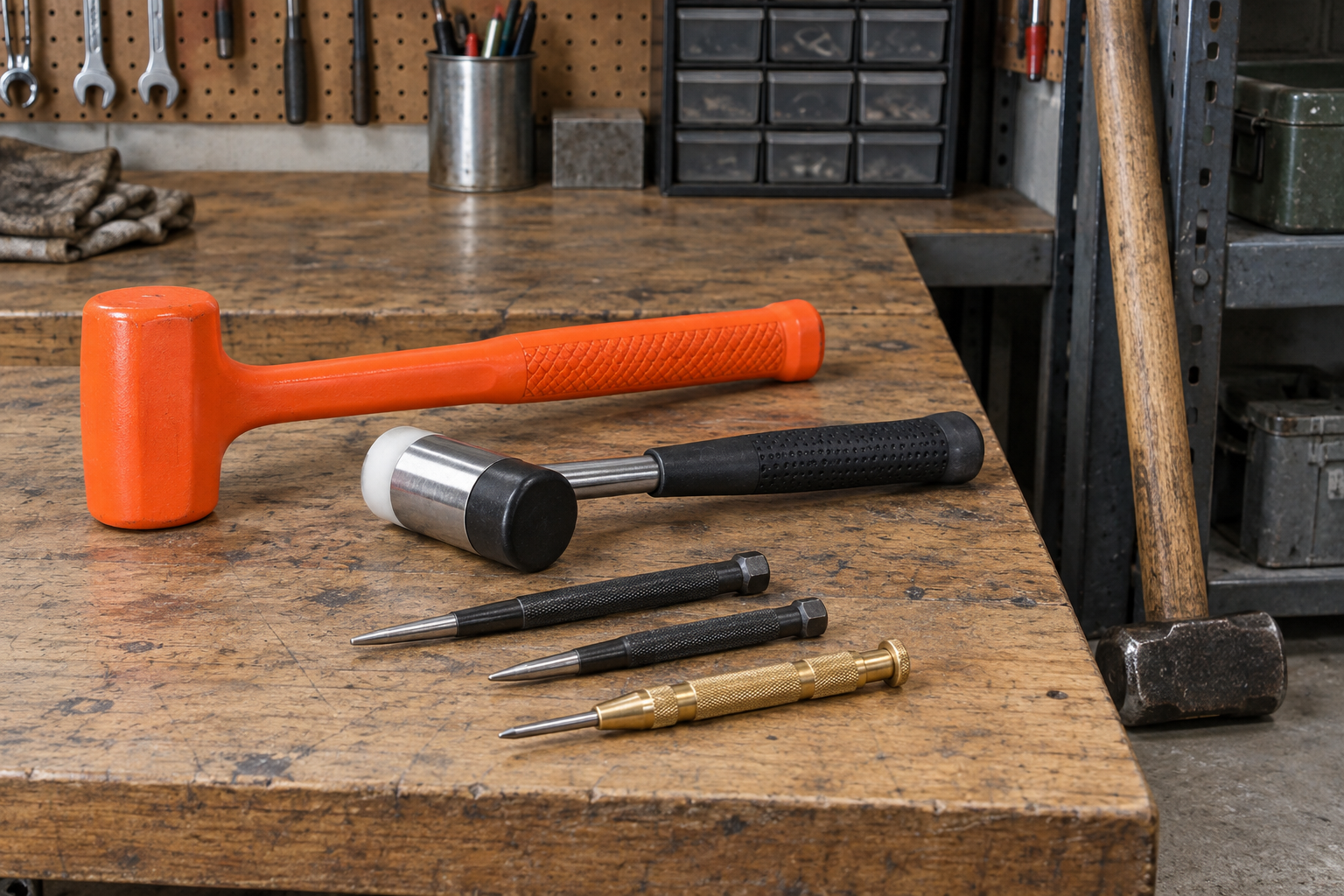
A rubber mallet is the cheaper option, and it is fine for occasional flat-pack assembly or nudging a cabinet into position. It is not automatically safer. Cheap black rubber can leave dark marks on white laminate, and the flexible face often requires repeated blows. A white rubber mallet reduces the marking risk, but you should still test it on an offcut or hidden area.
For heavier work, a small dead-blow mallet is useful when assembling thick hardwood face frames or large plywood boxes. The shot-filled head reduces rebound, so more of the impact moves the workpiece instead of sending the hammer back toward your fingers. The trade-off is reduced finesse: a 24-ounce dead-blow tool can shift a cabinet several millimeters with a single strike.
How to avoid dents even with a soft hammer
Soft-face does not mean mark-proof. Put a clean scrap of the same material between the hammer and the cabinet whenever the surface is visible. A thin piece of plywood, MDF, or cardboard can spread the impact and catch dirt from the hammer face. For a painted door or veneered panel, use a clean folded cotton cloth over the sacrificial block, not directly under a hard strike.
Strike near a joint, rail, or solid edge rather than in the middle of a wide panel. A 1/2-inch plywood panel can flex under impact, and the resulting movement may crack veneer or open a glue line. Keep the hammer face square to the work. Glancing blows create dents at the edge of the face and can chip laminate.
Use short wrist taps first. If the joint does not move after two or three controlled strikes, stop and find the cause. Common problems include a misplaced dowel, a screw that is not aligned, glue buildup in a hole, or a cabinet that is out of square. More force does not fix an obstruction; it usually causes a crushed edge or split stile.
Assembly techniques that reduce hammering
Dry-fit the cabinet before applying glue. Confirm that shelves, stretchers, dowels, and dados line up, then mark the parts. Clamp wide panels instead of trying to drive them together with repeated blows. For dowels, check that the holes are deep enough and clear of glue. Hydraulic pressure from trapped glue can prevent a joint from closing even when the parts appear correctly aligned.
When installing a hardboard back, use a small face and light taps around the perimeter. A small replaceable-face hammer gives better control than a large mallet. For cam-lock furniture, seat the panels by hand first and use the hammer only to close the final gap; forcing an incorrectly oriented cam can break the particleboard.
What should you buy?
Buy a 12- to 16-ounce nylon or plastic soft-face hammer for the broadest usefulness. Spend more for replaceable faces and a balanced handle if you assemble cabinets regularly. Choose a white rubber mallet if cost is the priority and your work is occasional. Move to a dead-blow mallet only when cabinet size or tight hardwood joints demand extra impact control.
Whatever you choose, keep a scrap block beside the assembly bench and inspect the face before every visible strike. That simple habit prevents more dents than buying the most expensive mallet.