What's inside
As an Amazon Associate I earn from qualifying purchases. This post may contain affiliate links at no extra cost to you.
Fine-tuning a wood joint is usually a matter of removing a few thousandths of an inch without damaging the reference surfaces. A chisel and a shoulder plane can both do that, but they behave very differently. The chisel is inexpensive, versatile, and easy to control in tight spots. The shoulder plane is faster and more predictable when you need to true a long shoulder or clean a rabbet.
The right choice depends less on which tool is “better” and more on the joint, the amount of material left, and how much control you need over the cut.
As an Amazon Associate we earn from qualifying purchases at no extra cost to you.


Our Top Picks


What Each Tool Is Designed to Do
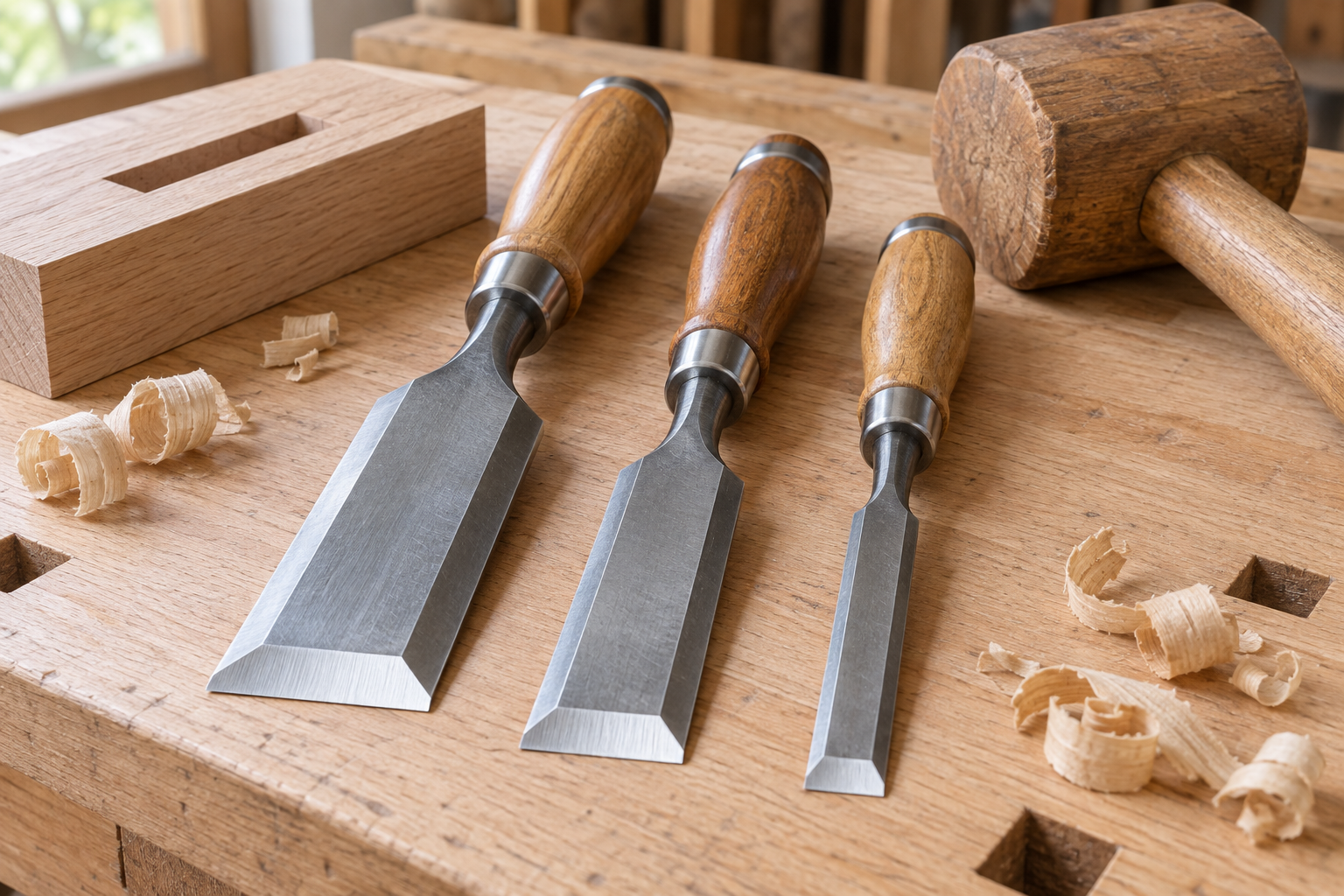
A chisel cuts with a narrow edge and gives you direct control over exactly where wood comes off. You can pare across a shoulder, trim a tenon cheek, clean the corner of a rabbet, or remove a localized high spot. A sharp bench chisel in the 6–12 mm range handles most fine-fitting work.
A shoulder plane uses a blade that reaches across the full width of the tool, including close to both side edges. Its sole rides on the workpiece while the blade trims a shoulder or rabbet. That registration makes it easier to produce a flat, square surface over several inches, provided the plane is properly set up.
For a loose mortise-and-tenon joint, a chisel is often the better first tool because you may need to adjust one small area. For a tenon shoulder that is visibly uneven, a shoulder plane removes the high spots continuously and leaves a more consistent surface.
Chisel vs. Shoulder Plane
| Factor | Chisel | Shoulder plane |
|---|---|---|
| Typical cost | Low; one good bench chisel does many jobs | Moderate to high, especially for a well-finished tool |
| Best use | Spot corrections, corners, end grain, and tight access | Long, flat shoulders and rabbets |
| Material removal | Very controlled but relatively slow | Fast on broad, shallow corrections |
| Risk of damage | Can gouge or undercut if rocked | Can tip, tear out, or alter an edge if poorly registered |
| Learning curve | Low for basic paring; high for consistently flat cuts | Moderate; setup and technique matter |
| Versatility | Excellent for general woodworking | Specialized for rebates, shoulders, and narrow trimming |
When a Chisel Is the Better Choice
Choose a chisel when the error is local rather than continuous. If a tenon shoulder has a small bump, pare only that bump instead of flattening the whole shoulder. This avoids making the tenon shorter or changing the joint’s intended fit.
A chisel is also the practical choice for inside corners. A shoulder plane may clean the long section of a rabbet, but it cannot always reach the final corner cleanly if the plane’s nose or side interferes. A sharp chisel can pare the last 1–2 mm and remove a thin shaving from a single high spot.
Use a slicing motion rather than forcing the blade straight down. Hold the bevel flat against the surface when paring, and take shavings roughly 0.05–0.2 mm thick. Keep both hands behind the edge and secure the work firmly. A slipping board turns a minor fitting operation into a damaged edge or hand injury.
For most general work, a sharp bench chisel set is the cheaper and more useful purchase. Even if you later buy a shoulder plane, you will still use the chisels for corners, stopped joints, hinge recesses, and cleanup.
When a Shoulder Plane Earns Its Place
A shoulder plane is most useful when the shoulder is wide enough to support the sole and the correction runs for much of its length. On a 75 mm tenon shoulder, for example, a plane can remove a continuous shaving and reveal whether the surface is genuinely flat. A chisel tends to create a series of overlapping cuts, which can leave shallow hollows if you are not careful.
It is especially effective for adjusting rabbets on cabinet parts and tuning the shoulders of housed joints. Set the blade for a fine cut, often less than 0.1 mm, and take repeated passes. Check the surface after every few strokes. If the plane takes a heavy shaving, stop and reduce the projection; excessive force can crush fibers or make the tool dive at the end of the cut.
Buy a shoulder plane for woodworking when you make frequent mortise-and-tenon joints, rabbets, or other edge-referenced fittings. It is a specialist tool, so it is difficult to justify for occasional projects when a chisel and a flat sanding block can do the same job more slowly.
Common Failure Modes
The most common chisel mistake is rocking the tool while paring. The edge enters at one point, then the handle drops or rises, producing a hollow instead of a flat surface. Make short cuts, use the existing surface as a guide, and inspect with a straightedge or square.
Another mistake is using a chisel to lever out large chips. That can bruise the shoulder and leave a wedge-shaped defect. If more than about 0.5 mm needs to come off across a broad area, remove the bulk before fine paring with a plane, router, or controlled saw cut.
With a shoulder plane, poor blade alignment is the main problem. If one side projects farther than the other, the plane will cut a step or wedge. The sole must also be flat and the blade firmly seated. Keep the plane square to the shoulder; tilting it changes the angle and can undercut the joint.
Both tools can tear out at the end of a cut, particularly in open-grained woods such as oak. Support the exit with a backing block, plane from both ends toward the middle, or take a lighter final cut.
The Practical Buying Decision
If you are building a basic hand-tool kit, buy the chisel first. Spend the money on a blade that holds an edge and learn to sharpen it. A flat back and a keen edge matter more than an expensive handle. A chisel sharpening setup will improve results more than adding another size to the drawer.
If your work regularly includes multiple tenons, wide rabbets, or frame-and-panel joinery, a shoulder plane saves time and improves repeatability. Look for a plane with a blade that can be adjusted laterally and a sole that extends close to the cutting edge. A used tool can be a good value, but budget time to flatten the sole, clean the mouth, and sharpen the iron.
In practice, the two tools complement each other: use the shoulder plane for the long, flat correction, then use the chisel for the corner and the last stubborn high spot. That combination gives you speed without sacrificing the precise control needed for a tight wood joint.