What's inside
As an Amazon Associate I earn from qualifying purchases. This post may contain affiliate links at no extra cost to you.
Our Top Picks


Quick verdict
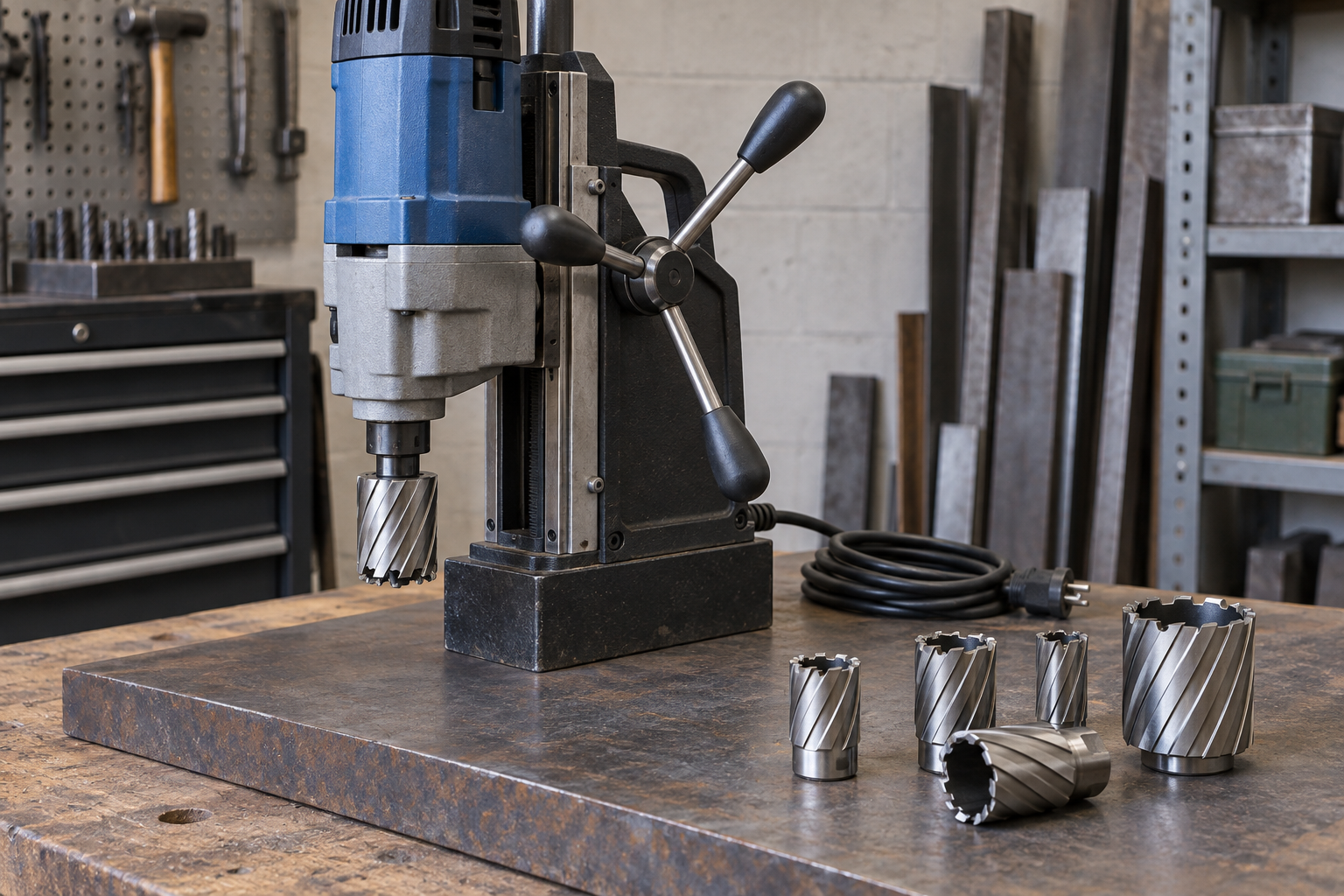
The Hougen HMD904 and Milwaukee 2788-22 are both portable magnetic drills for boring holes in steel, but they suit different jobs. The HMD904 is a corded drill built around steady, controlled production work. The 2788-22 is a cordless system that trades unlimited runtime for easier setup and access to places where a cord is awkward.
Choose the Hougen if you have reliable power and expect to drill many holes in a shift. Choose the Milwaukee if mobility matters more than continuous operation, or if the work is in a location where managing a cord is a liability. Neither is a universal replacement for a handheld drill: both need a suitable steel surface and a correctly secured magnet.
As an Amazon Associate we earn from qualifying purchases at no extra cost to you.


At-a-glance comparison
| Feature | Hougen HMD904 | Milwaukee 2788-22 |
|---|---|---|
| Power | Corded, 120 V | Cordless, 18 V battery platform |
| Magnet | Electromagnetic base | Permanent-magnet base |
| Maximum annular-cutter capacity | 1-1/2 in. diameter, up to 2 in. depth | 1-1/2 in. diameter, up to 2 in. depth |
| Maximum twist-drill capacity | 1/2 in. | 1/2 in. |
| Best fit | Repeated holes near a dependable outlet | Field work and locations where a cord is inconvenient |
| Main limitation | Needs mains power and cord management | Runtime depends on battery charge and material |
Specifications and included accessories can vary by package or revision, so check the current manufacturer listing before buying. In particular, compare what is actually in the box: batteries, charger, cutter pilot, and case may differ.
Cutting performance and capacity
Both drills are rated for annular cutters up to 1-1/2 inches in diameter and 2 inches deep. That is a useful capacity for structural-steel work, where a cutter removes a ring of material rather than grinding out the entire hole. A properly selected cutter can make a large hole faster and with less effort than a twist drill of the same diameter.
Capacity is not a promise that either machine will cut every 1-1/2-inch hole equally well. Steel thickness, cutter condition, feed pressure, lubrication, and surface flatness all matter. A dull cutter or forcing the feed can overheat teeth, stall the motor, or make the drill shift on the work. Use the cutter maker’s recommended speed and lubricant, keep chips clear, and stop if the cutter chatters or the machine starts moving.
The HMD904’s corded supply is an advantage for long runs of holes: there is no battery to swap or recharge. That does not make it immune to overload or poor technique. The Milwaukee can do the same rated-size work, but repeated large holes will consume more battery than occasional smaller holes. For a full day’s production, plan for charged spare packs and a place to recharge, rather than assuming one battery will cover the job.
Magnet, setup, and safety
The Hougen uses an electromagnet, which must be powered to hold the drill in position. Its grip depends on the steel beneath it: paint, rust, scale, a curved surface, thin stock, or a gap under part of the base can reduce holding force. Keep the base on clean, flat material and use the safety strap, especially when drilling vertically or overhead. If power is interrupted, an electromagnetic base can lose its hold.
The Milwaukee’s permanent magnet does not rely on battery power to maintain its magnetic hold, an important distinction when working away from an outlet. A permanent magnet still cannot compensate for poor contact, thin or unsuitable material, or a badly positioned drill. Verify the manufacturer’s minimum material requirements and secure the tool as directed. Before starting either drill, confirm that the base is fully seated and that the workpiece cannot shift.
These are heavy, high-torque machines. Keep hands clear of the cutter and chips, wear eye protection, and remove loose clothing and jewelry. Do not reach across a rotating cutter to clear swarf. A pilot pin helps locate and eject the slug, but the slug can be hot and sharp; let it stop and cool before handling.
Mobility and running cost
The Milwaukee is the easier choice when the hole locations are scattered, access is cramped, or trailing a cord would create a snag or trip hazard. It is also useful where there is no convenient outlet. The cost of that convenience is battery planning: cold conditions, worn packs, large cutters, and thick steel can all shorten working time. A spare battery adds cost and weight, but is often necessary for work beyond a few holes.
The Hougen is the more straightforward choice when the drill can stay near a suitable power source. It avoids battery downtime and typically makes more sense for a shop, fabrication bay, or crew doing repeated holes at one station. You still need to manage the cord so it cannot catch on the work, ladder, or operator.
If you are comparing complete kits, include batteries and charger in the Milwaukee price and cutter costs in either option. For a job involving only a few holes, renting a magnetic drill or hiring a fabricator may cost less than buying either machine. If you do buy, compare cordless magnetic drills and corded magnetic drills by package contents and service support, not just headline capacity.
Which one should you buy?
Buy the Hougen HMD904 if the work is mostly stationary, power is available, and you value uninterrupted drilling over portability. It is the practical choice for repeated holes where battery changes would slow the job. The cheaper option is fine when it meets the actual workload: if you already have a compatible Milwaukee battery platform and only need occasional holes in accessible steel, the 2788-22 can be a sensible purchase rather than an unnecessary corded machine.
Buy the Milwaukee 2788-22 if moving between locations is part of the job, cords are hard to manage, or the worksite lacks convenient mains power. Its permanent magnet is useful when power is unavailable, but do not treat that as permission to skip proper surface checks, restraints, or safe positioning.
Before choosing, measure the largest hole and steel thickness, count how many holes you expect to make in a typical shift, and check the surface where the magnet will sit. Those three details—capacity, production rate, and holding conditions—matter more than the brand name. If the base cannot sit flat on suitable steel, neither drill is the right solution without a properly engineered mounting arrangement.