
What's inside
As an Amazon Associate I earn from qualifying purchases. This post may contain affiliate links at no extra cost to you.
Our Top Picks
 VEVOR 1450W Mag Drill PressW/ 2 in 6 pieces - Tapping (NEW)11 x 7.1 x 14.2 inches26.46 poundsCheck on Amazon
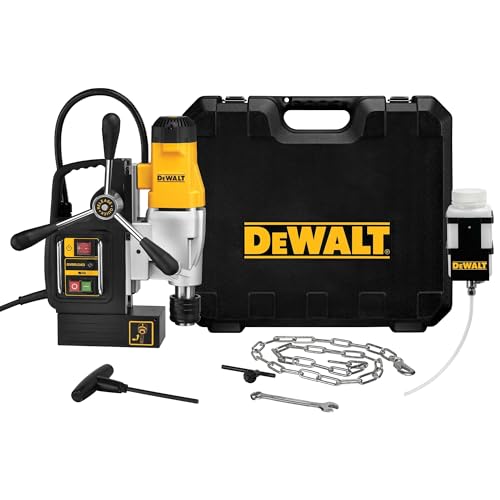


What matters when drilling structural steel on site
A magnetic drill press earns its keep when you need accurate holes in beams, columns, or plate too large to move to a drill press. Its magnetic base holds the machine against the steel while an annular cutter removes a ring of material, usually faster and with less effort than drilling the same hole with a twist bit.
For structural work, start with the hole sizes and steel thickness you actually encounter. Check the drill’s rated cutting diameter, cutter capacity, stroke, and magnet specifications—not just its motor wattage. A machine rated for a 2-inch cutter is not automatically suitable for every 2-inch hole: capacity depends on material thickness, cutter type, and the manufacturer’s limits.
As an Amazon Associate we earn from qualifying purchases at no extra cost to you.
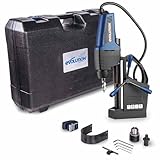


Magnet holding force is commonly stated in pounds, but that number is measured under ideal conditions on clean, flat steel of a specified thickness. Paint, mill scale, rust, a curved flange, or a gap beneath part of the base can reduce grip. Never treat a published holding-force figure as a substitute for a safety strap.
Mag-drill types compared
| Type | Best for | Trade-off |
|---|---|---|
| Compact, single-speed | Occasional holes and restricted access | Less range for matching cutter speed to size |
| Two-speed or variable-speed | Mixed hole sizes and regular site work | Costs more; extra settings do not replace correct cutter choice |
| Low-profile or pivoting-base | Close clearance or awkward surfaces | May give up capacity, rigidity, or convenience compared with a standard base |
A compact drill is a sensible buy if your typical work is modest holes in accessible steel and you can position the machine securely. For frequent structural work, a more capable unit with a rated capacity that comfortably covers your largest routine cutter gives more flexibility. Compare magnetic drill presses for annular cutters by capacity, speed range, weight, and service support rather than by headline wattage alone.
Features worth paying for
Speed control: Larger cutters generally need slower cutting speeds than small ones. A two-speed gearbox or variable speed helps match the cutter to the job, but use the cutter maker’s recommended speed for its diameter and material. Running too fast overheats teeth; running too slowly with poor feed can also rub and wear the cutter.
Magnet interlock: Prefer a design that prevents the motor from running unless the magnet is energized. This does not confirm that the magnet is holding well, so inspect the setup and use the supplied safety chain or strap. On thin material, the magnet may not achieve its rated hold even when switched on.
Weight and access: A heavier drill can be tiring to carry up ladders or position overhead. A lighter machine is easier to handle, but may have a smaller motor or lower cutting capacity. Measure the space around the hole: the drill body, handles, cutter, and ejection slug all need room. A low-profile model helps only when its geometry fits the obstruction.
Arbor and coolant: Confirm the machine accepts the annular cutters you plan to use, including the shank style and cutter length. Many setups use a pilot pin to locate the hole and help eject the slug. Cutting fluid or an appropriate lubricant improves cutter life and finish; check whether the drill has an integrated feed system or requires manual application.
When a cheaper drill is enough
You do not need a premium mag drill for a handful of holes a year. A basic corded unit can be adequate for straightforward holes within its stated capacity, especially if a rental is available for one-off work. Budget models may have fewer speeds, less refined controls, or limited support, so check replacement parts, warranty terms, and whether the supplied arbor suits your cutters.
Do not save money by exceeding the rated cutter diameter, using a worn cutter, or skipping securement. If you regularly drill large holes, work on site away from outlets, or need a machine for multiple crews, compare heavy-duty magnetic drill presses with the exact duty and service demands in mind. A larger motor is useful only if the magnet, gearing, arbor, and cutter capacity also suit the job.
Setup and failure modes
Before mounting, clean the contact area and check that the steel is thick, flat, and large enough for the base. Remove loose scale, heavy paint, and debris where the magnet sits. Position the drill so the cutter is square to the surface, then engage the magnet and test the setup according to the manufacturer’s instructions. Attach the safety strap around the workpiece or a secure anchor; it is essential protection if power fails or the magnet loses grip.
Use eye protection and hearing protection, secure loose clothing, and keep hands clear of rotating parts. On vertical or overhead work, account for the drill’s weight and the falling slug. Keep the cable clear of the cutter and use a suitable supply and extension cord; voltage drop can reduce performance. Follow site procedures for overhead drilling and work at height. Do not rely on a magnetic base over a joint, thin edge, curved surface, or uneven plate unless the manufacturer permits that setup.
Common warning signs include a base that rocks, a cutter that squeals or smokes, chips that stop clearing, and a motor that labors. Stop, isolate power, and correct the cause. A slipping base can signal poor contact or inadequate material thickness. A stalled cutter may be blunt, running at the wrong speed, misaligned, or fed too aggressively. Do not force it through: damaged teeth and a jammed cutter can twist the drill or move the work.
A practical buying checklist
Write down your largest regular hole diameter, thickest steel, available power, and tightest access point before shopping. Then verify the maker’s capacity in steel, speed range, magnet requirements, cutter compatibility, and service options. For work in remote areas, consider whether a corded drill can reach a reliable supply or whether a suitable cordless system is worth the added cost and battery weight.
For most crews drilling structural steel regularly, a robust two-speed or variable-speed drill with a useful safety interlock, a secure strap, and readily available cutters is the balanced choice. For infrequent, accessible holes, a simpler model—or renting—can be the better value. Buy for the actual steel and cutter sizes on your jobs, and treat safe mounting as part of the tool choice, not an optional extra.