What's inside
As an Amazon Associate I earn from qualifying purchases. This post may contain affiliate links at no extra cost to you.
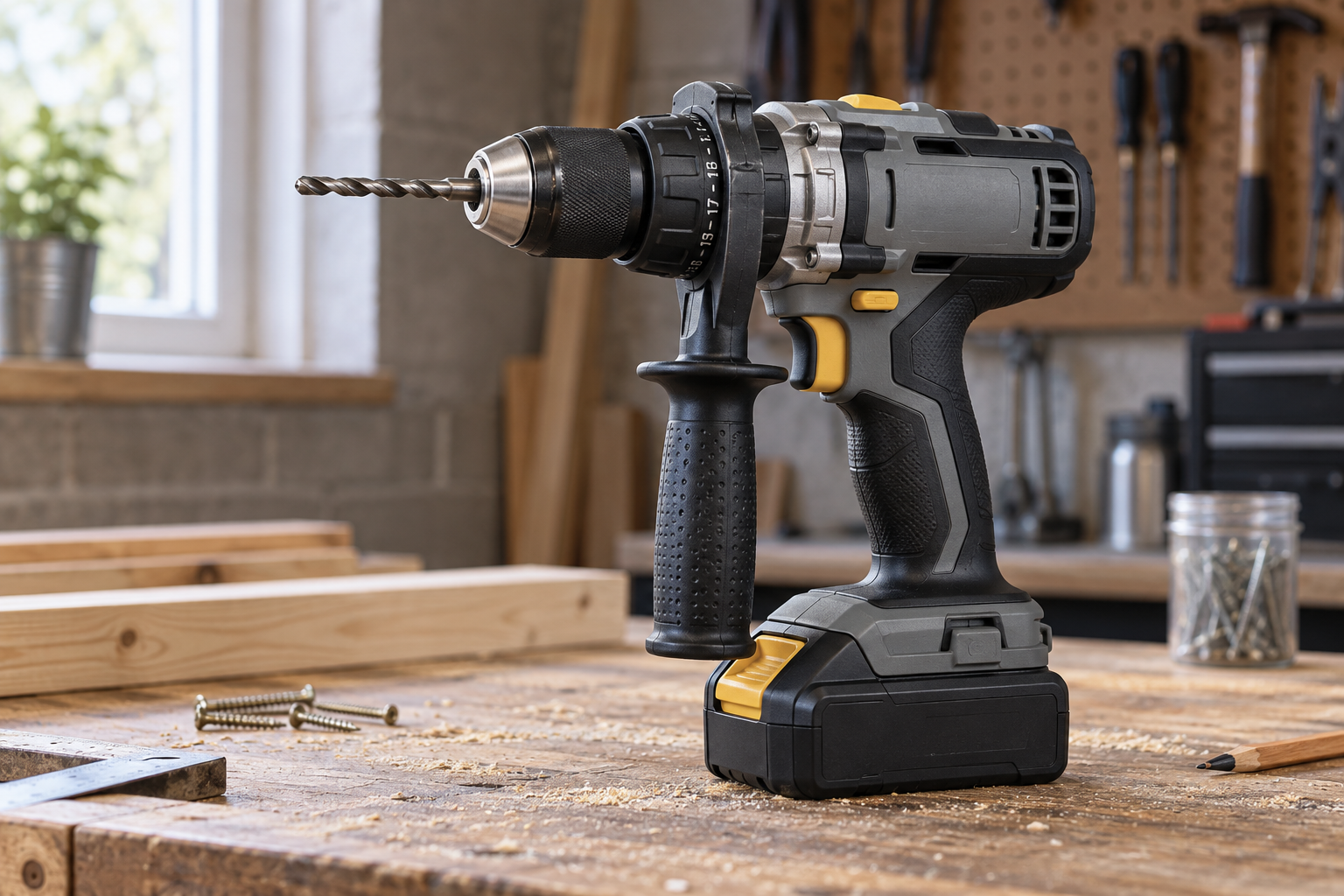
A combination drill has two jobs that can look similar from the outside: turning a bit and making holes in masonry. The mode selector decides whether the drill only rotates or also drives the bit forward and back. Use the wrong mode and you may get a slow hole, a damaged bit, or a spinning drill body that’s hard to control.
As an Amazon Associate we earn from qualifying purchases at no extra cost to you.


Our Top Picks
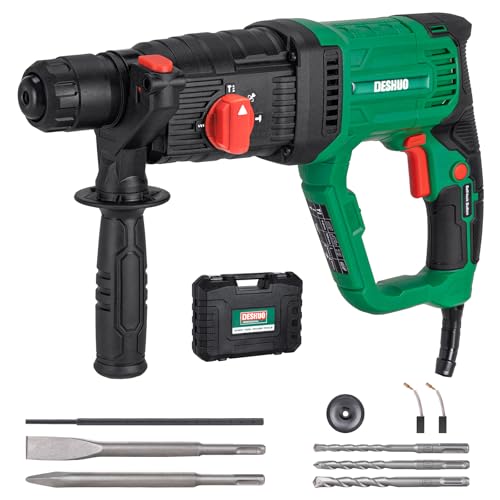 Deshuo 1" SDS-Plus Lightweight Rotary Hammer Drill forSmall15.15 x 8.85 x 3.93 inches7.19 PoundsCheck on Amazon
 DYRECELVE 12-Piece Masonry Drill Bit Set and Concrete5.51 x 2.95 x 0.64 inches0.45 PoundsCheck on Amazon


What the modes actually do
In drill-only mode, the chuck rotates the bit without impact. Use it for wood, metal, plastic, and driving screws with a suitable bit. In hammer mode, the bit rotates while the tool adds rapid, short axial blows. Those impacts help a masonry bit break up brick, block, or concrete as it cuts.
A combination drill is not the same as a rotary hammer. Its hammer action is usually lighter and works best for smaller holes, often around 6–10 mm (roughly 1/4–3/8 inch), depending on the tool and material. For repeated large holes or tough concrete, a rotary hammer with an SDS bit is faster and less tiring.
Which mode for which material?
| Job or material | Mode | Why | Watch out for |
|---|---|---|---|
| Wood | Drill-only | Clean cutting depends on sharp spurs or cutting edges, not impact. | Hammering can tear the hole and stress the bit. |
| Metal | Drill-only | Steady rotation keeps a twist bit engaged with the metal. | Use low speed, a sharp bit, and cutting oil where appropriate; impact can break small bits. |
| Plastic or tile | Drill-only | Impact can crack or chip brittle surfaces. | For tile, start slowly with a tile-rated bit and keep hammer mode off through the tile. |
| Brick or concrete | Hammer mode | Axial impacts help a masonry bit penetrate mineral material. | Progress may be poor in hard concrete, especially with a large hole or a worn bit. |
| Screws | Drill-only, or screw mode if fitted | Controlled rotation helps avoid stripping the head or overtightening. | Hammer action can damage the fastener, workpiece, or driver bit. |
When to switch modes
Switch to hammer mode when a sharp carbide-tipped masonry bit is turning in brick, block, or concrete and drill-only mode is making slow progress. Keep the drill straight and apply firm, controlled pressure. Let the impacts do the work; leaning your full weight on the tool can stall it or make it harder to control.
Switch back to drill-only for wood, metal, plastic, tile, screwdriving, and any task where impact could damage the material or bit. If you’re drilling a tiled wall into masonry, drill through the tile in drill-only mode first. Once the bit has passed through the brittle tile and reached the masonry behind it, you can change to hammer mode if needed. Check that the bit is suitable for the material on both sides of the tile.
Most drills require the motor to stop before changing modes. Don’t force the selector while the tool is running or jammed; follow the manual’s instructions. If the selector won’t engage, briefly rotate the chuck by hand with the battery removed, then try again rather than levering the switch.
Common failures and how to avoid them
Using hammer mode on metal or wood: Impact can make the bit chatter, wander, or break, and it can leave a ragged hole. Turn hammer mode off. For metal, make a small pilot hole if needed and keep the bit cutting rather than forcing it.
Using drill-only mode in hard masonry: The bit may polish the surface or make little progress while the motor gets hot. Confirm you have a masonry bit, select hammer mode, and clear dust from the hole periodically. If the drill still struggles, the material may be too hard, the bit may be worn, or the hole may exceed the tool’s practical capacity. A stronger drill is not always the answer: for sustained concrete drilling, a corded SDS-Plus rotary hammer is the more suitable category.
Drilling tile with impact: The tile can crack before the bit reaches the masonry. Use a tile-rated bit at low speed with hammer mode off. Once through the tile, change modes only if the backing material calls for impact.
Ignoring dust and heat: Masonry dust packs into the hole and slows the bit; prolonged drilling heats both bit and tool. Withdraw the bit occasionally to clear dust, and pause if the bit or drill becomes excessively hot. Wear eye protection and a suitable dust mask, particularly indoors.
What to buy for the work you do
If most of your jobs are furniture, shelving, wood, metal, and occasional small masonry holes, a combination drill is a practical one-tool compromise. Choose a model with a clear mode selector, a clutch for screws, and a side handle if you expect to drill masonry regularly. A cordless combination drill is convenient for general household work; a cheaper drill-only model is fine if you won’t drill masonry.
For frequent concrete work, compare the drill’s stated masonry capacity with the hole sizes you actually need. A combination drill can handle occasional small anchor holes, but repeated holes around 10 mm or larger in hard concrete can be slow and tiring. If the job is mainly masonry, the added cost and weight of a rotary hammer may save time and broken bits.
Also budget for the right bits. A carbide-tipped masonry bit set is for brick and concrete; it is not a substitute for sharp wood or metal bits. Mode choice matters, but it cannot make an unsuitable or worn bit cut well.