What's inside
As an Amazon Associate I earn from qualifying purchases. This post may contain affiliate links at no extra cost to you.
Start with the thinset, not the chisel
Removing thinset means breaking the bond between mortar and slab without gouging the concrete underneath. The right SDS-Plus chisel depends on how thick and stubborn the residue is, how much floor you have to clear, and how easily your rotary hammer can control the tool.
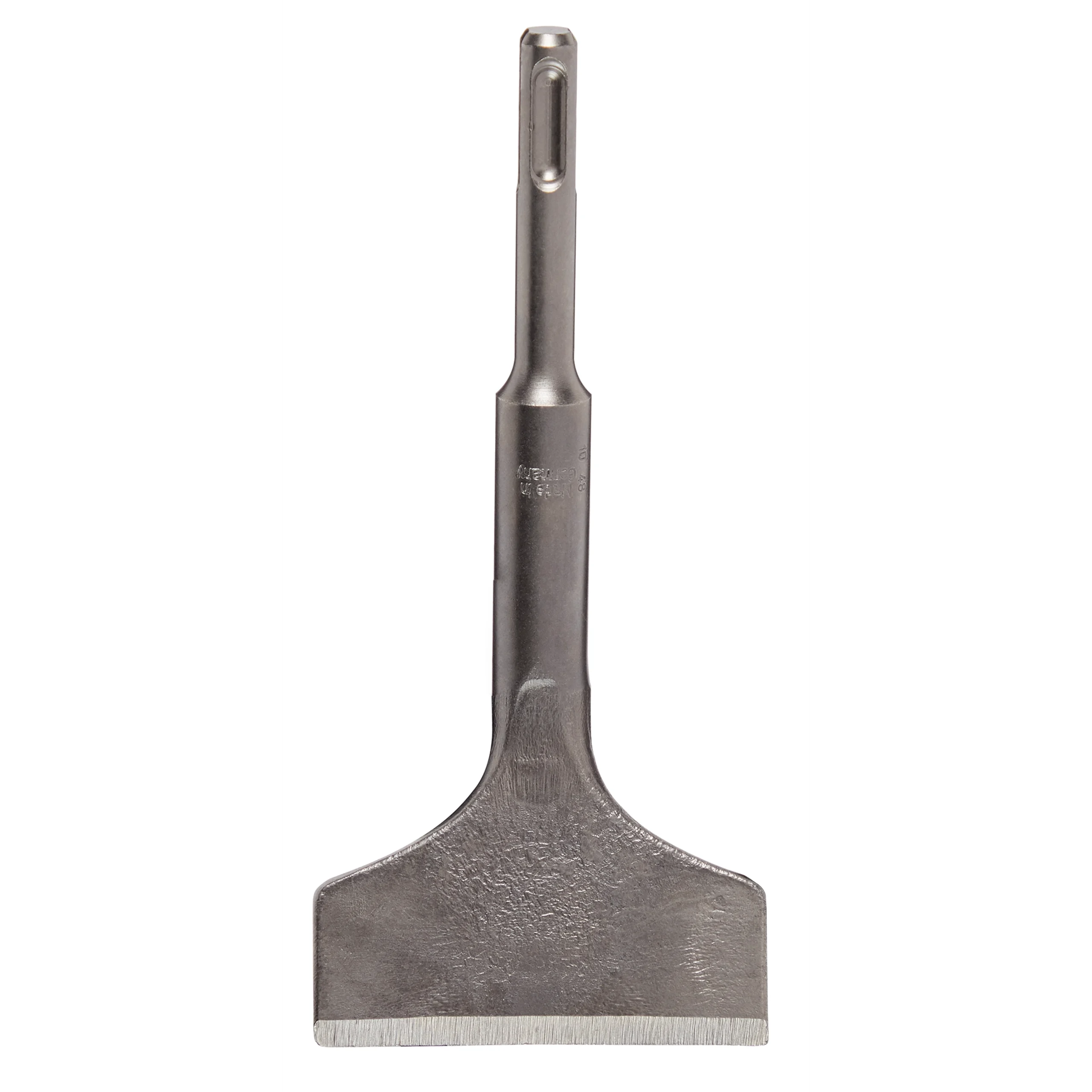
For most tile-removal cleanup, a wide floor scraper is the sensible first choice. A 2- to 3-inch blade can get under thinset ridges and shave down high spots while spreading the blow over a larger area. A narrow chisel concentrates force, which helps with stubborn patches but also makes it easier to leave pits and trenches in the slab.
Thinset is often only a few millimeters thick, but it can be hard enough that a hand scraper barely moves it. If the mortar is bonded in a nearly continuous layer, work in short sections and keep the blade at a shallow angle. If you can lift an edge, start there instead of striking straight down.
Choose the chisel shape for the task
An SDS-Plus connection is the shank that fits a compatible rotary hammer; it does not describe the blade. Check your hammer’s manual for supported bit types and operating instructions. The common choices are a wide tile-removal chisel, a narrower flat chisel, and a pointed chisel. For thinset on concrete, the wide tile-removal style is usually the best starting point.
| Chisel type | Best use | Trade-off on concrete |
|---|---|---|
| Wide floor scraper, about 2–3 inches | Thinset ridges and broad, relatively even residue | Covers ground quickly but can catch an edge or chatter on uneven mortar |
| Narrow flat chisel, about 1 inch | Small stubborn patches, corners, and detail work | More control than a wide blade, but slower and more likely to leave a groove if held too steeply |
| Pointed chisel | Breaking up thick deposits or hard lumps | Concentrates force; easiest to pit or chip sound concrete |
For the main job, look for a wide SDS-Plus tile-removal chisel with a replaceable or resharpenable blade if the manufacturer supports it. A very wide blade is not automatically better: it can be harder to steer and may catch on ridges. A roughly 2-inch blade is a useful compromise for many floors; go narrower for tight spaces or when the residue is uneven.
Match the chisel to the rotary hammer
SDS-Plus tools are generally suited to lighter demolition than SDS-Max hammers, but performance varies by hammer. A light rotary hammer may struggle with a broad scraper on hard, dense mortar; a larger one can remove material quickly but can also damage the slab faster. Check the hammer maker’s guidance for chiseling and compatible accessories rather than assuming that any SDS-Plus bit is suitable.
Use the hammer’s chisel-only mode if it has one. Rotation is not needed for scraping and can make control worse. If your tool has adjustable speed or impact settings, begin low and increase only if the blade stalls. A narrow SDS-Plus flat chisel is a useful backup for corners and stubborn spots; it is not the fastest choice for clearing a whole room.
Technique matters more than extra power
Hold the blade nearly parallel to the floor—roughly 10 to 20 degrees is a practical starting range—and aim to slide under the mortar, not punch down into the slab. Work with the edge of the chisel traveling forward under a thinset ridge. If the blade is bouncing, the angle may be too shallow or the mortar may be too hard for that setup. If it digs a line into the concrete, flatten the angle and ease off.
Clear loose debris often so it does not get trapped under the blade and force the tip upward. Start at seams, cracks in the mortar, or exposed edges, then remove residue in strips. Do not lean your full body weight on the hammer: excessive pressure can stop the tool’s impact action and makes sudden slips more hazardous. Let the hammer work, and keep both hands on it.
Test a small patch first. Stop and inspect the slab after a few passes. The aim is to remove bonded mortar, not make the concrete look polished. If thin discoloration remains but the surface is flat and suitable for the next flooring system, further chiseling may do more harm than good.
Avoid the common damage and wear problems
A pointed chisel can leave craters; a steeply held flat chisel can cut grooves; and a wide blade can chip the slab when it catches an uneven edge. Stop if you see concrete aggregate coming loose or if the blade is producing pits rather than lifting mortar. Switch to a wider blade or a less aggressive approach, and avoid chasing every stain below the slab’s surface.
Blade condition matters. A rounded or nicked cutting edge tends to skate, chatter, and demand more force. Inspect the chisel regularly, follow the maker’s sharpening guidance, and replace it if it is cracked or badly worn. Wear safety glasses, hearing protection, gloves, and a suitable respirator; cement-based dust can contain respirable crystalline silica. Use dust control appropriate to the tool and site, and avoid dry sweeping. Keep other people out of the work area.
When cheaper is fine—and when it is not
For one small bathroom or a few isolated patches, a basic compatible SDS-Plus scraper may be enough. You do not need a premium bit if the blade stays sharp, fits the hammer, and removes the mortar without gouging the slab. A basic SDS-Plus tile-chisel set can make sense if it includes both a broad scraper and a narrower flat blade you will actually use.
For several rooms or repeated jobs, pay more for a well-made blade that holds its edge and can be serviced or replaced. Compare the usable blade width, edge shape, and manufacturer’s compatibility guidance—not just the number of pieces in a kit. If the floor has thick mortar beds, extensive patches, or a fragile slab, consider whether a larger professional hammer, a different removal method, or a flooring contractor is a better fit. More impact is not always a safer shortcut.