What's inside
As an Amazon Associate I earn from qualifying purchases. This post may contain affiliate links at no extra cost to you.
Our Top Picks


The short answer
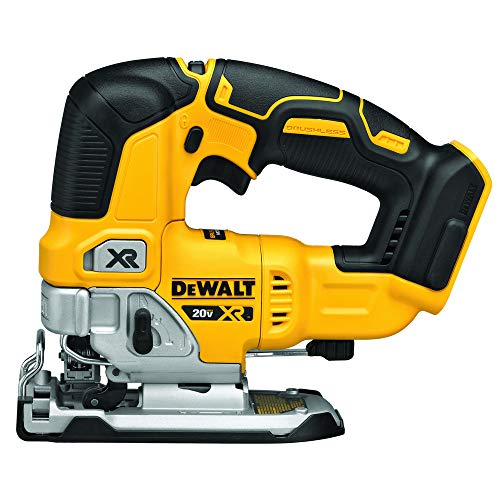
The DeWalt DCS334 and Makita XVJ03 are both 18V-class cordless barrel-grip jigsaws, and either can cut smooth curves when it has a sharp, suitable blade and a well-supported workpiece. The DeWalt is the stronger pick if you want more control over speed and pendulum action. The Makita is a capable, simpler option—often the better buy if its bare-tool price fits your budget and you already own Makita 18V batteries.
Neither saw guarantees a clean curve by itself. Blade choice, feed rate, and how you support the offcut matter at least as much as the brand. If you mostly cut plywood curves a few times a month, the cheaper saw is usually fine. For frequent, tight curves or a range of materials, the DeWalt’s extra settings are useful.
As an Amazon Associate we earn from qualifying purchases at no extra cost to you.


Specs at a glance
| Feature | DeWalt DCS334 | Makita XVJ03 |
|---|---|---|
| Battery platform | 20V MAX (18V nominal) | 18V LXT |
| Grip style | Barrel grip | Barrel grip |
| Speed control | Variable-speed trigger; up to 3,200 strokes per minute | Three speed settings; up to 2,600 strokes per minute |
| Pendulum action | Four positions | Three settings |
| Typical strengths | Fine speed adjustment and a high top speed | Straightforward operation and existing LXT battery compatibility |
Published specifications can vary by region and kit. Check the exact tool listing for included parts and local specifications; bare-tool prices do not include a battery or charger.
What makes a clean curve?
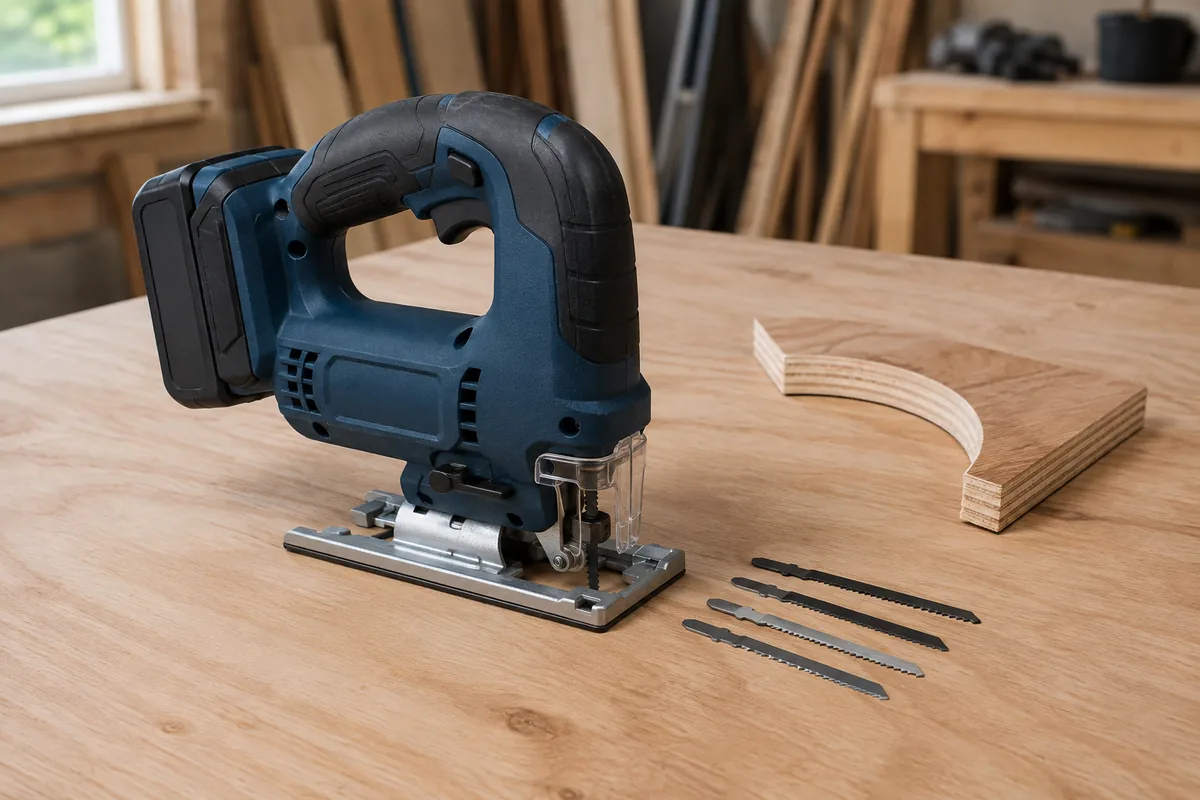
A smooth curve depends on keeping the blade square to the cut and letting it follow the marked line without forcing it sideways. A narrow jigsaw blade turns more readily than a wide one. For tight radii, use a blade intended for curve cutting and make a few relief cuts from the waste edge toward the line. Those cuts give the waste somewhere to go; without them, a pinched blade can bend, drift, or leave a ragged edge.
Pendulum action moves the blade forward on its cutting stroke. Higher settings cut faster in thick stock but tend to leave a rougher edge and can make the saw harder to steer around a small radius. For clean curves in cabinet plywood or hardwood, start with pendulum action off or low. Let the blade do the work, and slow down before the curve tightens.
Both saws are barrel-grip models, which some users prefer because they can hold the tool low and close to the work. That can help with control, but grip preference is personal. Try one in your hand if possible, especially if you have smaller hands or expect long cuts.
DeWalt DCS334: better adjustment for varied cuts
The DCS334’s variable-speed trigger and four pendulum positions give you more ways to tune the cut. The advertised maximum is 3,200 strokes per minute, but the useful point is not simply that it is faster than the Makita. A trigger lets you ease into a cut and adjust speed as the curve changes, rather than choosing one of three fixed speeds.
That control is handy when one project includes thin plywood, thicker stock, and different curve radii. Start at a moderate speed and low pendulum setting for a visible edge. If the blade bogs in thicker material, increase feed rate carefully or add pendulum action on straighter sections. More speed and orbit are not automatic improvements: they can increase tear-out and make a tight turn harder to track.
Its extra settings add little value if you make occasional rough cuts and leave the edge for sanding. The DeWalt also makes the most financial sense if you already use its battery platform. If you need a complete setup, compare the cost of the battery and charger as well as the saw.
Makita XVJ03: capable without as much fine tuning
The XVJ03 offers three speed settings and three pendulum settings, with a published top speed of 2,600 strokes per minute. That is enough for routine curve work in plywood, solid wood, and other common sheet materials when paired with the right blade. Its simpler controls are not a serious drawback if you tend to use one conservative setup for most cuts.
The trade-off is less speed adjustment while cutting. If a curve changes from broad to tight, you may need to stop and change a setting—or manage the cut with feed pressure and blade choice. For an occasional DIY user, that is a reasonable compromise. For repeated fine work, the DeWalt’s trigger control is more convenient.
As with the DeWalt, battery compatibility can outweigh small differences between the saws. If you already own Makita 18V LXT batteries and charger, the bare tool may be the economical choice. Compare current prices for the Makita XVJ03 cordless jigsaw and the DeWalt DCS334 cordless jigsaw, checking whether each listing is tool-only or a kit.
Common cutting failures—and how to avoid them
Blade wanders off the line: This often comes from pushing too hard, using a dull or wide blade on a tight radius, or trying to turn before the blade has cleared enough material. Back off the feed pressure, use a narrow curve blade, and make relief cuts. If the top edge looks on-line but the bottom edge does not, the blade may be flexing; a jigsaw is not a substitute for a bandsaw on very thick stock.
Splintering on the face: A coarse blade, excessive speed, and pendulum action can all worsen tear-out. Use a fine-tooth blade suited to the material, put the show face in the orientation recommended for that blade, and test on scrap. A zero-clearance insert or masking tape can help, but neither fixes a dull blade.
The cut closes and traps the blade: This happens when the offcut is unsupported or the waste pinches the kerf. Support both sides without clamping the waste so tightly that it binds, and cut relief slots from the waste edge. Keep hands clear of the blade path.
Which one should you buy?
Choose the DeWalt DCS334 if you make curves regularly, work across different materials, or value continuous trigger-speed control. Choose the Makita XVJ03 if you already own Makita LXT batteries, want a capable saw for normal DIY work, and do not need to adjust speed constantly. The Makita is not a poor curve cutter; it simply gives you fewer ways to tune the cut.
If neither brand’s battery platform suits you, compare complete kits rather than bare tools. For cleaner curves, budget for the right curve-cutting jigsaw blades for wood before paying extra for settings you may rarely use. A sharp narrow blade, low pendulum action, and patient feed will usually make the larger difference at the workbench.