What's inside
As an Amazon Associate I earn from qualifying purchases. This post may contain affiliate links at no extra cost to you.
Our Top Picks

They Are Not the Same Tool
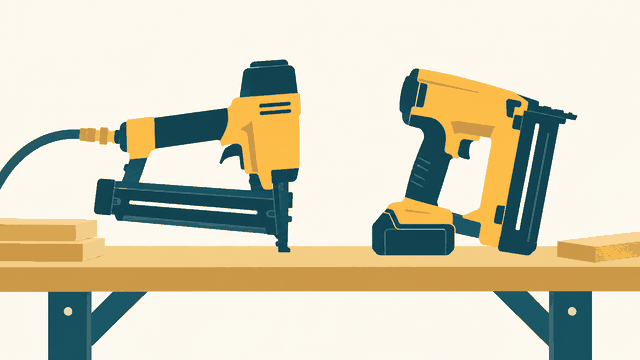
Let’s clear this up first, because the title is misleading if you take it literally. The Paslode IM250A is not a framing nailer. It’s a 16-gauge angled finish nailer that shoots 1″ to 2-1/2″ finish nails. The Milwaukee 2747-20 is a true framing nailer — an M18 FUEL 21-degree framing nailer that shoots 2″ to 3-1/2″ full-head, clipped-head, or offset round-head framing nails.
You would not frame a wall with an IM250A, and you would not trim a window with a 2747-20. But for remodeling, where you are constantly switching between framing, reframing openings, furring, and finish work, a lot of buyers cross-shop them because they are both cordless and both solve the hose-and-compressor problem. So the real question is: which type of cordless nailer earns its keep first on a remodel?
As an Amazon Associate we earn from qualifying purchases at no extra cost to you.


Specs at a Glance
| Feature | Paslode IM250A (Trim) | Milwaukee 2747-20 (Framing) |
|---|---|---|
| Tool Type | 16-Gauge Angled Finish Nailer | 21-Degree Framing Nailer |
| Fastener Range | 1″ to 2-1/2″ 16-gauge finish nails | 2″ to 3-1/2″ framing nails (3.25″ typical max) |
| Collation | 20-degree angled strip | 21-degree plastic collated |
| Power Source | Rechargeable NiMH battery + Paslode fuel cell | M18 REDLITHIUM battery only (no gas) |
| Weight | 4.8 lbs bare, ~5.2 lbs ready to fire | 10.2 lbs bare, ~11.5 lbs with 5.0Ah battery |
| Firing Rate | 2-3 nails per second, no ramp-up | Up to 3 nails per second, slight flywheel spool |
| Nails Per Charge / Cell | ~9,000 nails per battery charge, ~1,200 nails per fuel cell | ~700-750 nails per 5.0Ah battery charge |
How They Fire and Why It Matters on Site
The Paslode uses internal combustion. A small dose of gas from the fuel cell mixes with air in the combustion chamber, a spark ignites it, and the piston drives the nail. The battery just powers the fan and spark. That gives it instant trigger response and very low weight, but it introduces temperature and maintenance variables. Below about 35°F the fuel doesn’t atomize well. You get misfires, weak drives, and a lot of blinking red lights. Fuel cells also expire — once you pop the seal, you have weeks, not months, and shelf life unopened is about 12-18 months. Leave a half-used cell in the case over winter and it will likely be dead in spring.
The Milwaukee 2747-20 is fully electric. It uses a brushless motor to spin up a flywheel and a nitrogen air spring to drive the piston. No gas, no combustion, no warm-up. You pull the trigger, the flywheel engages, and it sinks a 3-1/2″ x .131″ nail into LVL or doubled SPF without much hesitation. Milwaukee claims it is ready to fire in a fraction of a second, and in practice it is. There is a little whine as it spools, and if you bump-fire too fast you can outrun the flywheel and get a blank fire. In single sequential mode, it is consistent.
For depth of drive, both have tool-free adjustment, but they behave differently. The Paslode depth control is sensitive — a quarter turn changes the set of a 16-gauge nail in prefinished trim from perfect to punched-through. The Milwaukee has a large dial by the nose and a separate power adjustment switch for soft vs. hard wood. You need it, because a 3-1/2″ nail in old, dry Douglas fir behaves nothing like one in new SPF.
What Remodeling Actually Demands
If your remodel is structural — opening a load-bearing wall, sistering joists, building a header, adding a partition, re-decking — you need the Milwaukee. A finish nailer simply cannot do that work. The Milwaukee M18 framing nailer will let you frame without dragging a compressor up stairs or through a finished house. That is its whole value proposition. You can toe-nail bottom plates to concrete with 3″ cut-nails by hand and then run the rest of the plates and studs cordlessly. For punch-out framing, subfloor patch-in, and blocking, it is a real time saver.
The downside is mass and size. At over 11 lbs with a battery and 13.5″ tall, the 2747-20 is fatiguing overhead and awkward in a 16″ stud bay when you are trying to toenail. It also has a large nose that makes tight corners hard. Jams are rare but when they happen you are clearing plastic collation debris from a deep magazine, not just pulling a brad.
The Paslode IM250A shines on the second half of a remodel: casing, baseboard, cabinet install, door jambs, crown, and built-ins. At under 5 lbs, you can use it one-handed to tack casing while you hold the piece with the other hand. The angled magazine gets into corners that a straight 18-gauge brad nailer cannot. If you are doing a kitchen and bath remodel where you keep the existing framing but replace all the trim, you will fire 300 finish nails for every framing nail. A lightweight Paslode cordless finish nailer pays for itself in speed and lack of hose whiplash on prefinished material.
The failure mode for the Paslode in finish work is air bubbles and oil contamination. If you don’t clean the filter, combustion chamber, and spark plug every 25,000-30,000 nails (or at least each season), it starts to leave soot and drive shallow. You also cannot ignore the cost of consumables.
Cost and Ownership Reality
Upfront, the Milwaukee 2747-20 is typically $329-$399 as a bare tool, plus $149+ for a 5.0Ah M18 battery and charger if you are not already on the platform. Nails are standard 21-degree plastic collated framing nails, about $35-$45 per 2,000 for 3-1/4″ galvanized. No fuel to buy.
The Paslode IM250A is usually $279-$329 for the tool with battery and charger, but every 1,200 nails costs you an $11-$14 fuel cell. If you shoot 5,000 finish nails on a whole-house trim job, that is four cells or about $45 in gas alone. Battery life is excellent, but the small NiMH battery is proprietary and weaker in cold than an M18 pack. Many remodelers keep two Paslode IM250A fuel cells in the truck because one will inevitably sputter at 8am on a cold morning.
Long-term maintenance favors the Milwaukee. No combustion chamber to clean, no expired fuel, no filter to oil. You blow it out, keep the nosepiece clean, and replace the driver every few years if you are heavy user. The Paslode requires the cleaning ritual and occasional O-ring service. If you neglect it, it will still fire but you will see inconsistent countersink and more misfires.
Noise and jobsite considerations also differ. The Paslode has a sharp crack that is louder than a pneumatic finish nailer and produces exhaust that smells in a closed room. The Milwaukee is quieter at the point of fire but has that constant flywheel whine that clients notice during occupied remodels.
Which Should You Buy First for Remodeling?
Buy based on the work you actually sell, not on which tool is more impressive.
If you frame at all — even just one wall, a header, or a bulkhead — you need a framing nailer and the Milwaukee 2747-20 is the logical cordless choice if you already own M18 batteries. If you own no batteries, a pneumatic 21-degree framing nailer plus a small compressor is still cheaper and lighter, and will drive better in engineered lumber. Be honest about that. Cordless framing is about convenience, not power. If you frame once a month and hate hoses, cordless is worth it. If you frame every day, pneumatic still wins on weight and speed.
If your remodeling is trim-heavy — you are a finish carpenter, cabinet installer, or a generalist who subs out framing — the Paslode IM250A will get used 5x more often. It is lighter, faster in tight spaces, and does not leave compressor dents on soft trim. Just budget for fuel and learn the cleaning procedure on day one. For remodels inside occupied homes where you cannot run a compressor, it is hard to beat.
Ideally, a remodeling truck eventually has both, because they do not overlap. But if you can only have one right now, let the fastener size decide: if the job calls for nails longer than 2-1/2″, you have no choice but the framing nailer. Everything else is finish work, and the Paslode is the better fit for that. Do not try to use finish nails to cheat structural connections — inspectors and racking loads will not forgive it.