What's inside
As an Amazon Associate I earn from qualifying purchases. This post may contain affiliate links at no extra cost to you.
For final surfacing, the No. 4 smoothing plane and No. 5 jack plane overlap, but they are not interchangeable in feel or purpose. The No. 4 is shorter, lighter, and easier to control as it removes thin shavings from an already-flattened board. The No. 5 covers more ground and handles minor hollows, twist, and rough stock better, but its longer sole can make a poor surface harder to correct.
As an Amazon Associate we earn from qualifying purchases at no extra cost to you.



Our Top Picks
 Stanley 1-12-004 Smooth Plane Bailey No. 4Smooth Plane 2 Inch9.88 x 5.67 x 2.68 inches4.2 PoundsCheck on Amazon
 Taytools #5 Premium Bedrock Style Flattop Jack PlaneOne Size Fits All0 x 0 x 0 Inches6.5 PoundsCheck on Amazon
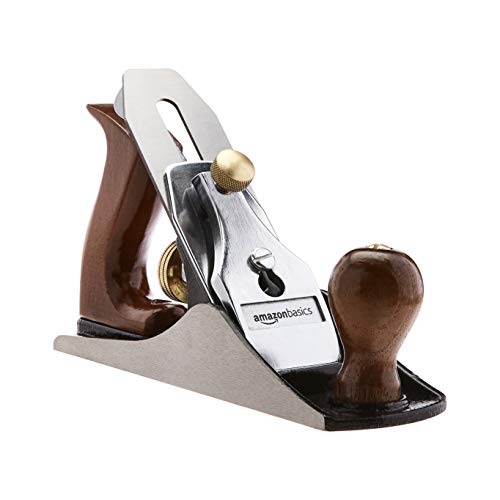 Amazon Basics No.4 Adjustable Precision Smoothing Bench Hand(Pack of 1)10 x 5.5 x 2.6 inches3.82 poundsCheck on Amazon

The Basic Difference
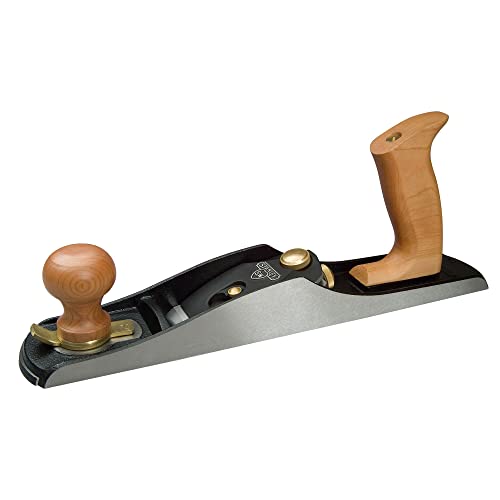
A typical No. 4 smoothing plane has a sole about 9 inches long and an iron roughly 2 inches wide. A No. 5 jack plane is around 14 inches long with an iron commonly about 2-3/8 inches wide. Those dimensions matter more than the number stamped on the lever cap: the No. 5 bridges dips that a No. 4 will follow, while the No. 4 can work locally without constantly riding on high spots.
In traditional hand-tool work, the jack plane removes material and establishes a reasonably flat surface. The smoother follows it with a finer cut. That division is not mandatory, but it remains a useful buying guide. If you are building furniture from rough boards, the No. 5 is the more versatile first plane. If boards are already machine-planed and you mainly want to remove cutter marks or leave a hand-planed surface, the No. 4 is the better fit.
| Feature | No. 4 smoothing plane | No. 5 jack plane |
|---|---|---|
| Typical sole length | About 9 inches | About 14 inches |
| Typical iron width | About 2 inches | About 2-3/8 inches |
| Best cut | Fine, shallow finishing passes | Medium stock removal and flattening |
| Typical setup | Straight or barely cambered edge | More camber for rapid removal |
| Main weakness | Slow on uneven or twisted stock | Less nimble and easier to overwork a finished surface |
Which Plane Leaves the Better Finish?
The No. 4 usually wins when “final surfacing” means the last tool used before scraping, sanding, or applying finish. Its shorter sole lets you concentrate on individual tear-out patches and blend small areas. A sharp iron set for a shaving around 0.001 to 0.003 inch thick can leave a clean, reflective surface on cooperative grain.
That result depends on setup, not just plane size. The iron must be genuinely sharp, the cap iron must sit tightly near the edge, and the mouth must not be unnecessarily wide. A straight edge with corners eased by roughly 0.005 to 0.015 inch prevents the plane from leaving tracks. For reversing or interlocked grain, take a lighter cut, skew the plane slightly, and work with the grain where possible.
The No. 5 can produce the same quality surface, but it takes more care. Its longer sole may bridge a shallow hollow and leave the hollow untouched while removing material around it. That is useful when flattening, but undesirable when you are trying to correct one small defect. The extra weight also encourages users to take too much material, especially on softwood end grain or near an already-finished edge.
When the No. 5 Is the Smarter Choice
Choose a No. 5 if your boards are rough-sawn, cupped, or only moderately flat. It is particularly useful for panels and tabletops where a No. 4 would require many more overlapping passes. Start with a cambered iron, often with the center projecting about 0.010 to 0.020 inch farther than the corners, then switch to a less cambered or nearly straight iron for the final passes.
This two-iron approach makes the jack plane more capable, though it adds sharpening and setup work. A heavily cambered iron is a poor choice for final surfacing because its corners leave scallops. Conversely, a straight iron set for a very fine shaving makes the No. 5 behave like an oversized smoother and gives up much of its stock-removal advantage.
For a single general-purpose hand plane, a No. 5 jack plane is often the cheaper and more useful choice. It can flatten, dimension, and finish adequately if you are willing to tune it. The cheaper option is fine when your work is mostly construction, utility furniture, shelves, or boards that will receive paint or substantial sanding.
When the No. 4 Is Worth Buying
Buy a No. 4 when you already have a way to flatten stock, or when surface quality matters more than speed. It is easier to hold at a consistent angle, less tiring over a long session, and more precise around shoulders, edges, and narrow parts. Its smaller footprint is also helpful on short components where a No. 5 feels clumsy.
A good No. 4 smoothing plane still needs a flat sole and a properly bedded iron. Used or budget planes can be excellent, but allow time for flattening the back of the blade, correcting the chipbreaker, and checking the sole. A plane with a polished body and a badly ground iron is not a bargain for final work.
A Practical Finishing Sequence
Begin with a winding stick or straightedge rather than trusting your eye. Use the No. 5 diagonally across high areas until the board is flat enough that the reference marks disappear evenly. Reduce the cut, plane mostly with the grain, and remove the diagonal marks with overlapping lengthwise passes. Finish with a No. 4 set for a fine shaving, checking the surface under raking light.
If tear-out appears, do not automatically press harder or close the mouth further. Sharpen the iron, reduce the cut, reverse direction, or use a higher effective cutting angle if the grain demands it. A low-angle block plane can handle end grain and small repairs, but it is not a replacement for either plane on a broad face.
The Buying Decision
Pick the No. 4 for the cleanest and most controlled final passes. Pick the No. 5 if you need one plane to do rough flattening and acceptable finishing. If budget allows two planes, the pairing is sensible: use the No. 5 to establish the surface and the No. 4 to refine it. If you will buy only one, choose based on the condition of your lumber, not on the promise of a smoother finish from a smaller plane.