What's inside
As an Amazon Associate I earn from qualifying purchases. This post may contain affiliate links at no extra cost to you.
Our Top Picks


At a glance
The DeWalt DW088K and Bosch GLL30 are compact self-leveling cross-line lasers for indoor layout work: each projects one horizontal and one vertical line. Either can help with shelves, cabinets, tile, trim and similar small renovations. Neither is a substitute for a rotary laser outdoors or a four-plane model when you need lines on multiple walls at once.
The practical choice comes down to reach, mounting and the job’s accuracy demands. The DW088K is a larger, more jobsite-oriented tool with a stated working range of up to 50 feet. The GLL30 is a simpler compact option intended for short indoor runs. Check the exact specifications for the version sold in your market; range and included accessories can vary by package.
As an Amazon Associate we earn from qualifying purchases at no extra cost to you.


Key differences
| Feature | DeWalt DW088K | Bosch GLL30 |
|---|---|---|
| Lines | One horizontal and one vertical | One horizontal and one vertical |
| Stated working range | Up to 50 ft | Designed for compact indoor layout; verify range for the specific package |
| Self-leveling | Yes, within its leveling range | Yes, within its leveling range |
| Power | Three AA batteries | Three AA batteries |
| Best fit | More frequent use or longer room layouts | Occasional, short-range household jobs |
| Main limitation | Costs and takes up more space than a basic compact laser | Less compelling when you need greater reach, ruggedness or more mounting options |
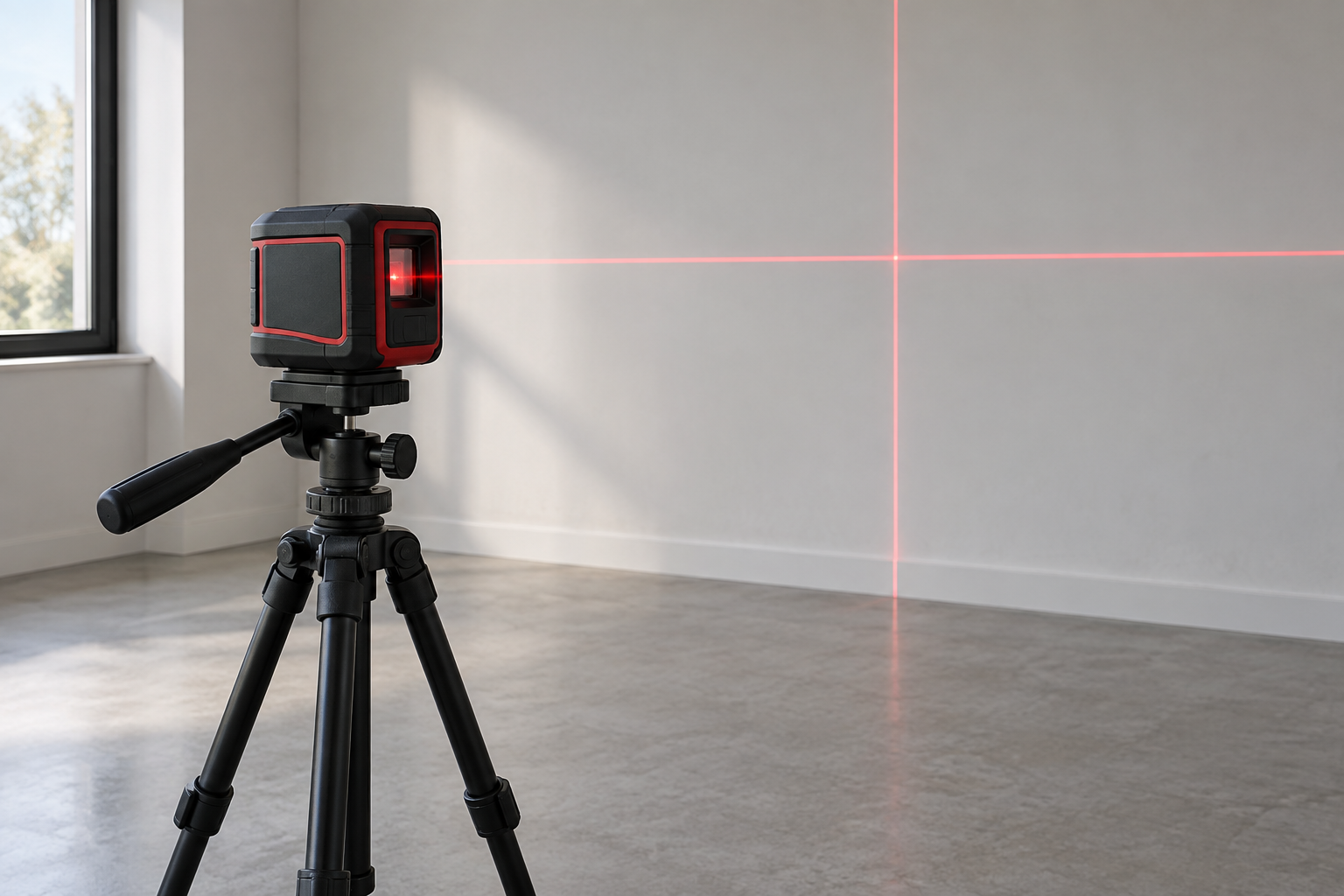
Both tools project visible red lines. Bright sunlight washes out red beams, so treat these as indoor tools; even near a bright window, visibility can fall off. A laser receiver can extend the useful range of some lasers, but don’t assume compatibility unless the manufacturer lists it for that model.
Accuracy and leveling in practice
Self-leveling saves setup time, but it does not mean the tool can correct a badly tilted surface. Set the laser on a stable base and let it settle. If the unit is outside its leveling range, the lines may flash or otherwise indicate an error; don’t mark from a flashing line. Move or shim the setup until it levels, then recheck after adjusting the mount.
Accuracy matters most over longer runs. A small angular error becomes easier to see as you move farther from the laser, so a line that looks fine across a short backsplash may be noticeably off across a long cabinet run. Before a precision job, check the manual’s accuracy specification and verify the tool on site: mark a line, turn the laser around or reposition it as instructed, and compare the marks. If the test shows a mismatch beyond the stated tolerance, use another instrument or have the laser checked.
The DW088K’s 50-foot stated range gives it more room to work in a typical renovation space, but that number is not a promise of a clearly visible line in every room. Light, wall color, distance and the surface all affect visibility. For a small bathroom or a short row of shelves, reach is unlikely to decide the purchase.
Mounting, batteries and jobsite use
How the laser mounts can matter more than a few feet of range. For cabinet installation, you need to position the beam at the correct height and keep it steady while you work. A tripod, clamp or wall mount can make that easier, but confirm the supplied kit and mounting interface before buying: bundles are not always identical. A laser perched on a loose stack of boxes is easy to bump and can turn careful layout into repeated measuring.
Both models use three AA batteries, which are easy to find. Carry spares for longer jobs and remove batteries before storing the tool for an extended period. A dim or intermittent beam is not automatically a calibration problem; check fresh batteries, clean the lens area gently and make sure the tool is level before troubleshooting further.
These are compact instruments, not indestructible site equipment. A drop can affect calibration even if the casing looks fine. Store the laser in its case, avoid leaving it loose in a tool bag, and check alignment after a hard knock. Dust and paint overspray can obscure the window, so keep the lens clean without rubbing it with abrasive material.
Which one should you buy?
Choose the DW088K if you expect to use a cross-line laser regularly, need its greater stated reach, or want a tool better suited to moving between renovation tasks. It makes sense for repeated cabinet, tile and trim layout where a stable line across a room is useful. If your work expands to large rooms or outdoor grading, step up to a laser and receiver designed for that use rather than expecting this compact unit to cover it.
Choose the GLL30 if your jobs are occasional and short, and the lower price leaves room in the budget for a useful mount or spare batteries. For hanging a few shelves, aligning a vanity, or setting a short backsplash, the cheaper tool can be perfectly adequate. Paying extra for range you will not use does not make the line more accurate at the distance you actually work.
If you are comparing other options, browse cross-line laser levels and laser-level mounts and tripods. Check what is included and whether the mount fits your setup; a bare tool and a bundled kit can differ substantially in value.
Use it well on a small renovation
Start by deciding where the reference line needs to land, then place the laser where the beam can reach the whole work area without being blocked. Let it self-level, confirm there is no warning indication, and mark several points along the line rather than relying on one mark at each end. For tile or cabinets, use the line as a reference and measure from it; don’t assume the existing floor, countertop or ceiling is level.
Before drilling, check the laser line against a tape measure and the actual installation dimensions. A level line cannot tell you whether a cabinet is centered, whether a shelf clears a door, or whether a wall is straight. Those still require measurement. The best buy is the one that suits the room size and mounting method you have—not simply the one with the larger range printed on the box.