What's inside
As an Amazon Associate I earn from qualifying purchases. This post may contain affiliate links at no extra cost to you.
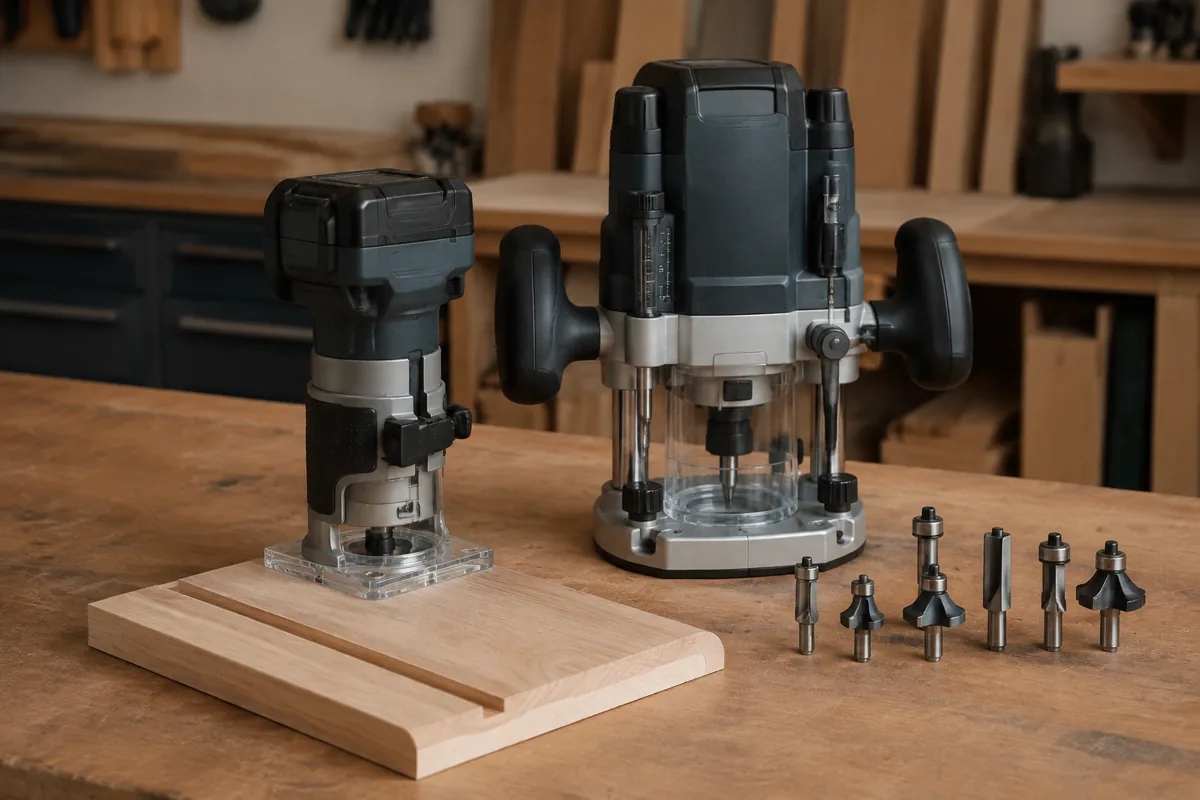
The DeWalt DWP611 and Milwaukee 5615-20 are not direct size-for-size competitors. The DWP611 is a compact 1.25-horsepower router built for edge work, templates and light joinery. The Milwaukee 5615-20 is a full-size, 2.25-horsepower router intended for heavier cuts, larger bits and longer sessions.
That difference determines which tool offers better control. The DeWalt is easier to hold and steer. The Milwaukee gives you more control over demanding cuts because its larger base, stronger motor and broader speed range resist stalling. For most trim and cabinet tasks, the lighter DeWalt feels more precise. For deep grooves, hardwood and large bits, the Milwaukee is the safer, more capable choice.
As an Amazon Associate we earn from qualifying purchases at no extra cost to you.

Our Top Picks


Key differences at a glance
| Feature | DeWalt DWP611 | Milwaukee 5615-20 |
|---|---|---|
| Motor rating | 1.25 peak horsepower | 2.25 peak horsepower |
| Speed range | 16,000–27,000 rpm | 10,000–24,000 rpm |
| Collet capacity | 1/4 inch | 1/2 inch, with 1/4-inch capability |
| Approximate weight | About 4.6 pounds with fixed base | About 12 pounds with fixed base |
| Best use | Trim, template work, small joinery and edge profiles | Deep cuts, hardwood, large bits and production routing |
Which router is easier to control by hand?
The DWP611 wins for ordinary handheld work. Its compact motor and small fixed base let you see the bit and keep both hands close to the work. That matters when routing a short edge, trimming laminate or following a template on a small panel. The motor also has a soft-start feature, so it does not jerk sharply when switched on.
Its main limitation is that the tool is light enough to react quickly when a bit catches. A feed-rate mistake or a cut taken too deeply can pull the router sideways. This is especially noticeable when using a wide round-over bit or routing against end grain. Take shallow passes—roughly 1/8 inch at a time in hardwood—and keep the base flat.
The Milwaukee is much heavier, but that weight is useful. Its wide base and substantial motor make it less twitchy in a long straight cut. The router tracks steadily across cabinet sides and hardwood workpieces, and it is less likely to slow when the bit engages a deep groove. The trade-off is fatigue. Holding a 12-pound router accurately on a narrow edge is harder than holding the DeWalt, particularly during flush-trimming or overhead work.
For the most controlled results on small parts, a compact router edge guide can help, but neither tool should be guided by force. Let the base do the work and move against the bit’s rotation.
Power, speed and cut quality
The DWP611’s 16,000-to-27,000-rpm range suits the small 1/4-inch bits it is designed to use. It produces clean edges in plywood, pine, poplar and most trim stock. It can handle shallow mortises and hinge recesses, but repeated deep cuts will make the motor work hard. If the pitch rises, the router slows noticeably or the cut begins to burn, the pass is too aggressive.
The Milwaukee’s 10,000-to-24,000-rpm electronic speed control is more versatile. The lower minimum speed is important with larger-diameter bits, where running at compact-router speed can be unsafe and can damage the work. Its 1/2-inch collet also accepts larger-shank bits, which generally run with less flex and provide better support in deep cuts.
Do not interpret the Milwaukee’s extra horsepower as permission to remove all the material in one pass. A 1/2-inch straight bit buried deeply in hard maple can still overload the router, damage the edge and create a dangerous kickback. Use multiple passes, secure the workpiece and follow the bit manufacturer’s maximum speed.
Base adjustment and visibility
The DWP611 has a clear fixed base and a convenient rack-and-pinion-style height adjustment. Its LED lights illuminate the bit area, which is helpful in a dark corner or when following a template. The compact footprint makes it easy to position the base exactly where the cut starts.
The Milwaukee uses a more traditional full-size fixed-base layout. It has a strong, stable base and fine height adjustment, but it is less nimble around small templates. The larger base can bridge uneven surfaces better, though it may not fit in tight spaces. Milwaukee’s above-table adjustment capability is useful when the router is mounted in a table, where repeated height changes are much easier than reaching underneath.
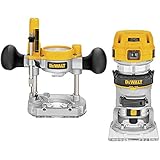
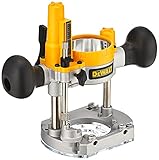
Neither tool is a complete plunge-router replacement. The DWP611 is available in a kit with a plunge base, while the 5615-20 is primarily a fixed-base machine. If you need stopped dados, mortises or controlled entry into the middle of a panel, shop for a router with a plunge base rather than forcing a fixed base into that work.
Which one should you buy?
Choose the DeWalt DWP611 if you mainly trim laminate, soften edges, copy templates, cut shallow grooves or build small cabinets and furniture. It is easier to store, less tiring to use and usually easier to control on narrow workpieces. The cheaper option is entirely adequate when your bits are 1/4-inch shank and your cuts are shallow.
Choose the Milwaukee 5615-20 if you routinely work in hardwood, use large round-over or panel-raising bits, need 1/2-inch shanks, or want a router that can stay in a router table. It costs more and demands more physical control, but it is less likely to stall and gives better results when the cut needs power and stability.
For a first router, the DWP611 is the more approachable tool. For one router expected to cover heavy furniture work and table routing, the Milwaukee is the more capable investment. In either case, budget for sharp bits and a reliable router bit set with the correct shank size; a dull bit creates more control problems than the difference between these two motors.