What's inside
As an Amazon Associate I earn from qualifying purchases. This post may contain affiliate links at no extra cost to you.
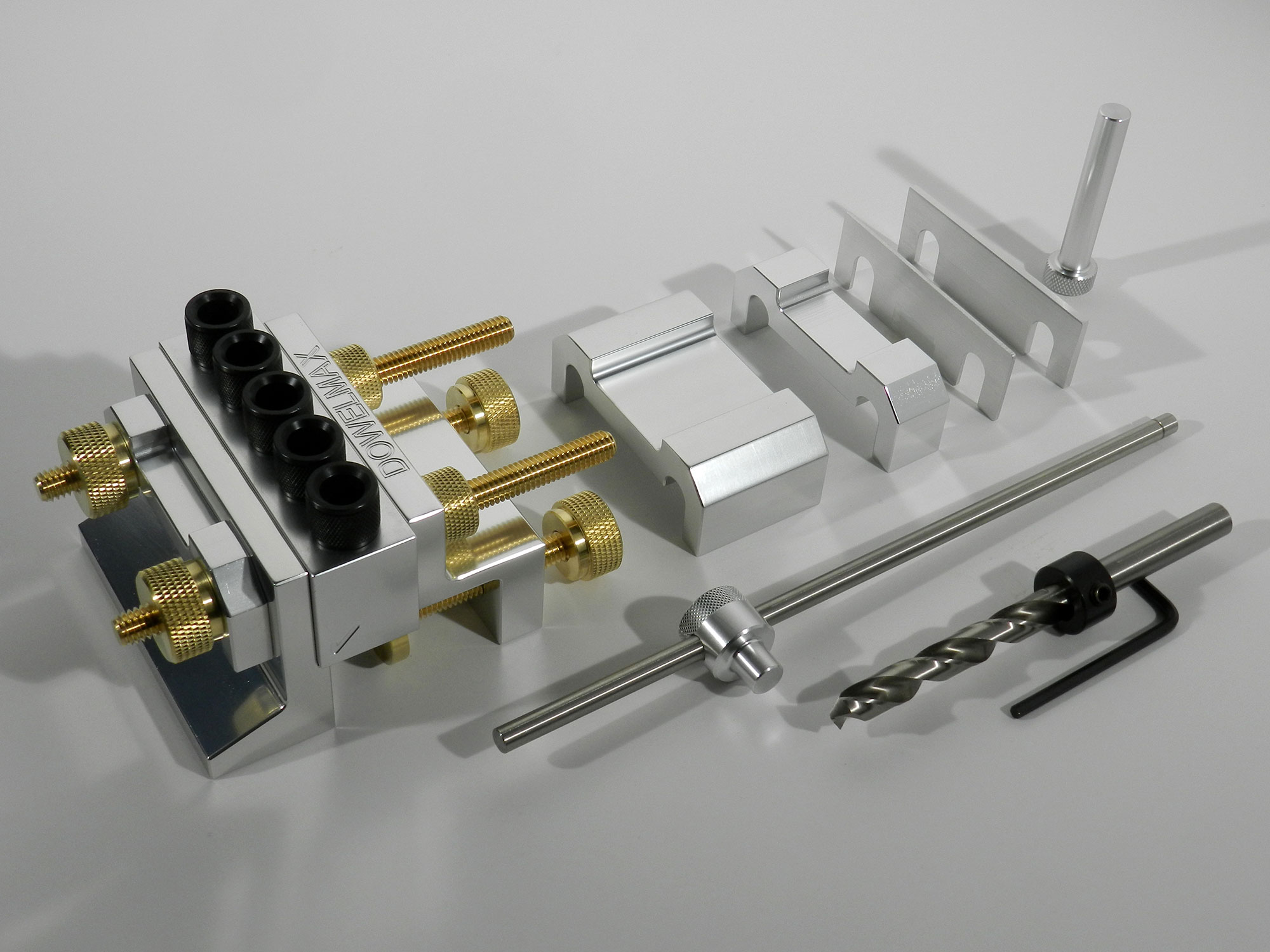
DowelMax and Jessem’s doweling jig are both aimed at accurate, repeatable dowel joints, but they approach the job differently. DowelMax uses a modular guide system and registration fences; Jessem’s jig is built around a substantial, clamping body and a set of fixed guide positions. Either can make sound furniture joints. The better choice depends on how often you need to change hole spacing, how you prefer to register the jig, and whether the price premium earns its keep in your shop.
As an Amazon Associate we earn from qualifying purchases at no extra cost to you.


Our Top Picks
How the jigs register a joint
DowelMax locates holes with hardened drill bushings and adjustable fences. You reference the jig from a board edge or face, drill one side, then use the same setup to locate the matching holes in the mating part. Its modular layout makes it especially useful for edge-to-edge panels and repeated rows of dowels. Depending on the configuration, you can change spacing or add guides rather than being restricted to one fixed pattern.
Jessem’s doweling jig also uses hardened bushings and a clamping mechanism to hold the work securely. Its guide positions are laid out for common dowel patterns, so setup is straightforward when those positions suit the job. The solid body and clamp help keep the jig from shifting, but a fixed layout is less flexible than a system that lets you configure the spacing to suit an unusual joint.
Neither jig can correct poor reference surfaces. If a board edge is bowed, or you register one mating piece from its face and the other from its edge, accurately drilled holes can still produce a joint that sits proud or twists during glue-up. Mark a common reference face on each part and check the mating surfaces before drilling.
At a glance
| Consideration | DowelMax | Jessem doweling jig |
|---|---|---|
| Hole layout | Modular guides and fences allow flexible spacing and repeat setups | Fixed guide positions suit common patterns with fewer layout decisions |
| Registration | Fence-based; careful setup and consistent reference surfaces matter | Clamping body holds the jig to the work during drilling |
| Best fit | Frequent dowel work, varied spacing, and repeatable panel or furniture joints | Occasional or regular joints using the jig’s available guide pattern |
| Main trade-off | More setup flexibility, with more parts and decisions to manage | Convenient clamping, with less freedom to tailor the hole layout |
What precision means in practice
For a furniture joint, precision is not just the accuracy of each bushing. The paired holes must line up in position and angle, and the dowel must fit without forcing the boards apart. A jig that stays square but is registered inconsistently can give worse results than a simpler jig used carefully.
Use a sharp bit sized for the dowels, set a depth stop, and drill at a steady pace. As a practical starting point, make holes deep enough to leave room for glue rather than letting the dowel bottom out. For a 40 mm dowel, for example, two holes around 21–22 mm deep provide roughly 2–4 mm of combined clearance. Confirm the fit with scrap first; dowel diameter, stock thickness, and the joint design all affect the right depth.
Common failures are easy to diagnose. A joint that will not close may have holes that are too shallow, too tight, or slightly misregistered. A panel that steps at the seam often points to inconsistent fence registration or a bit that wandered. Test the complete setup on offcuts from the same stock before drilling finished parts. On a run of identical parts, keep the jig orientation and reference face consistent, and label the pieces so you do not accidentally flip one.
Setup, speed, and repeatability
DowelMax’s flexibility pays off when the hole pattern changes from project to project. You can lay out a row to suit a cabinet side, rail, or panel rather than adapting the joint to a fixed guide arrangement. The cost of that freedom is setup: you need to select and position the guides correctly, then verify the spacing before committing to the work. It is a strong choice if doweling is a regular part of your furniture workflow.
Jessem is appealing when you want the jig to clamp securely and the available guide positions fit the joint. Clamping reduces the chance of hand pressure nudging the body while drilling, especially on a narrow workpiece. It does not eliminate the need to align the jig accurately, and clamping force alone will not prevent a poor reference edge from causing a bad joint. For a straightforward frame or repair, the simpler pattern may be all you need.
For both tools, drill a test joint before a batch. Two holes that are each only 0.5 mm off in opposite directions can make a dowel bind; on multiple holes, the error accumulates and the parts may refuse to seat. If you are drilling a long row, check the first and last positions against a story stick or a marked reference, not just the spacing between neighboring holes.
Which one should you buy?
Choose DowelMax if you make furniture often, need nonstandard spacing, or want a jig that can handle a range of panel and frame layouts. Its extra flexibility is most valuable when you will use it repeatedly; it is harder to justify if dowel joints are an occasional task. Check the current configuration and included guides before buying, since accessories affect what patterns you can drill. Browse DowelMax doweling jig options to compare current listings.
Choose Jessem if its guide pattern covers your usual work and you value a secure clamping setup over adjustable spacing. For a hobby shop making a few bookcases, tables, or cabinet frames a year, that can be the better-value decision. You do not need the most configurable jig to make accurate joints; you need one that fits the work and can be registered consistently. See Jessem doweling jig listings and confirm the included guide positions before ordering.
A practical way to decide
Before spending more, list the joints you actually make: panel edges, frame rails, repairs, or repeated production parts. If your spacing varies and you expect to drill many matching joints, DowelMax’s modular approach is easier to grow with. If your work uses a few standard patterns, Jessem’s clamping and simpler setup may be enough. In either case, accurate marking, a depth stop, sharp bits, and a scrap test will do more for the finished joint than rushing through setup.