What's inside
As an Amazon Associate I earn from qualifying purchases. This post may contain affiliate links at no extra cost to you.
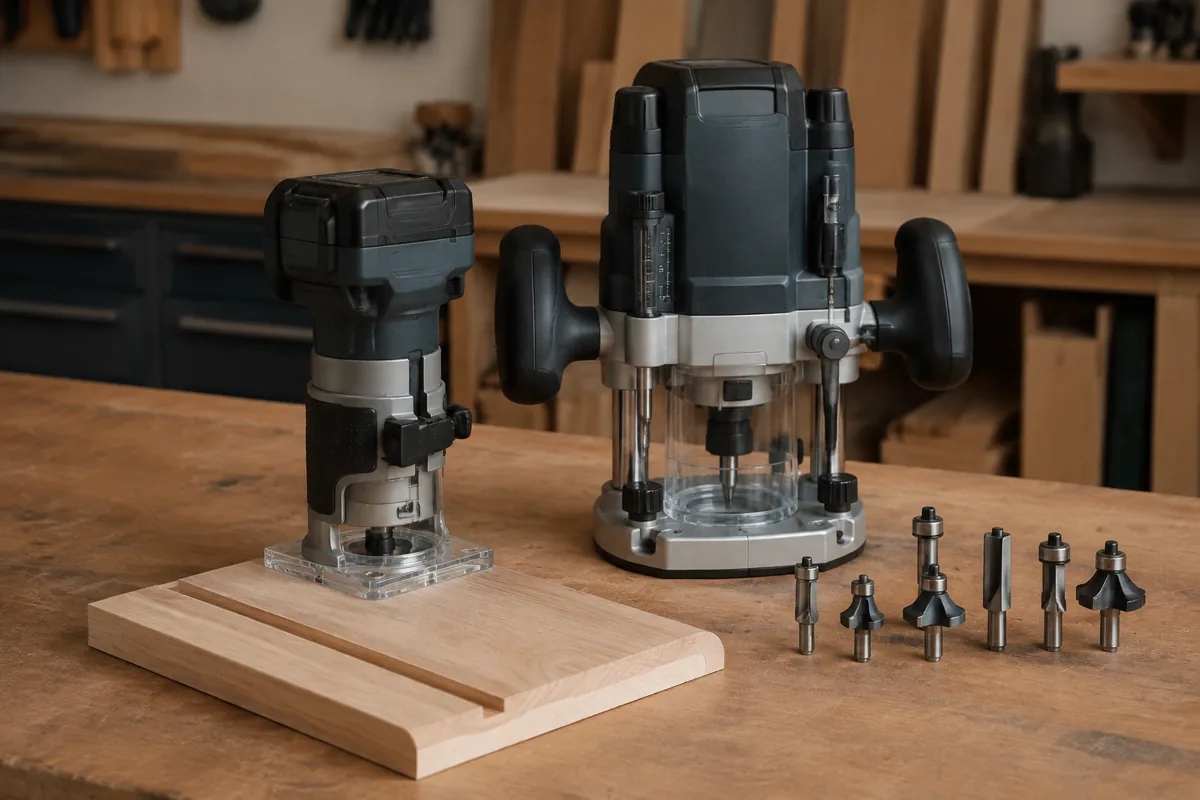
The DeWalt DCW600 and Makita XTR01 are compact 18-volt-class routers for edge work, small profiles, and controlled cuts in sheet goods. Both can be fitted with a plunge base, but their standard fixed bases differ in how they adjust and hold the router. For handling, that matters more than a small difference in advertised speed: a bit that is hard to set accurately, or a base that shifts under load, makes routing less predictable.
The short version: the Makita’s rack-and-pinion depth adjustment is easier to make in small, repeatable increments. The DeWalt’s adjustment is straightforward and its base has a useful quick-release mechanism, but fine positioning can take more fiddling. The better choice depends on whether you prioritize precise adjustments or a familiar, simple setup.
As an Amazon Associate we earn from qualifying purchases at no extra cost to you.


Our Top Picks
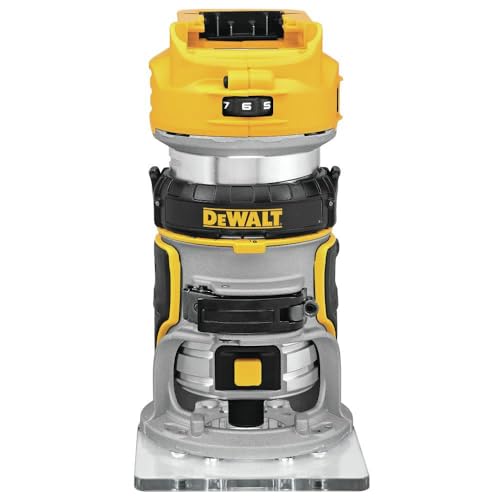 Dewalt DCW600BR 20V MAX XR Brushless Compact Lithium-IonMini-v1865.82 x 5.82 x 5.75 inchesCheck on Amazon
 Makita XTR01Z 18V LXT Lithium-Ion Brushless Cordless Compact6.2 x 8.5 Inches6.2 x 8.5 x 5.8 inches5.3 poundsCheck on Amazon


At a glance
| Feature | DeWalt DCW600 | Makita XTR01 |
|---|---|---|
| Platform | 20V MAX (18V nominal) | 18V LXT |
| Speed range | 16,000–25,500 rpm | 10,000–30,000 rpm |
| Depth adjustment | Rack-and-pinion adjustment with locking lever | Rack-and-pinion adjustment with fine-adjustment dial |
| Collet size | 1/4 inch | 1/4 inch |
| Best handling advantage | Quick base removal and a compact fixed-base setup | More controlled depth setting and broad speed range |
Specifications and included accessories vary by kit. Check the listing for the base and edge guide you actually need; some packages include more than the bare tool.
Depth adjustment: Makita is more precise
For a trim router, the depth setting is part of handling. If the bit projects too far, the router can grab, chatter, or remove more material than intended. Set it too shallow and you may need another pass. The Makita’s rack-and-pinion mechanism and fine-adjustment dial make it easier to creep up on a final depth rather than loosen, reposition, and retighten repeatedly. That helps with shallow chamfers and flush-trimming work where a small change is visible.
The DeWalt also uses rack-and-pinion adjustment and a locking lever, so it is not a crude twist-and-hope setup. Its quick-release arrangement makes it convenient to remove the motor from the base for bit changes or to use another compatible base. But the last little adjustment can feel less controlled than the Makita’s fine dial. If you work by test cut and adjust, that difference is noticeable.
Neither system eliminates the need for a test piece. A practical routine is to set the bit slightly shallow, make a short test cut in scrap of the same material, then adjust in small increments. Tighten the lock before routing; a base that is not locked can shift and ruin a workpiece.
Grip and control on the workpiece
Both are palm-grip routers, and both are comfortable for guiding with two hands when the work allows it. The DCW600’s compact body and base release make it easy to set down, reposition, and swap bases. The Makita feels similarly manageable, with its adjustment controls arranged for deliberate setup. Neither is a full-size router, and neither should be treated as one for heavy, deep cuts.
In practice, stability comes from the base sitting flat and from keeping the router moving steadily. A narrow edge or small workpiece can be difficult to support with either tool. Clamp the work securely and use a larger support surface or an appropriate guide when the base is close to tipping. Dust collection is also worth planning: a visible cut line helps you avoid wandering, and chips packed around the bit can affect the cut.
Both accept 1/4-inch shank bits. Use a bit with a shank and cutting length suited to the task, and avoid forcing a large profile in one pass. Several shallow passes are slower, but they put less strain on the tool and give you more control than trying to remove the full depth at once.
Speed and cut quality
The Makita’s stated range runs from 10,000 to 30,000 rpm, while the DeWalt’s range is 16,000 to 25,500 rpm. That gives the Makita more room at both ends, especially when you want to slow down for a larger-diameter bit or a material that burns easily. Lower speed can reduce burning, but it does not make an unsuitable bit or an aggressive feed rate safe.
The DeWalt’s narrower range is adequate for ordinary trim-router jobs such as roundovers, small chamfers, and edge trimming. For many users, a correctly sized sharp bit and a steady feed matter more than having the widest speed range. If you routinely switch between bit sizes and materials, the Makita gives you more adjustment latitude.
Battery and workload
These routers use different battery platforms, so the practical choice may already be decided by the tools you own. A bare tool is cheaper if you have compatible batteries and a charger; buying into a second platform adds cost and storage clutter. A small battery keeps the router lighter, while a larger pack can be more convenient for longer sessions. Battery runtime depends heavily on bit size, material, depth of cut, and how continuously you work, so a precise hours-per-charge claim would be misleading.
For occasional edge cleanup or a few cabinet parts, either tool is capable. For repeated production work, keep a spare charged pack nearby and let the motor reach speed before entering the cut. If the router bogs down, stop and check the bit, feed rate, and depth rather than leaning harder on the tool.
Which one should you buy?
Choose the Makita XTR01 if fine depth control and a wider speed range are your priorities, particularly if you already own Makita 18V batteries. It is the easier of the two to dial in carefully. For someone who owns neither platform and expects to do a lot of varied routing, a Makita XTR01 cordless router is a strong fit for controlled setup and adjustment.
Choose the DeWalt DCW600 if you already have DeWalt 20V MAX batteries, want its quick-release base arrangement, or find a better-priced kit. Its speed range is sufficient for common trim work, and the adjustment system is workable once you get used to it. If your jobs are occasional and mostly involve small profiles, the cheaper tool or kit can be entirely adequate. Compare the price of the bare router with a DeWalt DCW600 cordless router kit that includes the accessories you would otherwise buy separately.
For either router, budget for sharp bits and reliable workholding before paying extra for features you may rarely use. If your cuts regularly require deep material removal, large bits, or extended production runs, a corded router may be a better category to consider than asking a compact cordless trim router to do heavy work.