What's inside
As an Amazon Associate I earn from qualifying purchases. This post may contain affiliate links at no extra cost to you.
Our Top Picks
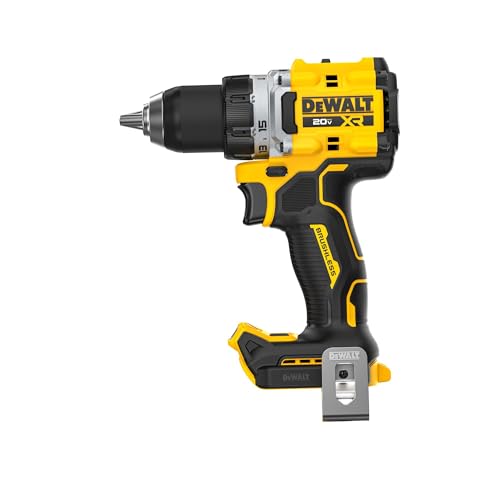 DEWALT 20V MAX XR Brushless Cordless 1/2 in.9 x 3.5 x 7.1 inches9 x 3.5 x 7.1 inches0.86 poundsCheck on Amazon
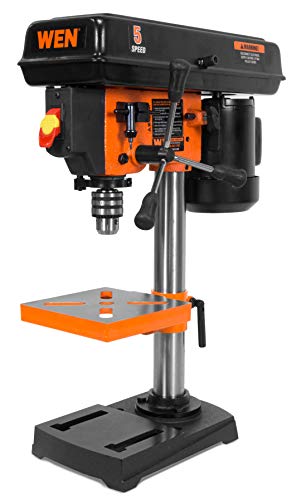 WEN 2.3-Amp 8-Inch 5-Speed Cast Iron Benchtop Drill16.88 x 8.63 x 22.88 inches32 poundsCheck on Amazon
The short answer
For repeated holes in a fixed shop setup, a benchtop drill press is usually the better choice. It holds the work at a consistent angle, makes depth stops easy to repeat, and is less tiring over a batch. A cordless drill with a drill-press guide can handle occasional holes or work too large to fit under a press, but the guide does not turn a handheld drill into a rigid machine.
The difference matters most when hole placement, depth, or squareness needs to match from one part to the next. If you are drilling a few rough holes in lumber, a drill and a steady hand may be enough. If you are making a dozen holes in steel brackets or matching parts, the press is easier to control.
As an Amazon Associate we earn from qualifying purchases at no extra cost to you.
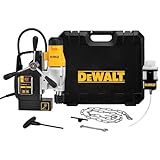


What counts as a cordless drill press?
A cordless drill press is generally a cordless drill mounted in a portable guide or stand. The drill still supplies the power; the guide supports it and directs its travel. Some guides have a base and rails, while simpler versions pivot around a central column. Their accuracy and stiffness vary, so check that the guide fits your drill and the intended bit sizes.
This setup is useful for drilling perpendicular holes on a jobsite or working on a large panel that will not fit under a benchtop press. It also lets you use the same battery platform you already own. But the drill can shift in its clamp, the guide can flex, and a small base can rock on uneven stock. Those problems show up as angled holes, wandering bits, or inconsistent depth.
Where a benchtop press wins
A benchtop press keeps the spindle aligned with the table and gives you a lever to feed the bit. Its depth stop can be set for repeated blind holes, and the table can support small work without asking you to hold the drill steady. A typical small press has roughly 2 to 3 inches of quill travel, though actual capacity and throat depth differ by machine.
That rigidity helps with hard materials and larger bits. For example, drilling a 1/2-inch hole in mild steel asks more of the setup than drilling a 1/8-inch pilot hole in pine. A press does not eliminate grabbing or overheating, but it gives you better control over feed pressure. Clamp the work; never rely on your hand to stop a piece from spinning if the bit catches.
Side-by-side comparison
| Factor | Cordless drill with guide | Benchtop drill press |
|---|---|---|
| Best fit | Occasional holes, jobsite work, oversized panels | Repeated holes in parts that fit the table |
| Repeatability | Depends on guide stiffness, clamping, and operator setup | Generally better with a fixed table and depth stop |
| Portability | High; works where you can position the guide | Low; needs a bench and power outlet |
| Setup cost | Lower if you already own a compatible drill | Higher; press, bench space, and suitable bits |
| Common limitation | Flex, drill movement in the clamp, or base rocking | Limited throat depth and workpiece size |
Accuracy and repeatability in practice
Neither option guarantees accurate hole placement by itself. Mark the centers, use a center punch on metal, and clamp a stop block or fence when drilling a batch. A drill press makes it easier to keep the bit square, but it cannot correct a misplaced mark or a part that moves on the table. For small parts, use a vise or clamps and keep fingers clear of the bit.
A drill guide can produce good results in wood when its base sits flat and you apply steady pressure. It becomes less dependable when the stock is narrow, the surface is curved, or the bit is large enough to twist the drill. Test the setup on scrap first. Measure several holes rather than assuming that a guide marked “90 degrees” will stay square under load.
Material and bit size change the answer
For small holes in softwood, plywood, or plastic, a cordless drill with a guide is often fine. For repeated holes in metal, a press is usually the safer and more consistent setup. Use the speed recommended for the bit and material; slower speeds are generally needed as bit diameter increases. Add cutting fluid where appropriate for metal, clear chips, and back off if the bit squeals, smokes, or stops cutting cleanly.
Large twist bits and hole saws can catch abruptly. A handheld drill can wrench your wrist, and a portable guide may not prevent that kick. With a press, the work can still spin if it is not secured. If the part is awkward or the cutter is large, reconsider the setup rather than trying to muscle through it.
What to buy for your shop
Choose a benchtop drill press if repeated, square holes are normal shop work and your parts fit its table and throat. Before buying, check swing, spindle travel, table adjustment, and whether the press can run at a suitable low speed for your larger bits. A bigger advertised horsepower number matters less than a stable machine and usable speed range for ordinary bench work.
Choose a portable drill guide if you need occasional perpendicular holes, portability, or access to large workpieces. Confirm the clamp will hold your drill securely and that the guide’s travel suits the holes you plan to make. If you already own a good cordless drill, this can be a sensible lower-cost option—just expect to spend more time checking alignment and supporting the work.
When the cheaper option is enough
Do not buy a press just to drill a handful of clearance holes in a weekend project. A sharp bit, a marked center, a clamped workpiece, and careful pressure can be adequate with a handheld drill. A drill guide is a useful middle ground when you want help staying square without giving up portability.
But if you are making the same hole across a run of parts, the press earns its space through fewer setup corrections and less operator fatigue. For repeated shop holes, buy the benchtop press if the work fits. Pick the cordless setup when portability or oversized stock matters more than machine-level consistency.