What's inside
As an Amazon Associate I earn from qualifying purchases. This post may contain affiliate links at no extra cost to you.
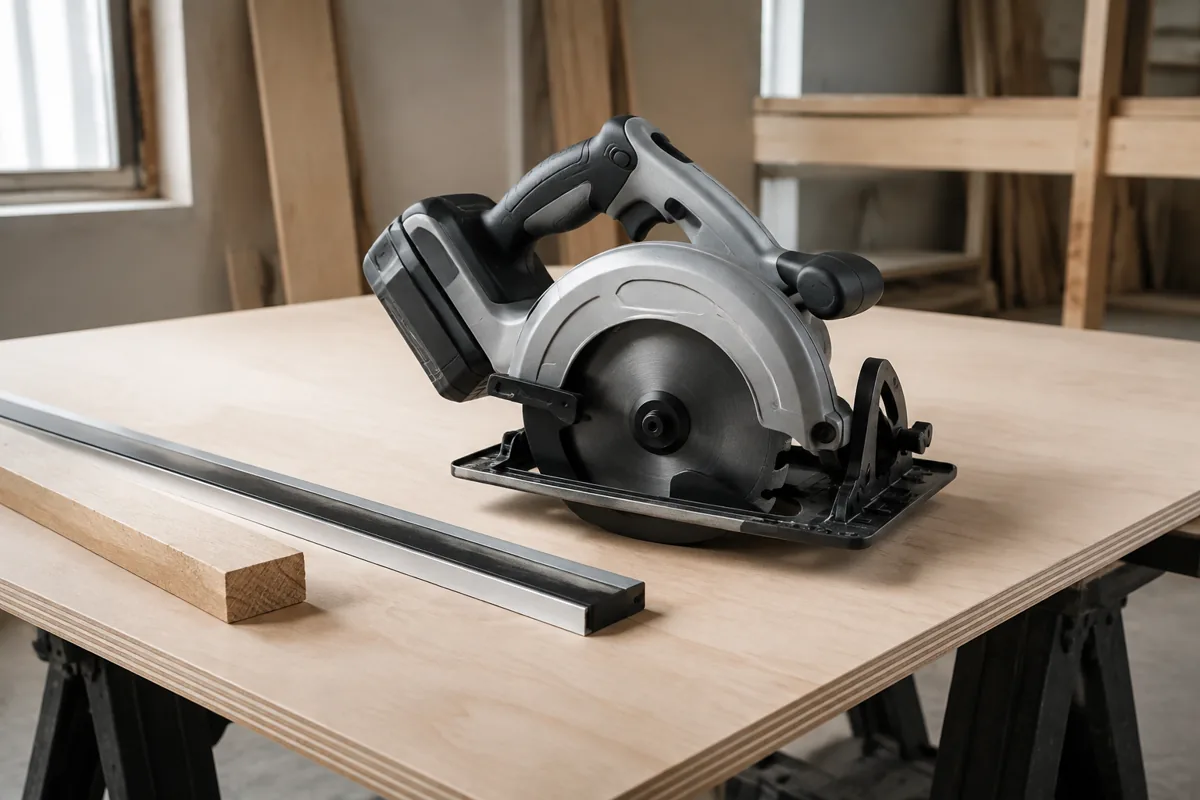
For repetitive framing cuts, the choice between a corded and cordless circular saw comes down to workflow, not just cutting power. Both can rip plywood, crosscut dimensional lumber, and chew through stacks of framing stock. The better tool is the one that keeps your cuts consistent without forcing you to stop, manage a cord, or compensate for a saw that is losing speed.
As an Amazon Associate we earn from qualifying purchases at no extra cost to you.


Our Top Picks
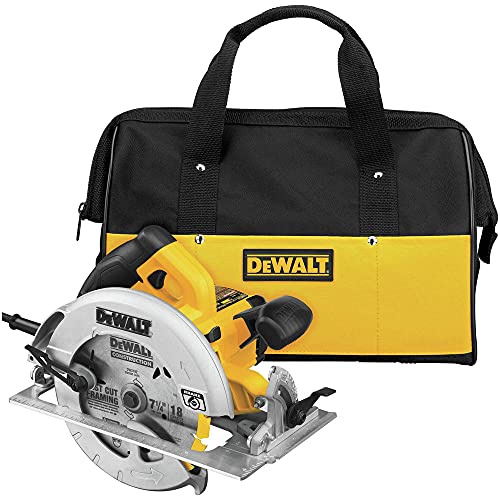
 DEWALT FLEXVOLT 60V MAX* Circular Saw with BrakeOne Size15.35 x 8.23 x 9.65 inches8.2 poundsCheck on Amazon


The short answer
Choose a cordless circular saw if you are framing in unfinished spaces, moving around a jobsite, or making repeated cuts from ladders, scaffolding, or a pile of lumber away from an outlet. Choose a corded saw if you will make long, uninterrupted cuts at a bench or saw station and already have reliable power nearby.
For most modern framing work, a cordless saw makes more sense when paired with two or three high-capacity batteries and a fast charger. A corded saw remains the cheaper and more dependable choice for occasional use, shop work, and large batches of plywood cuts.
Where cordless wins on a framing job
The main advantage is movement. A cordless saw does not drag a cable across the lumber, catch on wall plates, or disappear behind a stack of sheathing. That matters when making dozens of short crosscuts, trimming studs in place, or cutting rafters on a roof deck.
There is also less setup time. Pick up the saw, make the cut, and set it down. You do not need to locate an outlet or protect an extension cord from being sliced. The absence of a cord also reduces one common failure mode: accidentally cutting through the power lead. That mistake can stop work, damage the saw, and create a shock hazard if the cord is already worn.
Modern brushless cordless saws generally have enough output for normal framing lumber. A good 18V or 20V platform saw will cut 2x4s and 2x6s easily, and many can cut a 2x material at 45 degrees in one pass. For repetitive work, prioritize a saw with a visible blade, a rigid shoe, an effective blade brake, and a comfortable handle rather than chasing the highest advertised voltage.
If you are already invested in a battery platform, buying a bare tool is often the sensible route. Otherwise, compare the kit price carefully. Batteries can cost as much as the saw, and a single compact battery may be frustratingly short-lived under continuous framing use. See current options in brushless cordless circular saw kits.
Where corded wins
A corded saw delivers consistent power for as long as the motor stays cool and the circuit holds. It does not slow down because the battery is cold, partly discharged, or overdue for charging. That consistency is useful when ripping full sheets of plywood or cutting a large batch of lumber in a fixed location.
The purchase price is usually lower, especially if you do not own batteries. A basic corded saw and a suitable extension cord can cost less than a cordless tool-only purchase. You also avoid the long-term replacement cost of battery packs, which commonly become the most expensive consumable in a cordless system.
The drawbacks are practical. A cord can snag on framing, fall across your cut line, or pull the saw sideways as you move. Long extension cords also cause voltage drop, particularly if they are undersized or very long. Use a heavy-duty cord matched to the saw’s amperage; do not run a high-draw saw through a thin household cord or a marginal generator.
Corded vs. cordless circular saw
| Factor | Corded | Cordless |
|---|---|---|
| Best setting | Bench, shop, or near a dependable outlet | Active construction site and remote cuts |
| Runtime | Continuous | Limited by battery capacity and charging |
| Typical cost | Lower initial cost | Higher with batteries and charger |
| Handling | Cord can snag or drag | Unrestricted movement |
| Heavy ripping | Strong and consistent | Capable, but battery-dependent |
| Maintenance concern | Brushes, cord damage, and extension-cord limits | Battery aging, charging, and cold-weather performance |
Battery planning is part of the tool choice
Repetitive framing exposes weak battery planning quickly. A compact 2Ah pack may be comfortable but can force frequent changes. A 5Ah or 6Ah pack usually offers a better balance for a full day of framing, although it adds weight. Two packs let one charge while the other works; three are more practical when cuts are continuous or power is unavailable.
Cold weather reduces battery performance, and a battery that feels adequate for occasional cuts may overheat or shut down during long rips. Keep spare packs out of direct cold and rotate them rather than running one pack until it is completely flat. If your work regularly involves sheet goods, consider high-capacity cordless saw batteries and budget for the charger, not just the tool.
Cut quality, safety, and failure modes
Neither power source guarantees a straight cut. A dull or cheap blade creates more drag than most framing saws can overcome cleanly. For dimensional lumber, use a sharp framing blade with a low tooth count; for plywood, switch to a finer-tooth blade to reduce splintering. When the blade starts burning, wandering, or requiring force, stop and replace it. Pushing harder can cause a bind and increase kickback risk.
Support the work on both sides of the cut, but keep the offcut from pinching the blade. Pinching is especially common when ripping long boards or cutting sheet goods without enough support. A saw that suddenly slows, kicks, or pulls sideways is giving you a problem to correct—not an invitation to push harder.
For repetitive cuts, a corded saw is fine at a cutting station with stable supports and a protected cord path. A cordless saw is safer and faster when the work location changes constantly. In either case, wear eye protection, keep both hands on the saw when practical, and wait for the blade to stop before setting it down.
What to buy for your work
Buy a corded model if you frame only occasionally, already have a heavy-duty extension cord, and want the lowest-cost route to reliable cutting. It is also the better value for a workshop where the saw rarely leaves the bench.
Buy cordless if you make hundreds of cuts across a jobsite, already own compatible batteries, or value fast repositioning more than the lowest purchase price. For a first cordless platform, a kit with a brushless saw, two high-capacity batteries, and a rapid charger is more useful than a bare saw with one small pack. If sheet goods are a major part of the job, compare 15-amp corded circular saws as well. The cheaper option is entirely adequate when your cuts happen in one place; cordless earns its cost when moving the tool is the part slowing you down.