What's inside
As an Amazon Associate I earn from qualifying purchases. This post may contain affiliate links at no extra cost to you.
Our Top Picks
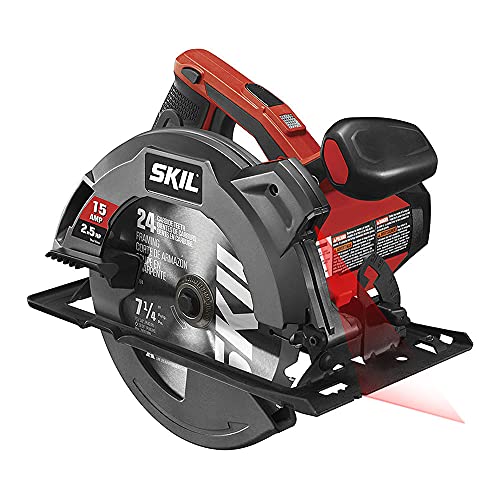 SKIL 15 Amp 7-1/4 Inch Circular Saw with7-1/4 Inch (Pack of 1)14.2 x 9.8 x 8.5 inches8.7 PoundsCheck on Amazon

The short answer
For everyday framing, a 7¼-inch circular saw is usually the more practical first choice. Its blade reaches deeper, it handles common lumber cuts without as much repositioning, and replacement blades are easy to find. A 6½-inch saw is lighter and can be easier to handle overhead or for occasional cuts, but its reduced depth matters when cutting thick stock or making bevel cuts.
That does not mean the larger saw makes every job faster. If most of your work is cutting 2-by-4s, sheathing, or trim, a good 6½-inch saw can do the work. The choice comes down to how often you need extra cutting depth, how long you carry the tool, and whether you value lower weight more than versatility.
What the blade sizes mean in practice
A nominal 7¼-inch blade typically cuts about 2½ inches deep at 90 degrees. A 6½-inch blade commonly reaches around 2⅛ inches. Exact capacity varies by saw, and the depth drops when you tilt the shoe for a bevel cut.
That difference is small on paper but useful on site. A 2-by-4 is actually 1½ by 3½ inches, so either saw cuts through it from one side at 90 degrees. A 2-by-6 is 1½ by 5½ inches; neither size normally cuts all the way through that width in one pass. The 7¼-inch saw gets closer, though, and is more likely to finish the cut with a second pass that is easier to line up.
How each size handles everyday framing
For crosscutting studs, plates, and rafters, both sizes are capable. A 6½-inch saw has enough depth for a typical 2-by-4 cut, including many common bevels. If you are cutting roof framing, stair parts, or other thicker material, check the saw’s stated depth at the angle you plan to use—not just its maximum depth at 90 degrees.
For ripping plywood and OSB, the smaller saw is not automatically at a disadvantage. Both can make long cuts with a straightedge or track-compatible guide. Blade quality, shoe stability, and keeping the cord or battery clear of the cut often matter more than the diameter. A dull or coarse blade can leave a rough edge and make either saw work harder.
Where the 7¼-inch model pulls ahead is in less common but routine site situations: cutting a thick stack of sheet goods, trimming a 4-by-4 from multiple sides, or beveling a deeper member. It does not turn those cuts into effortless one-pass jobs, but it gives more room to work.
Side-by-side comparison
| Factor | 7¼-inch saw | 6½-inch saw |
|---|---|---|
| Typical depth at 90 degrees | About 2½ inches | About 2⅛ inches |
| 2-by-4 cuts | Comfortable one-pass capacity | Usually one pass at 90 degrees |
| Bevel capacity | More depth to work with | Can run short on thicker stock |
| Weight and handling | Usually heavier and bulkier | Usually lighter and easier overhead |
| Blade availability | Broad selection in common sizes | Plentiful, though fewer options in some stores |
| Best fit | General framing and varied cuts | Light work, overhead use, or a compact kit |
Those are typical figures, not a guarantee for every saw. Compare the manufacturer’s cut-capacity specifications before buying, especially if bevel cuts are part of your regular work.
Weight, power, and battery trade-offs
A smaller saw often weighs less, but the difference depends on the tool’s design and battery. A compact cordless saw with a small battery can feel noticeably easier to hold above shoulder height. That matters when you are making repeated cuts from a ladder or carrying the tool around a large site. For bench-height cutting, a few extra pounds may be less important than the larger blade’s added capacity.
Do not assume blade size alone determines power. Motor design, battery voltage and capacity, blade sharpness, and feed rate all affect how a saw performs. Forcing either saw through a cut can bog down the motor, burn the wood, or pull the saw off line. Keep the offcut supported so it cannot pinch the blade, and let the blade reach full speed before entering the cut.
What to buy for your work
Choose a 7¼-inch saw if you want one saw for framing, occasional deeper cuts, and general construction. For a corded saw, it is the straightforward standard choice. For cordless tools, match the saw to the battery platform you already own, then compare weight and depth capacity. See current options for a 7¼-inch circular saw.
A 6½-inch saw makes sense if lower weight and compact handling are the priorities, or if your work is mainly 2-by lumber and sheet goods. It is also a reasonable cheaper purchase when you already own a larger saw for occasional deep cuts. Check the saw’s maximum cut depth before deciding: a model with less capacity than the typical range may not suit the bevel work you expect. Browse 6½-inch circular saws.
Whichever size you choose, budget for a sharp blade suited to the work. A framing blade with fewer teeth cuts quickly through lumber; a higher-tooth-count blade generally leaves a cleaner edge in sheet goods. A well-maintained 6½-inch saw is more useful than a larger saw with a dull blade and a poorly adjusted shoe.
The practical choice
If you are buying only one saw for regular framing, get a 7¼-inch model unless weight is a genuine daily constraint. Its extra depth reduces workarounds and gives more headroom for bevels and thicker material. If your cuts are mostly 2-by-4s, panels, and light renovation work, a 6½-inch saw is not a compromise that needs apologizing for—it is simply a lighter tool with a narrower range.