What's inside
As an Amazon Associate I earn from qualifying purchases. This post may contain affiliate links at no extra cost to you.
Our Top Picks

The short answer
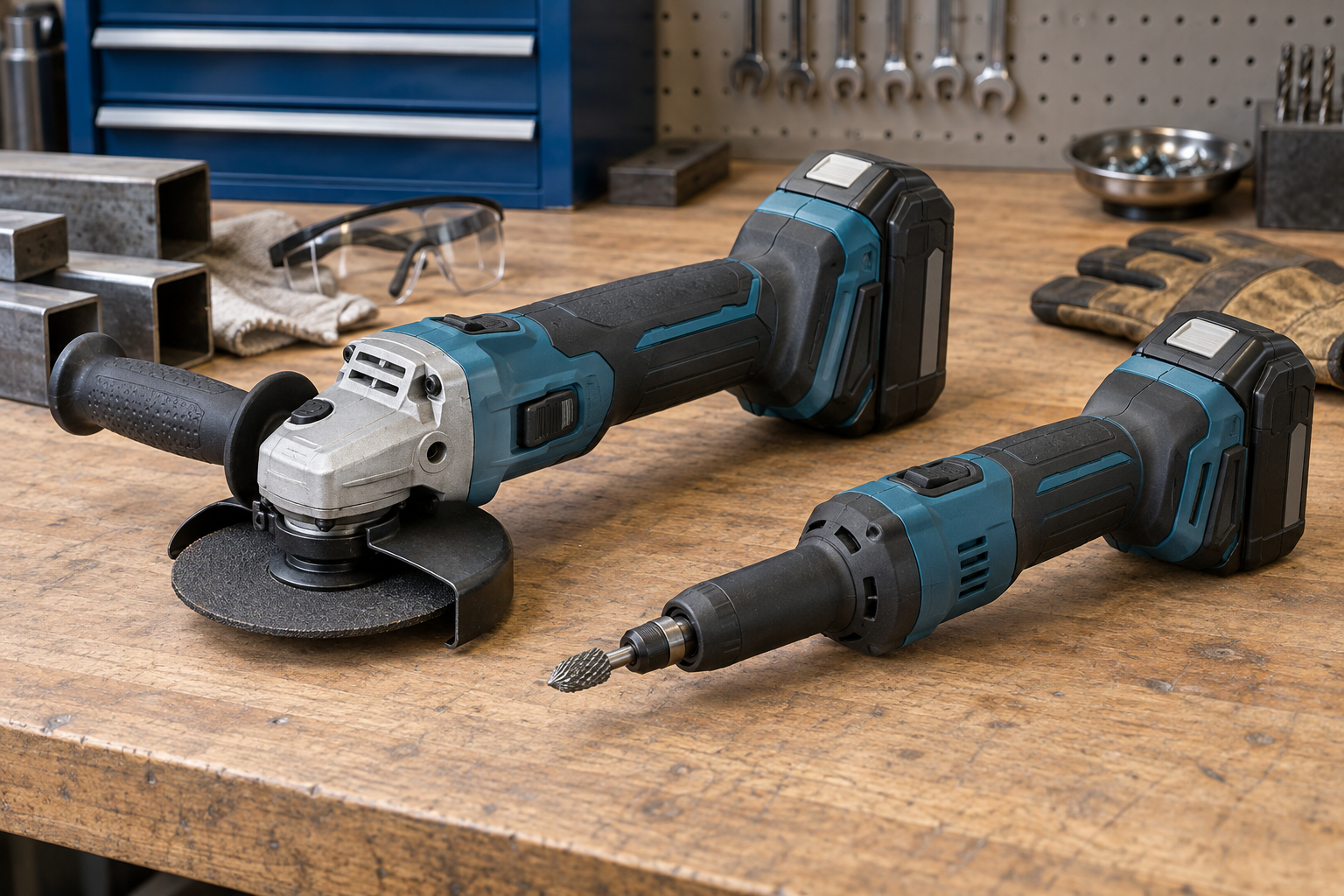
For a long deburring shift on one bench, a corded die grinder is usually the better fit: it can run continuously without battery swaps, and you do not need to manage a charging rotation. A cordless grinder makes more sense when the work moves around, access to an outlet is awkward, or each part needs only a few minutes of grinding.
That distinction matters more than a small difference in advertised speed. Continuous metal deburring puts steady demand on the tool, the abrasive, and the operator. A grinder that bogs down, overheats, or runs out of charge can slow the whole job. The right choice depends on duty cycle, material removal, and how your work area is set up.
As an Amazon Associate we earn from qualifying purchases at no extra cost to you.


What continuous deburring demands
Deburring can mean a quick pass over a drilled hole or hours of removing sharp edges from cut plate. For sustained work, estimate how long the grinder will actually be running per hour. Ten seconds on a part followed by handling time is different from holding a carbide burr against a casting for several minutes at a time.
Most small die grinders run at high speeds, often around 20,000–30,000 rpm, though the tool and accessory determine the safe working limit. High speed helps with small carbide burrs and mounted points, but it does not mean more pressure is better. Forcing the cutter can slow it down, heat the work, wear the accessory, or make the tool kick. Let the cutting edge do the work, and use a wheel or burr rated for the grinder’s speed.
For long runs, also plan for metal chips, noise, and heat. Wear eye protection and hearing protection; use a face shield where flying fragments are a concern. Keep the work clamped, clear flammable material, and follow the grinder and accessory makers’ instructions. A die grinder is not a substitute for a properly guarded angle grinder when the job calls for a larger wheel.
Corded vs. cordless at a glance
| Factor | Corded die grinder | Cordless die grinder |
|---|---|---|
| Long, steady operation | Best suited to a fixed bench and extended use; no battery change needed | Limited by battery capacity and temperature; spare packs help, but add cost |
| Mobility | Restricted by outlet location and cord management | Easy to carry between workstations or around a large assembly |
| Power consistency | Generally steady when supplied by a suitable circuit and extension cord | Can vary with battery charge, pack condition, and load |
| Setup and upkeep | Manage the cord; check it for cuts and keep it clear of the work | Charge and rotate packs; battery capacity declines with age |
| Best value case | Frequent use at one location | Short jobs, mobile work, or a battery platform you already own |
When corded makes more sense
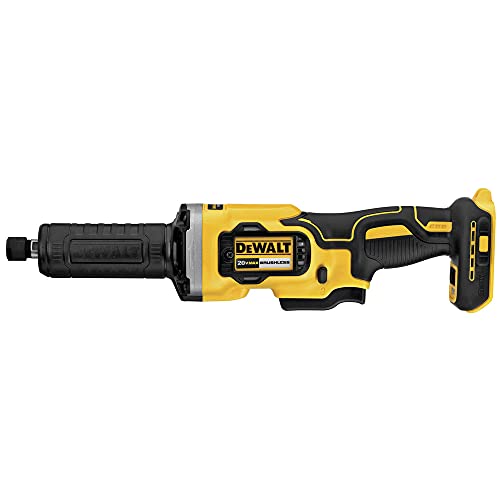
If the grinder will be used for long stretches at a bench, corded is the straightforward choice. It avoids interruptions to swap packs and the expense of buying enough batteries to keep two tools running. A corded tool can still overheat or wear out, and its duty cycle depends on its design, but it does not stop because a battery is empty.
Pay attention to the supply. A long, undersized extension cord can cause voltage drop and make a motor work poorly; use a cord rated for the tool’s current and length, and keep it out of the cutting area. Check the tool’s manual for electrical requirements and duty limits. If you want to compare options, start with corded die grinders and compare collet size, speed, warranty, and stated duty guidance rather than choosing by rpm alone.
When cordless is worth it
Cordless earns its keep when the parts are spread across a shop, the work is on a vehicle or structure, or a cord would snag on fixtures. It is also convenient for intermittent work: deburr several edges, set the tool down, then return later. If you already own compatible packs, the purchase can be economical. If you need the tool, charger, and multiple batteries from scratch, the price advantage of corded often grows.
Runtime varies too much to promise a universal number. Battery capacity, pack age, material, burr type, and pressure all matter. Under a heavy load, a pack can run down faster and may get hot; a protection system can shut the tool off until it cools. For regular use, check the manufacturer’s runtime guidance and budget for at least one spare pack so one can charge while the other works. Browse cordless die grinders that match a battery platform you already use, and compare bare-tool versus kit cost.
Accessories and common failures
Tool choice cannot compensate for the wrong abrasive. A coarse burr removes material quickly but can leave a rough edge or gouge thin stock. A finer abrasive is easier to control for light cleanup, though it takes longer. Match the accessory’s shank to the collet, seat it correctly, and never exceed its rated speed. A loose or damaged accessory can vibrate, slip, or break apart.
Common problems include pressing too hard until the grinder slows, using a clogged abrasive, and letting a burr catch on an edge. Those habits create excess heat and can damage both the workpiece and accessory. If the tool gets unusually hot, smells of burning, or loses speed repeatedly, stop and inspect it rather than continuing. Keep vents clear of metal dust, and do not blow debris into the motor unless the manufacturer allows it.
Make the buying decision
Choose corded for frequent, stationary deburring with long run periods, especially when you do not already own a compatible battery system. Choose cordless for mobility and short, interrupted jobs, or when battery packs are already part of your shop. For occasional edge cleanup, the cheaper corded tool is often perfectly adequate if an outlet is nearby; there is little reason to pay for cordless convenience you will rarely use.
Before buying, confirm collet size, accessory compatibility, speed range, tool weight, and service support. If the job involves hours of near-continuous contact, ask the maker about duty cycle and allow for breaks to inspect the tool and work. A stable setup, sharp compatible accessories, and controlled pressure will usually matter more to finish quality than choosing the tool with the biggest speed number.