What's inside
- Cordless Impact Driver vs Corded Screwdriver: Which Suits Repetitive Assembly?
- How the two tools deliver power
- Cordless impact driver vs corded screwdriver
- What matters during repetitive assembly
- When the impact driver is the better choice
- When the corded screwdriver is the better choice
- Which should you buy?
As an Amazon Associate I earn from qualifying purchases. This post may contain affiliate links at no extra cost to you.
Our Top Picks


Cordless Impact Driver vs Corded Screwdriver: Which Suits Repetitive Assembly?
For repetitive assembly, a cordless impact driver is usually the more versatile tool, but a corded screwdriver is often the better production tool. The difference comes down to control rather than maximum power. An impact driver is designed to drive stubborn fasteners quickly. A corded screwdriver is better suited to driving the same screw into the same material hundreds of times without over-tightening or stopping to recharge.
That makes the right choice dependent on the job. Building occasional furniture, installing decking, or assembling large timber components favors the cordless impact driver. Installing cabinet hardware, fastening sheet goods, assembling flat-pack products, or running a small workshop favors a corded screwdriver with a clutch and, ideally, a depth stop.
As an Amazon Associate we earn from qualifying purchases at no extra cost to you.


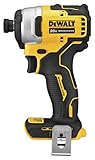
How the two tools deliver power
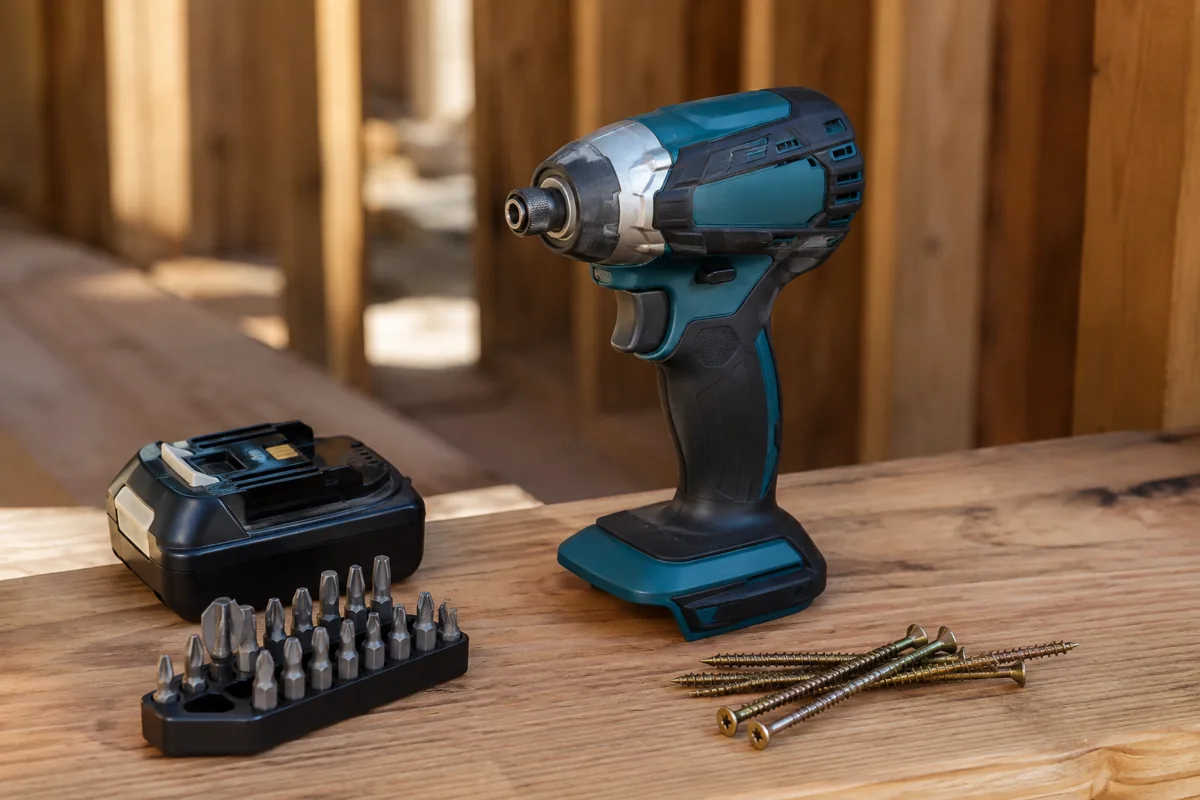
A cordless impact driver uses a rotating hammer mechanism. When resistance rises, the internal hammer strikes repeatedly, adding short bursts of torque. This helps the tool drive long screws and remove tight fasteners without transferring as much twisting force to your wrist.
Those impacts are also the source of its weaknesses in repetitive assembly. The torque arrives in pulses, so a small change in material density, pilot-hole size, or screw friction can produce a noticeably different final tightness. The tool may also continue driving after the screw head reaches the surface, stripping the recess or crushing the workpiece.
A corded screwdriver uses continuous rotation from an electric motor. Better models include an adjustable clutch that slips when the preset torque is reached. That gives much more consistent results across a batch of identical parts. A corded model also runs as long as power is available, with no battery swaps or charging downtime.
Do not confuse a basic corded electric screwdriver with a dedicated production screwdriver. A low-cost tool with only a trigger and no clutch can still overdrive screws. For repetitive work, search for a corded screwdriver with an adjustable clutch.
Cordless impact driver vs corded screwdriver
| Factor | Cordless impact driver | Corded screwdriver |
|---|---|---|
| Best use | Long screws, timber, construction, removal | Repeated fastening into consistent materials |
| Torque control | Limited and less predictable | Good when fitted with a clutch |
| Runtime | Typically 20–60 minutes of active driving per battery, depending on battery size and load | Continuous while plugged in |
| Speed | Very fast on long or resistant screws | Consistent on short machine and wood screws |
| Noise | High, especially when impacting | Usually lower, though motor noise remains |
| Portability | Excellent | Limited by the power cord |
| Typical failure | Stripped heads, overdriven screws, depleted battery | Cord snagging, clutch wear, inadequate torque on heavy work |
What matters during repetitive assembly
Consistency is the main test. If you are fastening 100 screws into identical panels, a clutch-equipped corded screwdriver can be set so the screw seats at nearly the same depth each time. This reduces split edges, loose joints, and damaged screw heads. It also makes inspection easier: a screw that sits high or low is immediately visible.
An impact driver can perform the same task, but it requires a lighter trigger finger and more frequent checks. Its speed control is usually based on trigger pressure or electronic modes, not a true torque cutoff. Soft pine may accept the screw cleanly while a harder knot causes the driver to hammer before the head is fully seated. In thin sheet metal or plastic, that can pull the material out of shape.
Bit choice affects failure rates as much as the tool. Use a fresh, correctly sized bit and replace it when the tip begins to round. Phillips screws are especially prone to cam-out; Torx or hex-drive screws tolerate impact tools better. For a production-like setup, a corded screwdriver with a depth stop is worth considering when screw depth matters more than maximum torque.
When the impact driver is the better choice
Choose an impact driver when the work moves around, the fasteners vary, or the material creates significant resistance. Deck screws, structural timber screws, lag screws, and long cabinet screws are all reasonable jobs. The tool is also useful when you need one compact driver for drilling pilot holes, driving screws, and removing fasteners.
A modern 18V or 20V-class impact driver commonly produces several hundred inch-pounds of torque, far more than a small corded screwdriver. That reserve matters when driving a 3-inch screw into hardwood or removing a rusted fastener. Keep the setting low where possible, use the correct bit, and stop as soon as the head is flush.
Battery cost is the hidden trade-off. A bare tool may look inexpensive, but a charger and one or two batteries can make the complete setup substantially more expensive than a basic corded driver. For a workbench that never moves, that extra cost buys convenience you may not use.
When the corded screwdriver is the better choice
A corded screwdriver wins for stationary, repetitive work with predictable loads. It is especially practical for assembly lines, workshop jigs, shelving, cabinet components, electrical boxes, and drywall-style fastening where consistent depth matters. The motor does not slow because a battery is cold or nearly empty, and there is no pause while a second pack charges.
The cord is its main nuisance. It can catch on a workpiece, drag small parts off a bench, or limit access inside a cabinet. Use a strain-relieved extension cord, keep the cable behind the work, and inspect it for cuts. A corded screwdriver also usually has less peak torque, so it is the wrong choice for heavy structural fasteners.
If your batch is small and the screws are forgiving, the cheaper option is fine. For assembling ten shelves or occasional household repairs, a basic corded electric screwdriver can be entirely adequate. You do not need a clutch, depth stop, or premium battery system unless inconsistent seating is causing problems.
Which should you buy?
Buy the cordless impact driver if portability, removal power, and mixed fastener sizes matter more than identical torque on every screw. Choose a model with multiple speed or torque modes, a brushless motor if you use it frequently, and at least one spare battery if the work lasts more than an hour.
Buy the corded screwdriver if the tool will stay near a bench and you are driving dozens or hundreds of similar screws. Prioritize an adjustable clutch, a comfortable inline or pistol grip, a lock-on function where safe, and a depth stop for surface-sensitive work. If both jobs are common, the practical combination is a corded clutch screwdriver for repeatable assembly and a cordless impact driver for heavy or mobile work.