What's inside
As an Amazon Associate I earn from qualifying purchases. This post may contain affiliate links at no extra cost to you.
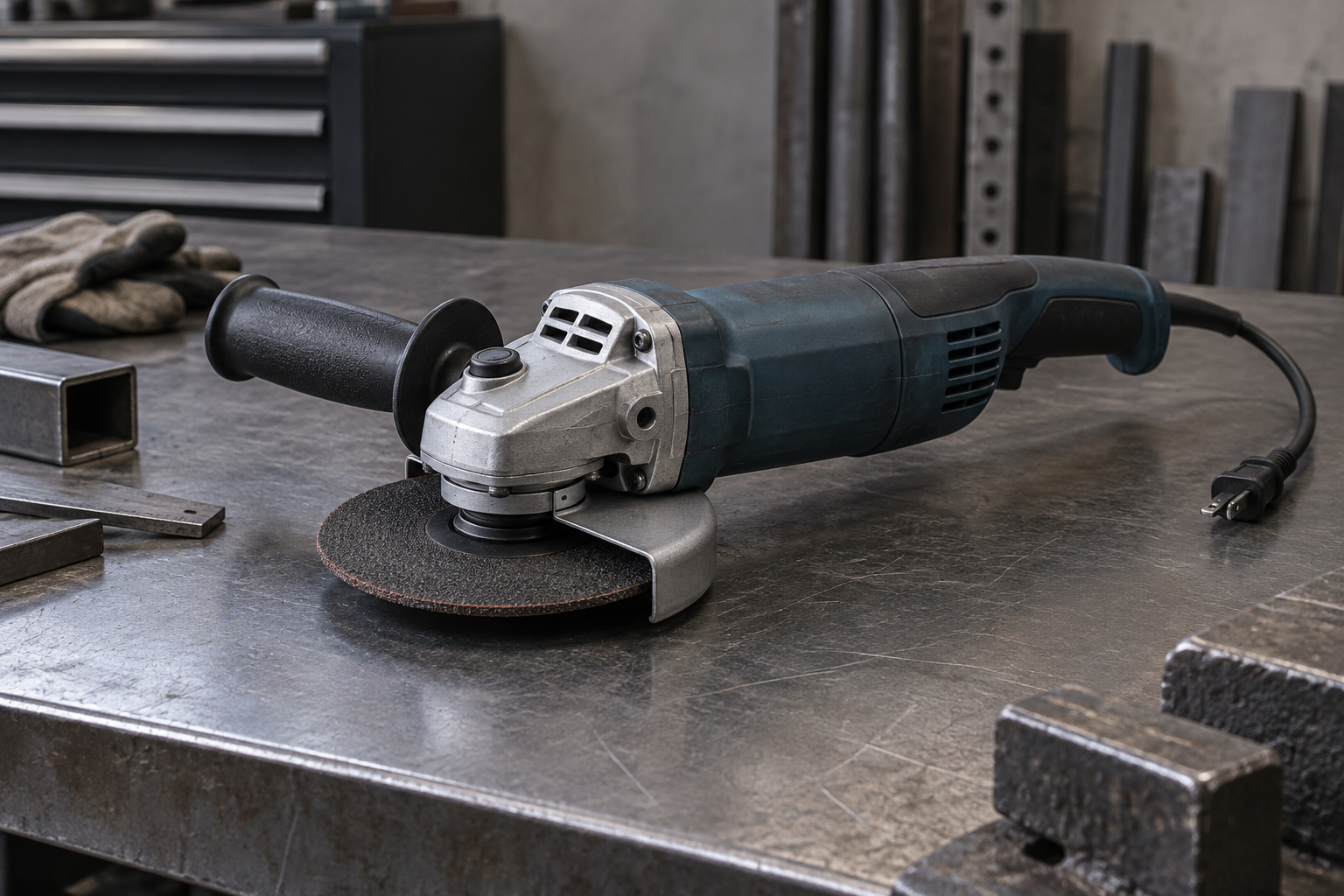
For metal deburring, both tools can remove sharp edges quickly, but they are built for different kinds of work. A die grinder is the better choice for controlled, precise deburring. An angle grinder is usually faster and cheaper for large, rough-cut parts. The right choice depends on how much metal you need to remove, how accessible the edge is, and how much finish quality matters.
As an Amazon Associate we earn from qualifying purchases at no extra cost to you.



Our Top Picks


Die grinder vs. angle grinder at a glance
| Factor | Die grinder | Angle grinder |
|---|---|---|
| Best wheel size | 1/4-inch shank burrs, small discs, and stones | 4-1/2-inch to 5-inch discs |
| Typical speed | 10,000 to 25,000 rpm | 8,000 to 12,000 rpm |
| Best use | Small edges, holes, contours, and precision work | Long edges, welds, plate, pipe, and heavy stock removal |
| Control | Excellent | Good, but more aggressive |
| Typical cost | Moderate, plus compressor or battery | Low to moderate |
| Main drawback | Slower on large surfaces | Easy to remove too much material |
When a die grinder is better
A die grinder is essentially a small, high-speed rotary tool designed for metalwork. Its narrow nose and small accessories let you reach inside holes, slots, corners, and irregular profiles that an angle grinder cannot reach. It is the better tool when deburring requires control rather than brute force.
Use a die grinder for drilled holes, milled slots, castings, tubing intersections, and parts with a visible finished surface. A carbide burr can remove a raised edge from a hole without gouging the surrounding face. A small flap wheel can then blend the area without leaving the deep scratches that a coarse grinding disc may create.
Die grinders are also useful when the burr is small. Removing only 0.5 to 1 mm from an edge is much easier with a die grinder than with a 4-1/2-inch wheel. The smaller tool gives you better visibility and makes it easier to maintain a consistent chamfer, such as 0.5 mm at 45 degrees.
Pneumatic versions are common in fabrication shops because they are compact and relatively light. They do, however, need a compressor capable of supplying their air demand. Many consume 4 to 8 cubic feet per minute at around 90 psi, and a small hobby compressor may run continuously or fail to maintain speed. Cordless models avoid the hose but add battery weight and cost.
For general-purpose precision work, look at cordless die grinders for metal deburring. Choose one with variable speed if you will use abrasive discs, flap wheels, and carbide burrs. High speed is useful for carbide, but too much speed can burn steel, load an abrasive, or make the tool difficult to control.
When an angle grinder is better
An angle grinder wins when the job involves long edges, thick plate, weld spatter, or a substantial amount of excess material. Its larger disc removes metal quickly and keeps the work moving. If you cut a steel bar with an abrasive or thin cut-off wheel, an angle grinder can clean the resulting burr in seconds.
It is also the more economical choice for occasional shop work. A basic 4-1/2-inch grinder often costs less than a quality die grinder, and its discs are widely available. One tool can handle grinding wheels, flap discs, wire wheels, and polishing accessories. If your deburring is limited to cleaning up cut ends and smoothing welds, buying an angle grinder is usually sensible.
Search for 4-1/2-inch variable-speed angle grinders if you want more control. A standard single-speed grinder may run near 10,000 or 11,000 rpm. That is fine for many grinding wheels, but aggressive for finishing work. A flap disc at a lower setting produces less heat and is easier to keep flat.
The drawback is its cutting power and disc diameter. A slight change in wrist angle can create a hollow or a deep scratch across the workpiece. The outer edge of a grinding disc can also catch on a corner, causing kickback. On thin sheet metal, an angle grinder can remove too much material before you have time to correct the mistake.
Choosing the right accessory
For a die grinder, use carbide burrs for fast removal and small aluminum-oxide or ceramic abrasive points for lighter cleanup. Carbide burrs work especially well on steel and cast iron, but they can chatter if you push sideways or use a damaged cutter. On aluminum, use a burr made for aluminum or apply a suitable cutting lubricant; ordinary flutes can clog quickly.
For final blending, a small flap wheel in the 80- to 120-grit range is usually easier to control than a hard stone. Do not use an accessory above its rated rpm. A 25,000-rpm die grinder can overspeed accessories intended for a slower tool.
On an angle grinder, a flap disc is generally the safest starting point for deburring. A 60- or 80-grit disc removes a visible burr while leaving a more manageable finish than a hard grinding wheel. Use a grinding wheel when you need maximum stock removal, but expect more heat, sparks, and surface damage. A wire wheel is for cleaning and removing loose scale, not for reliably cutting off a heavy burr.
Speed, finish, and material loss
For a short edge on mild steel, an angle grinder may finish the job in 10 to 20 seconds. A die grinder may take 30 seconds to a minute, depending on the burr. That time difference becomes significant on a batch of large parts. On the other hand, a die grinder can save time afterward by reducing rework on parts that must fit, slide, or seal.
Aluminum demands extra care. High-speed abrasives can smear aluminum across the disc or burr instead of cutting cleanly. Use accessories labeled for aluminum, reduce pressure, and stop frequently to inspect the edge. Stainless steel also benefits from light pressure and fresh abrasives; excessive heat can discolor the surface and leave a difficult-to-remove oxide layer.
Safe deburring practice
Wear safety glasses under a face shield, hearing protection, and gloves that do not interfere with your grip. Secure the workpiece instead of holding it by hand. Keep the tool moving, especially with an angle grinder, and let the abrasive do the work. Never remove the guard from an angle grinder, and use the correct guard and backing hardware for the accessory.
Inspect discs for cracks and check their maximum rpm before installation. Keep sparks away from solvents, sawdust, gas cylinders, and finished surfaces. A burr may be sharp enough to cut through a glove, so brush or wipe the part only after the tool has stopped and the edge has cooled.
Which one should you buy?
Buy an angle grinder if you mainly deburr cut steel, plate, pipe, or welds and want the lowest-cost, fastest solution. It is the better value for rough fabrication, especially if you will also grind, cut, and clean metal.
Buy a die grinder if you work on holes, slots, castings, small parts, or visible edges where control matters. If you already own an angle grinder, a die grinder is a useful second tool rather than a replacement. For many home shops, the practical setup is an angle grinder for bulk removal and a die grinder, file, or abrasive pad for the final pass.
If the work is occasional and cosmetic perfection is not important, the cheaper angle grinder is fine. If parts must fit accurately or you routinely deburr dozens of small edges, the die grinder will usually pay for itself through better control and less rework.