What's inside
As an Amazon Associate I earn from qualifying purchases. This post may contain affiliate links at no extra cost to you.
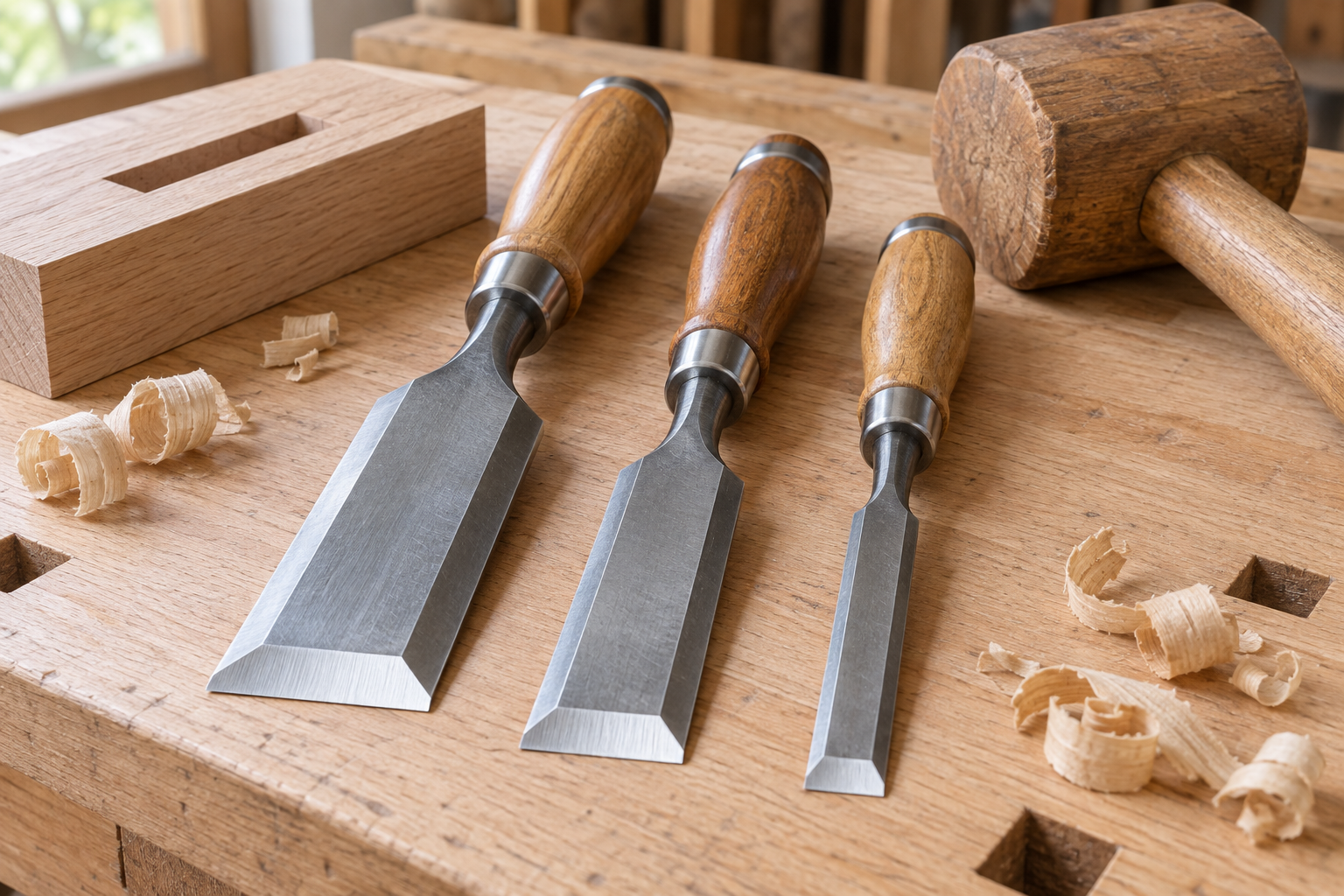
For a bench chisel used in joinery, the hollow-versus-flat grind choice matters less than the cutting angle, edge quality, and how easily you can maintain it. Still, the two grinds behave differently at the bench. A hollow-ground chisel removes metal quickly during honing and feels nimble at the edge. A flat-ground chisel supports more steel behind the bevel and is generally more tolerant of hard chopping.
For most furniture and cabinet joinery, either grind can work well. The practical choice depends on whether the chisel will mostly pare shoulders and clean corners, or whether it will also be struck with a mallet to remove waste.
As an Amazon Associate we earn from qualifying purchases at no extra cost to you.



Our Top Picks


What the Terms Mean
A hollow grind has a shallow concave curve on the bevel, usually produced by grinding on a wheel. The cutting edge and the heel of the bevel touch the sharpening stone first, while the center of the bevel sits slightly above it. The hollow may be subtle; it does not mean the bevel is visibly scooped out like a gouge.
A flat grind has a bevel that is straight from the cutting edge to the back of the primary bevel. When placed on a flat stone, the entire bevel can contact the abrasive. Some chisels marketed as flat ground are not perfectly flat, but they lack the distinct concavity of a wheel-ground bevel.
Both chisels can be sharpened to the same edge angle. Grind shape and bevel angle are separate specifications. A hollow-ground chisel at 30 degrees is not automatically more aggressive than a flat-ground chisel at 30 degrees.
How They Perform in Joinery
In paring work, a hollow grind can feel slightly easier to control. With less steel contacting the stone and the work, the bevel creates less drag. This is useful when trimming a tenon cheek, fitting a hinge recess, or cleaning the corners of a mortise. The effect is real but modest; a polished bevel and a sharp edge make a larger difference.
A flat grind gives continuous support behind the edge. That is useful when chopping a mortise, chopping across end grain, or levering out waste. The broader bevel is less likely to rock unpredictably when the chisel is driven with a mallet. It also gives a more consistent reference if you sharpen by hand without a guide.
Neither grind changes the chisel’s back requirement. The back should be flat or very slightly relieved near the cutting edge, and the first 10 to 20 mm behind the edge should be polished. A hollow-ground bevel does not compensate for a twisted back, and a flat-ground bevel does not make a poor chisel accurate.
| Characteristic | Hollow grind | Flat grind |
|---|---|---|
| Stone contact while honing | Two narrow contact zones | Full bevel contact |
| Metal removal | Usually faster and easier | More abrasive area to work |
| Paring feel | Low drag; responsive | Stable, with slightly more drag |
| Heavy chopping | Fine if the steel and edge are strong | More support behind the edge |
| Hand-sharpening tolerance | Easy to refresh, but rocking can alter the curve | Simple reference, but more work initially |
| Best general use | Paring and mixed bench work | Regular chopping and abuse |
Edge Angles and Durability
Angle has a bigger effect on failure than grind shape. A 25-degree primary bevel with a 30-degree secondary bevel is a common setup for light paring. For general bench work, a 25-degree primary bevel plus a 30-degree micro-bevel is a useful starting point. Chisels used hard in mortises often benefit from a 30- to 35-degree cutting edge.
If the edge folds, chips, or crumbles, do not immediately blame the hollow grind. The edge may be too thin for the work, the steel may be poorly heat-treated, or the chisel may be twisted sideways while cutting. A 2- to 3-degree increase in edge angle often solves repeated edge damage, though it makes paring slightly less effortless.
The heel of a hollow bevel is not a weak point by itself. The cutting edge is supported by the steel directly behind it. However, a very deep hollow grind leaves less material in the middle of the bevel and can make a chisel less pleasant for levering. Avoid treating any bench chisel as a pry bar; even a flat-ground one can bend or chip.
Sharpening Practicalities
A hollow grind is convenient if you sharpen on oilstones, waterstones, or diamond plates. You can often raise a burr with fewer strokes because only the bevel’s edge and heel touch the abrasive. A 1,000-grit stone for repairing or establishing the edge, followed by 4,000 to 8,000 grit for finishing, covers ordinary joinery. Remove the burr from the back and finish with light strokes rather than grinding heavily on the back.
Flat-ground chisels take longer to establish full bevel contact, especially if the factory bevel is uneven. Once flat, however, the bevel is easy to inspect: marker applied across the bevel should disappear evenly. A quality set of bench chisels is worthwhile if several sizes need matching geometry, but a cheaper flat-ground chisel is perfectly adequate for occasional work.
A honing guide can help maintain a repeatable 30-degree edge, particularly on flat-ground chisels. Narrow chisels can be awkward in wide roller guides, so check the guide’s minimum blade width before buying a woodworking chisel honing guide. Freehand sharpening is faster once learned, but consistency matters more than the method.
Which One Should You Buy?
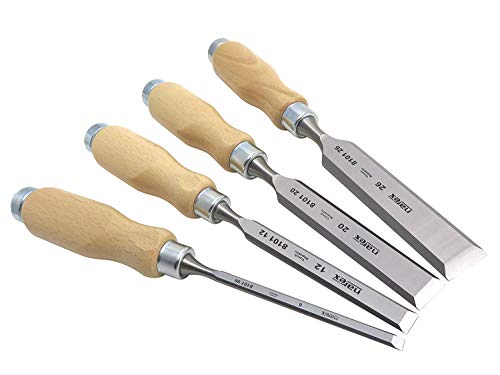
Choose hollow-ground bench chisels if your work is mainly paring, fitting joints, trimming miters, and occasional light chopping. They are especially pleasant when you sharpen frequently and want quick maintenance. A hollow grind also suits a mixed set where the chisels must switch between chopping and paring.
Choose flat-ground chisels if you regularly chop mortises, remove substantial waste, or expect rough handling. The difference is not dramatic at normal bench-chisel sizes, but the full bevel gives a reassuringly solid feel. Look for a thick blade, a secure handle, and steel that holds an edge; those features matter at least as much as the grind.
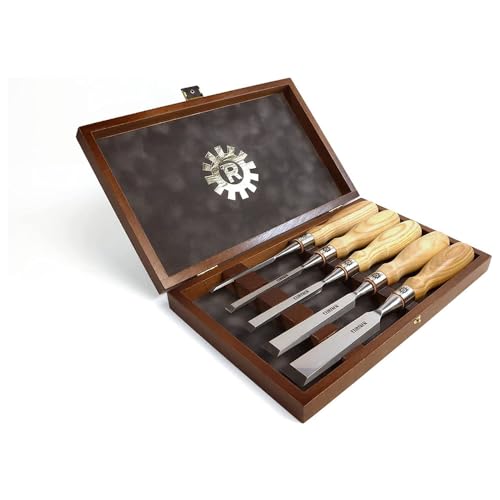
For a first set, do not pay a large premium solely for a named grind. A reasonably priced flat-ground set, sharpened correctly and fitted with a 30-degree micro-bevel, will handle ordinary joinery. Spend more on a reliable sharpening stone if your current tools cannot produce a consistent burr.
The most useful compromise is often hollow-ground chisels for the smaller paring sizes and robust flat- or lightly hollow-ground chisels for mortise work. If buying only one chisel, a 19 mm (3/4-inch) general-purpose bench chisel with a 30-degree edge is a sensible size and geometry. Maintain the back, avoid sideways levering, and the grind will rarely be the factor that limits your joinery.