What's inside
As an Amazon Associate I earn from qualifying purchases. This post may contain affiliate links at no extra cost to you.
Our Top Picks


The short answer
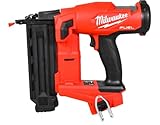
For clean holes in finish trim, the Milwaukee M18 FUEL 18-gauge brad nailer and DeWalt DCN680 are close competitors. Both are cordless, use 18-gauge brads, and avoid a hose or compressor. Neither guarantees an invisible hole: the result depends on the wood, nail length, depth setting, and whether the nose sits flat against the work.
Choose based on the details that matter on your jobs: the batteries you already own, how the nose behaves in tight spots, and local price. If you mostly install casing and baseboard, either can leave a small, easily filled mark when properly set. Test on scrap before committing to finished trim.
As an Amazon Associate we earn from qualifying purchases at no extra cost to you.



Comparison at a glance
| Detail | Milwaukee M18 FUEL 18-gauge brad nailer | DeWalt DCN680 |
|---|---|---|
| Fastener | 18-gauge brad nails | 18-gauge brad nails |
| Length range | 5/8 to 2-1/8 inches | 5/8 to 2-1/8 inches |
| Power source | M18 battery | 20V MAX battery |
| Depth adjustment | Tool-free adjustment | Tool-free adjustment |
| Notable convenience | Selectable firing modes and an integrated belt hook | Selectable firing modes and a tool-free jam release |
| Best deciding factor | Already owning M18 batteries | Already owning compatible DeWalt batteries |
Specifications and included accessories can vary by kit and market, so confirm the exact package before ordering. The table describes the core tools, not every battery, charger, or carrying case combination.
What clean holes depend on
An 18-gauge brad leaves a narrow puncture, but a nailer can still dimple the surface, crush soft grain, or leave the fastener proud. These are different problems. A proud nail usually needs more depth; a crushed dent may need less pressure or a different contact angle. A hole that appears wide can also come from a nail entering at an angle or from a damaged nose tip.
Both nailers provide depth adjustment, so the operator can tune how far the brad sits below the surface. Start with the lowest setting that seats the nail, then increase it in small steps on a cutoff of the same material. For painted trim, a shallow, consistent recess is easier to fill than a deep crater. On clear-finished wood, even a well-set brad hole may remain visible; consider pin nails, adhesive, or a different fastening plan if appearance is critical.
Milwaukee vs DeWalt in use
The Milwaukee is a sensible pick for an M18 owner who wants to keep batteries and chargers interchangeable. Its selectable firing modes cover single-fire placement and contact actuation for faster repeated fastening. As with any contact-actuation mode, use it only when the work and your control of the tool make it appropriate; for visible trim, single-fire placement gives you more deliberate positioning.
The DCN680 has the same basic job covered: cordless operation, tool-free depth setting, and a jam-release mechanism for clearing a stuck brad. A jam is not a daily event with good nails and a clean magazine, but it can happen with bent fasteners or a damaged strip. Disconnect the battery before clearing one, and follow the manual rather than reaching into the nose while the tool is powered.
Neither model is a clear winner on hole size alone. A fresh, straight brad driven square and slightly below the surface should produce a small hole with either tool. Battery condition, nail quality, wood density, and operator technique can outweigh modest differences in tool feel. If possible, handle both: nose visibility and balance matter when nailing near a narrow edge or working overhead.
Choosing nails and setting depth
Both models accept brads from 5/8 to 2-1/8 inches. Pick length for the combined thickness of the trim and the material behind it, not simply the longest nail that fits the tool. A nail that is too short may not hold; one that is too long can emerge from the back or strike wiring and plumbing. When fastening trim to a stud through drywall, account for the drywall thickness and confirm the nail has enough purchase in wood.
Use the nail type specified in the manual and keep strips clean and dry. Bent nails, mixed or incompatible fasteners, and debris in the magazine can cause feeding problems. If a brad is consistently proud, check that the tool is square to the surface and the depth setting is sufficient before assuming the tool lacks power. If it sinks too far, back off the setting and test again.
Which one should you buy?
Buy the Milwaukee if you already have M18 batteries and the tool’s feel suits your work. Buy the DeWalt if you are invested in its 20V MAX platform or find the bare tool or kit at a better price. Buying into a battery platform solely for one brad nailer can change the economics: compare the cost of a battery and charger as well as the tool.
If you are choosing between platforms from scratch, look at the nailer plus battery-and-charger bundle rather than comparing bare-tool prices. Browse current options for cordless 18-gauge brad nailers, but check that the listing is for the tool and kit you actually need. A bare tool may be the cheaper choice only if you already own a compatible battery.
For occasional trim work, the cheaper of these two is usually fine if it fits your battery system and passes a scrap test. If you are buying a first nailer and do not need cordless convenience, compare the cost of a pneumatic 18-gauge brad nailer and compressor as a complete setup. That option adds a hose and compressor, but may make sense in a shop with air already available.
For either cordless model, the cleanest result comes from a square approach, a suitable brad, and a depth setting tested on matching scrap. If the hole still looks rough, inspect the nail and contact tip before blaming the brand.