What's inside
As an Amazon Associate I earn from qualifying purchases. This post may contain affiliate links at no extra cost to you.
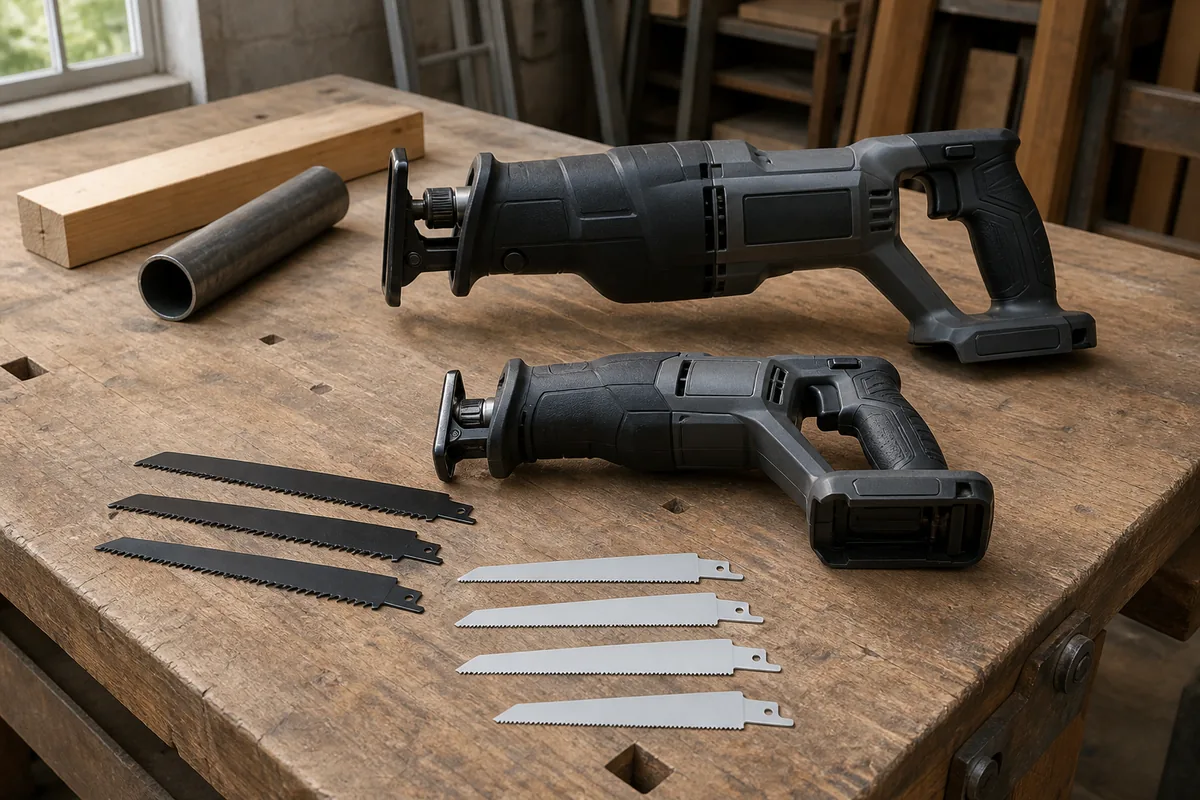
Demolition is hard on reciprocating saw blades because the work is unpredictable. A blade may cut clean wood for ten seconds, then hit a nail, screw, bracket, or hidden pipe. The best choice between bi-metal and carbide-tipped depends less on maximum cutting speed than on how often the blade will meet abrasive material and embedded metal.
As an Amazon Associate we earn from qualifying purchases at no extra cost to you.



Our Top Picks
 DEWALT Reciprocating Saw Blade Set for Metal Wood12 piece set12.56 x 7.31 x 1.37 inches1 PoundsCheck on Amazon
 DEWALT Bi-Metal Reciprocating Saw Blade Multi TPIOne Size7.4 x 1 x 12.6 inches1.1 poundsCheck on Amazon


The short answer
For ordinary demolition—framing lumber, pallets, drywall, nails, and occasional screws—bi-metal blades are the better value. They cost less, cut quickly, and are flexible enough to survive some twisting. Buy them in packs and expect to replace them.
For heavy renovation work involving nail-embedded lumber, cast iron, stainless steel, hardened fasteners, or repeated metal cutting, carbide-tipped blades last substantially longer. They cost several times more, but one blade can replace multiple bi-metal blades when the material is abrasive or unusually thick.
If you are buying one general-purpose pack, start with bi-metal demolition blades. If your work routinely destroys blades in minutes, move up to carbide-tipped reciprocating saw blades.
What bi-metal and carbide-tipped mean
A bi-metal blade usually combines a flexible spring-steel body with a high-speed-steel cutting edge. The body bends instead of snapping, while the teeth resist heat and wear better than basic carbon-steel teeth. This construction is well suited to mixed demolition, where the blade flexes as you pull it through framing or cut from awkward angles.
A carbide-tipped blade has individual carbide teeth or a carbide cutting edge attached to a tougher steel body. Carbide is much harder and more wear-resistant than high-speed steel. It keeps cutting through materials that quickly dull conventional teeth, including thick steel, cast iron, stainless steel, and wood packed with nails.
Carbide is not indestructible. The tips can chip if you twist the blade, force it sideways, or strike a very hard obstruction at the wrong angle. Bi-metal teeth usually round off gradually; carbide teeth can lose their edge suddenly after a severe impact.
Bi-metal vs. carbide-tipped blades
| Factor | Bi-metal | Carbide-tipped |
|---|---|---|
| Typical price | Lower; commonly sold in multipacks | Higher; often several times the price |
| Best materials | Wood, nails, screws, light-to-medium steel | Nail-embedded wood, thick steel, cast iron, stainless steel |
| Flexibility | Usually very good | Varies; teeth are less forgiving of twisting |
| Wear pattern | Teeth gradually dull or strip | Stays sharp longer, but tips may chip or break |
| Best use | General demolition and rough cutting | Repeated abrasive, hardened, or metal-heavy demolition |
Cutting wood with nails and fasteners
Bi-metal is normally the sensible choice for wood framing. A medium-to-coarse blade—roughly 6 to 10 teeth per inch—clears chips quickly and cuts two-by lumber without packing up. A 6-inch blade is easier to control in tight spaces; a 9- or 12-inch blade reaches through thicker assemblies but bends more easily.
The problem is repeated nail contact. One or two nails may barely affect a quality bi-metal blade, but a wall section containing dozens of nails can dull it quickly. You may notice slower progress, smoke, more vibration, and teeth that appear rounded or missing. If a blade that normally cuts a two-by-four in around 10 to 20 seconds now takes twice as long, replacement is usually cheaper than forcing it.
Carbide-tipped wood demolition blades make sense when you are cutting through old framing, roofing assemblies, pallets with heavy fasteners, or multiple layers of nailed lumber. They can maintain useful cutting speed after a bi-metal blade has become frustratingly slow. The trade-off is price: using a carbide blade on clean wood is usually wasteful.
Cutting metal and mixed materials
For thin sheet metal, conduit, brackets, and ordinary screws, bi-metal remains adequate. Use a fine-tooth blade, generally 14 to 24 teeth per inch, and keep the shoe firmly against the work. Let the teeth cut rather than leaning hard on the saw. Excessive pressure creates heat, strips teeth, and can warp thin metal.
Carbide becomes more valuable as metal gets thicker or harder. It is the better bet for cast-iron pipe, heavy angle iron, thick stainless steel, hardened bolts, and demolition where you cannot identify every fastener. Depending on the blade and material, a carbide blade may deliver several times the usable life of a bi-metal blade. The exact result varies widely with thickness, saw speed, and technique, so do not treat advertised life claims as guarantees.
Neither type should be used as a substitute for the correct blade pitch. A blade with too few teeth engaged can snag; one with too many teeth can rub, heat up, and cut slowly. As a practical rule, keep at least two or three teeth in the material at all times when cutting metal.
Why blades fail early
Most premature failures come from technique rather than the blade’s label. Bending the blade sideways while it is under power is the fastest way to damage teeth. Pulling the saw toward yourself instead of keeping the shoe planted can also make the blade chatter and flex.
Overheating is another common failure. A hot blade loses its edge quickly, especially in metal. If the cut produces blue discoloration, heavy smoke, or a burning smell, reduce pressure and allow a pause. Cutting steel at the wrong speed setting can do the same thing; use a slower setting for thick metal and a faster setting for wood.
Use eye protection and gloves, but do not rely on gloves to make a damaged blade safe. Inspect the blade after each difficult cut. Missing carbide tips, cracked steel, severe bends, or teeth stripped from one section are reasons to discard it.
Which one should you buy?
Choose bi-metal if you are dismantling a bathroom, deck, shed, or interior wall and expect a mixture of wood, nails, drywall, and light metal. A multi-pack lets you match blade length and tooth pitch to the job without worrying about saving every blade. For many homeowners, the lower cost and forgiving flex matter more than maximum service life.
Choose carbide-tipped if downtime costs more than blade price, if you repeatedly cut nail-heavy lumber, or if your demolition includes thick and difficult metal. Buying a small selection of carbide metal demolition blades is more practical than using them for every cut.
For a mixed project, carry both. Start with bi-metal for clean wood and light fasteners, then switch to carbide when the blade begins slowing noticeably or the material becomes consistently abrasive. That approach usually delivers the lowest cost per cut without sacrificing the durability carbide is designed to provide.