What's inside
As an Amazon Associate I earn from qualifying purchases. This post may contain affiliate links at no extra cost to you.
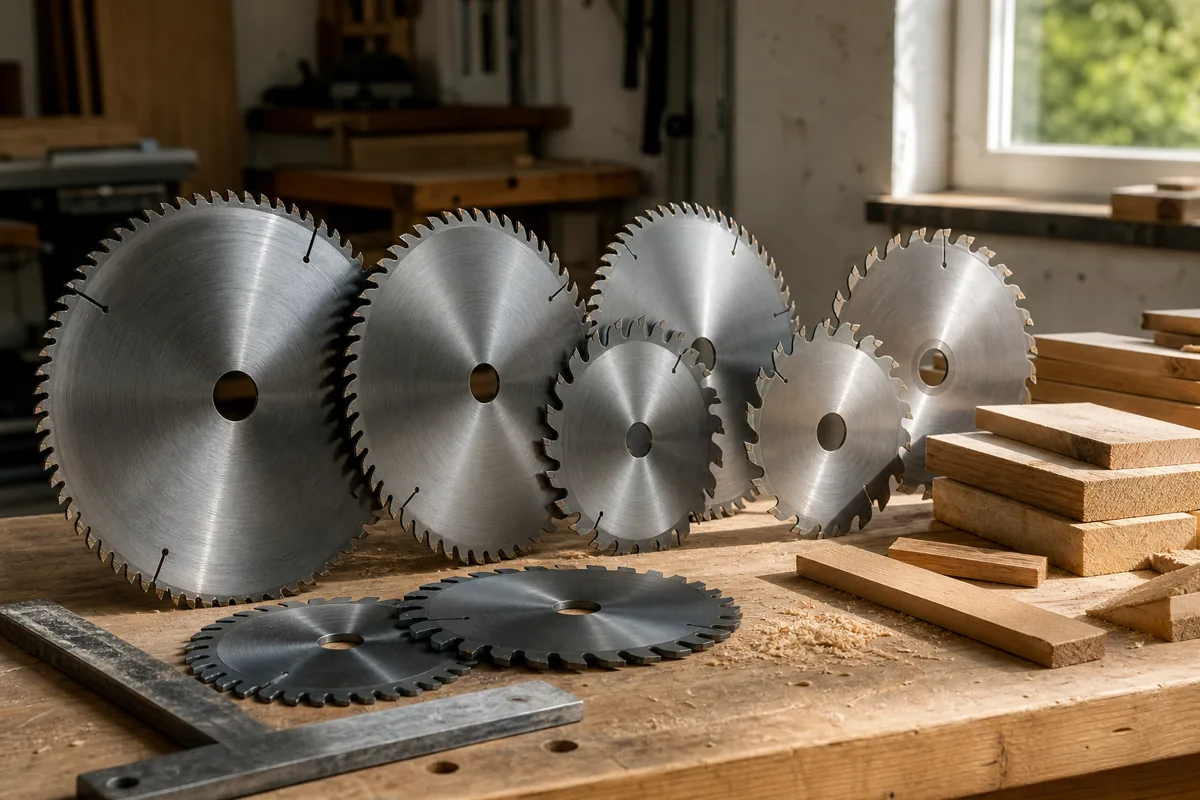
A contractor table saw needs a blade that can rip sheet goods cleanly, crosscut framing lumber without excessive tear-out, and survive construction-site abuse. The best all-around choice is usually a 10-inch, 40-tooth combination blade with carbide teeth. It is not the fastest blade for long rips or the cleanest option for fine cabinetry, but it handles the widest range of work without constant blade changes.
As an Amazon Associate we earn from qualifying purchases at no extra cost to you.


Our Top Picks
 DEWALT 10 in. 24 Tooth General Purpose Saw10" / 24 Teeth13.4 x 11.5 x 0.5 inches0.8 poundsCheck on Amazon


Best overall blade type: 10-inch, 40-tooth combination
For most contractor saws, start with a 10-inch 40-tooth combination table saw blade. Look for a full kerf blade if your saw has a 3-hp motor or a typical 120-volt contractor-saw motor with a sturdy arbor. A thin-kerf blade is better when the saw struggles in thick stock, but it can wander more easily during a cut.
A 40-tooth combination blade normally has alternating-top-bevel teeth for crosscutting and larger teeth or gullets for ripping. It will cut 2-by lumber, plywood, MDF, trim boards, and common hardwoods reasonably well. With a sharp blade and a properly aligned saw, the cut edge is clean enough for most building and repair work.
Expect some tear-out on veneered plywood and melamine. The blade is a compromise, not a magic solution. Feed rate, workpiece support, and the saw’s alignment matter nearly as much as tooth count.
Blade types compared
| Blade type | Best use | Main advantage | Main drawback |
|---|---|---|---|
| 24-tooth ripping | Long cuts in solid lumber | Fast feed rate and good chip clearance | Rougher crosscuts and more splintering |
| 40-tooth combination | General contractor work | Best balance of ripping and crosscutting | Not the fastest or cleanest specialist blade |
| 60-tooth crosscut | Trim, hardwood, and plywood crosscuts | Cleaner end grain and fewer blown-out fibers | Slower ripping; gullets can clog in thick stock |
| 80-tooth plywood or melamine | Finished sheet goods | Very clean surface cuts | Slow, expensive, and easier to overheat |
When a dedicated ripping blade makes sense
A 24-tooth ripping blade is worth buying if you routinely rip hardwood boards, construction lumber, or multiple sheets into narrow strips. Its deep gullets remove chips quickly, so the saw feeds more easily and the motor stays under less load. This is especially useful on a contractor saw with a modest 1-1/2 to 2-hp motor.
The trade-off is visible crosscut tear-out. A 24-tooth blade can leave a rough edge across plywood and hardwood, particularly if you push the work too quickly. It is fine when the edge will be hidden, trimmed, or joined later. It is a poor single-blade choice for a user who alternates between ripping and crosscutting.
For occasional long rips, the cheaper option is simply to keep the 40-tooth combination blade. You may feed a little slower, but buying a second blade will not improve every job. A dedicated ripping blade pays off through speed and reduced strain only when those cuts are frequent.
How to get cleaner crosscuts
For clean crosscuts in hardwood, painted trim, or visible plywood edges, use a 10-inch 60-tooth crosscut table saw blade. Sixty teeth is a useful middle ground. An 80-tooth blade can leave a cleaner edge in thin plywood or melamine, but it cuts more slowly and creates more friction.
Keep the blade only about 1/8 to 1/4 inch above the top of the workpiece. Raising it far above the board exposes more tooth and increases the chance of chipped fibers. Use a sharp zero-clearance insert when possible; the narrow opening supports the material beside the blade and reduces small offcuts dropping into the throat plate.
For veneered plywood, put the good face up on a table saw because the teeth exit the top surface. Support the sheet on both sides of the cut and use a sacrificial backing board if the edge must be nearly perfect. A dull blade will often burn the cut before it produces obvious tear-out.
Thin-kerf versus full-kerf blades
Most thin-kerf blades remove roughly 3/32 inch of material, while full-kerf blades commonly remove about 1/8 inch. The smaller cut reduces waste and requires less power. On a saw that bogs down in 2-inch hardwood, a thin-kerf blade can make the difference between a steady cut and repeated motor slowdown.
Thin kerf is not automatically better. A flexible blade can deflect when the fence is slightly misaligned or when the stock pinches the cut. That can produce a cut that is not square, or cause burning along the edge. Buy a thin-kerf blade when your saw needs the help, not merely because it removes less material.
What to look for before buying
Choose carbide-tipped teeth rather than a plain steel blade. Carbide stays sharp much longer and can be resharpened. Look for an expansion design, laser-cut body, and a stated maximum RPM at least as high as your saw’s blade speed. A 10-inch blade normally uses a 5/8-inch arbor, but verify this before ordering.
Anti-kickback shoulders are useful, but they do not replace a riving knife, guard, or properly set fence. Avoid using a blade with missing carbide teeth, visible cracks, or a warped body. A blade that has hit a nail may still spin, but it can cut unevenly and create dangerous vibration.
For mixed construction work, a 10-inch contractor table saw blade set containing a 40-tooth combination blade and a 24-tooth ripping or 60-tooth crosscut blade is more useful than an expensive specialty blade. Store the unused blade in its case and clean pitch from the teeth periodically. If the saw starts burning clean wood, requires noticeably more force, or leaves fuzzy crosscuts, the blade is due for cleaning or replacement.
The practical buying decision
Buy the 40-tooth combination blade first if you own one contractor saw and do varied work. Add a 24-tooth ripping blade if you regularly process thick lumber or make many long rips. Add a 60-tooth blade if clean visible crosscuts matter more than cutting speed. An 80-tooth blade is justified for frequent melamine, cabinet panels, or other finish sheet goods—not for routine framing.
Whatever blade you choose, check arbor size, kerf width, tooth count, and maximum RPM before buying. A sharp, correctly installed mid-priced blade on an aligned saw will usually outperform a premium blade installed on a saw with a drifting fence or a dull riving knife.