What's inside
As an Amazon Associate I earn from qualifying purchases. This post may contain affiliate links at no extra cost to you.
When a hole saw hits a nail buried in wood, the teeth—not the name on the package—decide whether the cut keeps going. A bi-metal hole saw is the sensible choice for occasional repairs and mixed wood-and-metal cutting. A carbide-tipped saw is usually better for repeated cuts through nail-embedded lumber, especially when nails are large or their positions are hard to predict. Neither makes a nail harmless: expect slower cutting, heat, vibration, and extra wear.
As an Amazon Associate we earn from qualifying purchases at no extra cost to you.


Our Top Picks
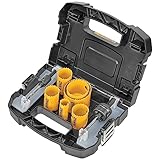
 DEWALT DWACM1802 Metal Cut Carbide Holesaw SetOne Size11.45 x 1.65 x 11 inches1.7 PoundsCheck on Amazon


Quick verdict
For one or two holes in old framing, buy a bi-metal saw if you already have one or want to keep costs down. It can cut through an occasional nail, but the encounter may dull or damage its teeth. For several holes, reclaimed lumber, or wood likely to contain multiple fasteners, choose a carbide-tipped hole saw. Its harder cutting edges generally tolerate nail contact better, though the saw costs more and can chip if abused.
If you can locate the nails, avoid them. A metal detector, stud finder with metal detection, or inspection from the opposite side may save a saw and produce a cleaner hole. For a large hole that crosses several fasteners, consider whether a different cutting method is safer and more practical than forcing a hole saw through.
How the cutters differ
Bi-metal hole saws typically combine a flexible steel body with a band of high-speed-steel teeth. Those teeth can cut wood, plastic, and thin metals such as nails or sheet metal. That versatility is useful, but cutting steel is still harder on the teeth than cutting ordinary wood. A single nail can blunt or break teeth, particularly if the saw is pushed hard or the nail is thick.
Carbide-tipped hole saws use small, very hard carbide cutting tips. They tend to stay sharp longer in abrasive materials and handle repeated contact with nails better than standard bi-metal teeth. The trade-off is a higher purchase price and less tolerance for rough handling. Carbide tips can chip if the saw is dropped, tilted in the cut, or struck against hard material at speed.
Side-by-side comparison
| Factor | Bi-metal | Carbide-tipped |
|---|---|---|
| Nail contact | Can cut an occasional nail; teeth may dull or lose a section | Better suited to repeated nail contact; tips can still chip |
| Best fit | Occasional holes and mixed materials | Frequent cuts in nail-embedded or abrasive material |
| Cost | Usually the lower-cost option | Usually costs more |
| Cutting feel | May slow sharply at a nail and need careful pressure | Often maintains cutting ability better, but still needs controlled feed |
| Main failure mode | Blunted, missing, or overheated teeth | Chipped carbide tips from impact, tilting, or poor handling |
| Wood finish | Can leave a rougher edge after tooth damage | Can cut cleanly while sharp; damage may cause sudden roughness |
Which one should you buy?
Choose bi-metal for a small repair where you expect one ordinary framing nail and can accept the risk of shortening the saw’s life. It is also a reasonable pick when the nail location is known and you can reposition the hole. If the saw is inexpensive and the job is one-off, paying extra for carbide may not make sense.
Choose carbide when nail contact is likely across multiple cuts, when the wood is reclaimed, or when replacing a worn saw would cost more in downtime than the upgrade. Look for a carbide-tipped hole saw sized for the hole and compatible with your arbor. For frequent work, compare replacement availability and the manufacturer’s stated material limits rather than relying on “cuts everything” claims. Search for a carbide-tipped hole saw kit if you need several sizes, or a bi-metal hole saw for occasional mixed-material work.
Check the saw’s rated use before cutting. Some hole saws are intended for wood only; others are explicitly rated for wood with embedded nails or for metal. Do not assume carbide means suitable for every nail, screw, masonry material, or high-speed application.
How to cut without wrecking the saw
Use a drill with a side handle when the hole saw is large or the material is thick. A hole saw can catch suddenly on a nail, twisting the drill and your wrist. Clamp the work where possible, keep both hands on the tool, and use a firm, square stance. Remove the battery or unplug the drill before clearing chips or changing the arbor.
Run at a controlled speed and let the teeth cut. For a common 2-inch hole saw, that generally means a slower drill setting than you would use for a small twist bit; follow the saw maker’s speed guidance because recommended RPM varies by diameter and material. Avoid leaning heavily on the drill. Excess pressure creates heat, packs chips into the kerf, and can strip teeth. Back the saw out periodically to clear chips, especially in deep cuts.
Expect a change in sound and feed when the teeth reach a nail. Ease off rather than forcing the saw. If it stalls, release the trigger and free it safely; do not restart while the teeth are jammed. After the cut, inspect the teeth or carbide tips. Missing teeth, chipped tips, blue discoloration, or a saw that now cuts slowly are signs to stop using it. A damaged cutter can bind or leave a ragged hole.
When a hole saw is the wrong choice
If the hole crosses several nails, thick spikes, or unknown hardware, neither cutter is a guarantee. Scan the area first and move the hole if the layout allows. For a rough opening in framing, a reciprocating saw with an appropriate demolition blade may be easier to control around fasteners, but it makes a less precise cut. For a clean, accurately sized hole, a sharp carbide hole saw is the better bet—provided the saw is rated for the material and you can keep it aligned.