What's inside
- Top 3 Picks
- Quick Comparison
- How We Chose
- 1. CAP 40 lb Adjustable Weighted Vest – Best for Strength Training and Gym-Style Rucking
- 2. ERIC FLAG 40 lb Weighted Vest – Best for Heavy-Load Progression
- 3. ZELUS Weighted Vest – Best for Fixed-Weight Walking and Light Rucking
- 4. Sportneer Adjustable Weighted Vest – Best for Beginners and Fast Weight Changes
- 5. APEXUP 40 lb Adjustable Weighted Vest – Best for Running With a Heavy Load
- 6. MVRK 35 lb Weighted Vest – Best for Heavy-Duty Calisthenics and Rucking
- 7. Zeerun Weighted Vest – Best Budget Option for Starting to Ruck
- 8. RUNFast 40 lbs Pro Weighted Vest – Best for Ruck Intervals and Run-Ruck Hybrids
- 9. Poudee Weighted Vest 12 lb – Best Budget Light Vest for Walking
- 10. APEXUP Adjustable Weighted Vest – Best Budget Option for Growing Into Load
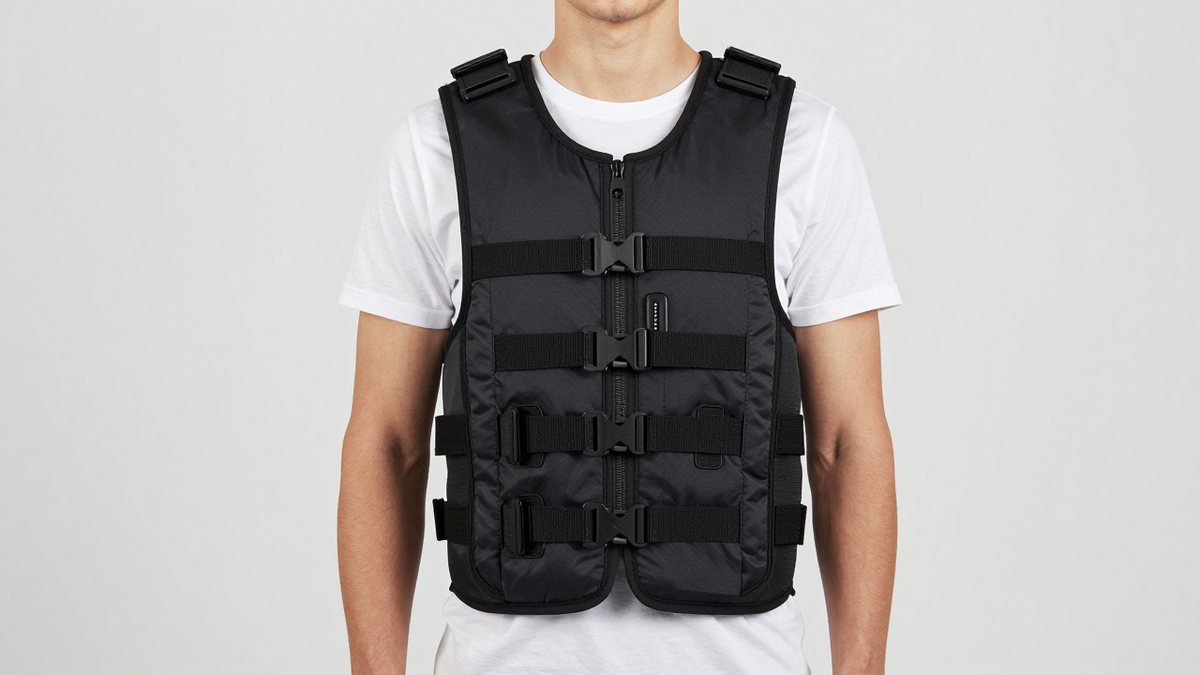
- 11. Wolf Tactical Adjustable Weighted Vest – Best Overall for Rucking
As an Amazon Associate I earn from qualifying purchases. This post may contain affiliate links at no extra cost to you.
The best weighted vest for rucking overall is the Wolf Tactical Adjustable Weighted Vest. It suits people who ruck two or more times a week and want one carrier that moves from a light 10 lb walk to a heavy loaded ruck without buying a second vest, because its load-carriage layout spreads weight across the upper back and shoulder straps instead of hanging it off the neck. If you want that same adjustability for the least money, the Zeerun Weighted Vest is the budget pick that covers walking and light rucking well. If you already ruck heavy and want the smoothest 0–40 lb progression, the ERIC FLAG 40 lb Weighted Vest is the premium choice. Everything below compares weight distribution, material durability and adjustable fit — the three things that decide whether a vest still feels fine at mile one or has become a problem by mile six.
Our Top Picks
 CAP 40lb Adjustable Weighted Vest for Men and40-Pound43.5 x 13.78 x 2 inches40 poundsCheck on Amazon


Top 3 Picks
Best overall: Wolf Tactical Adjustable Weighted Vest
The most complete rucking carrier in this group. Its load-carriage geometry keeps mass close to the spine and high on the back, which is exactly what stops the forward pull that ruins cheap vests over distance. The adjustable, modular design means you can add or remove load as your base fitness changes instead of buying a new vest every time you outgrow a fixed weight.
Best budget: Zeerun Weighted Vest
Zeerun sells the same vest in a wide ladder of fixed weights, from 6 lb up to 30 lb, which makes it the cheapest sensible way to start rucking. The reflective striping and padded shoulder straps are the two features that matter most at this price, and it has both. It is not the vest you buy if you plan to run with 40 lb, but it is the vest you buy to find out whether you even like rucking.
Best premium: ERIC FLAG 40 lb Weighted Vest
A 0–40 lb vest built around 16 removable iron weights, so the granularity is fine enough to progress in small steps rather than big jumps. Heavy-duty construction and a broad, load-spreading shoulder yoke make it the pick for long rucks at 30 lb and above, where cheap carriers start to dig in and shift.
Quick Comparison
| Product | Best for | Stated weight range & adjustability | Load style & build class | Price tier |
|---|---|---|---|---|
| CAP 40 lb Adjustable Weighted Vest | Strength training with occasional rucking | Up to 40 lb, reduced by removing weight packets | Removable packet weights, heavy-duty fabric, padded straps | Mid-range |
| ERIC FLAG 40 lb Weighted Vest | Heavy-load progression and long rucks | 0–40 lb via 16 removable iron weights | Iron weight packets, heavy-duty shell, wide shoulder yoke | Premium |
| ZELUS Weighted Vest | Fixed-weight walking and light rucking | Fixed options at 6/8/12/16/20/25/30 lb | Sealed weight fill, padded straps, reflective stripe | Mid-range |
| Sportneer Adjustable Weighted Vest | Beginners and fast mid-session weight changes | 2–18 lb, 16-in-1 fast adjust | Small removable weights, washable outer shell | Mid-range |
| APEXUP 40 lb Adjustable Weighted Vest | Running with a heavy load | Up to 40 lb, adjustable | Packet weights, running-oriented harness with chest strap | Premium |
| MVRK 35 lb Weighted Vest | Heavy-duty calisthenics and rucking | 0–35 lb via removable iron weights | Iron packets, heavy-duty adjustable carrier | Premium |
| Zeerun Weighted Vest | Cheapest way to start rucking | Fixed options at 6/8/10/12/15/18/20/24/30 lb | Sealed weight fill, padded straps, reflective stripe | Budget |
| RUNFast 40 lbs Pro Weighted Vest | Ruck intervals and run-ruck hybrids at 40 lb | Up to 40 lb | Weight packets in a close-fitting running harness | Mid-range |
| Poudee Weighted Vest 12 lb | Light walking, posture-cueing, first vest | 12 lb fixed | Sealed weight fill, reflective stripe, slim profile | Budget |
| APEXUP Adjustable Weighted Vest | Growing into load over months | Three size bands: 4–10 lb, 12–18 lb, 20–32 lb | 6 ironsand weights, large pocket, adjustable straps | Budget |
| Wolf Tactical Adjustable Weighted Vest | All-round rucking and CrossFit | Adjustable, modular load (range depends on configuration) | Plate- and weight-compatible carrier, reinforced stitching | Premium |
| BAGAIL Adjustable Weighted Vest for Women | Women’s fit and U-neck comfort | Three size bands: 4–10 lb, 12–18 lb, 20–32 lb | 6 removable weights, U-neck cut, adjustable straps | Budget |
How We Chose
This list was assembled from published product specifications, manufacturer descriptions and how each vest is positioned within the category — not from any kind of physical testing. The first filter was load architecture, because that is what determines comfort over distance: a vest that carries weight in a chest-hugging harness behaves completely differently from one that hangs packets off the shoulders, and the difference shows up around the 30-minute mark. The second filter was adjustability granularity. A vest that only comes in 10 lb jumps forces you to progress in steps that are too large for a beginner and too coarse for someone returning from time off, so finer increments were treated as a genuine feature rather than a marketing detail. The third filter was durability signals visible in the spec sheet: shell fabric class, strap reinforcement, closure type and whether the weights are removable (replaceable and cleanable) or permanently sealed. Finally, each vest was placed on a realistic upgrade path — entry-level walking, mid-level rucking, heavy-load long distance — so that no recommendation is a dead end for the reader who keeps going.
1. CAP 40 lb Adjustable Weighted Vest – Best for Strength Training and Gym-Style Rucking
As an Amazon Associate we earn from qualifying purchases at no extra cost to you.

The CAP 40 lb Adjustable Weighted Vest is the one to look at first if your rucking happens on the way to and from a squat rack. It is built as a strength-training vest: 40 lb of total capacity carried in removable weight packets, inside a shell heavy enough to survive being dropped on a gym floor. It suits lifters who want extra load for push-ups, pull-ups, dips, lunges and step-ups, and who will wear it for a 30–45 minute walk once or twice a week rather than a two-hour ruck. If that is your pattern, the CAP gives you the most load per dollar in this roundup without asking you to baby it.
Key specifications
- Stated capacity: 40 lb total, adjustable downward by removing individual weight packets
- Load type: solid packet weights held in dedicated pockets
- Fit: unisex, one-size carrier with adjustable shoulder and waist straps
- Build class: heavy-duty fabric shell with padded shoulder straps
- Best use: calisthenics, strength circuits, loaded carries, short rucks
- Price tier: mid-range
The strength of this design is simplicity. There are no plates to source separately, no proprietary rail system, and no parts that only the original brand can replace. When you want 25 lb instead of 40 lb, you take packets out. When you want to clean the shell, the packets come out first. That modularity is also what makes it a reasonable long-term buy: a vest with removable weights can be repaired, re-stuffed and re-adjusted in ways that a sealed vest cannot.
The trade-off is that CAP has optimised for load capacity and ruggedness rather than for long-distance carriage. The carrier sits relatively high and wide, which is fine for a set of squats and less fine at mile four, where the mass starts to pull the shoulders forward and the vest rides up. Ruckers who go long and heavy generally want a narrower footprint against the spine and a more positive waist or chest anchor, which is exactly what the premium carriers in this list provide. If you plan to spend more time walking than lifting, it is worth paying more for a rucking-first design.
Durability-wise, expect the usual wear points of a packet vest. The hook-and-loop closures that hold the pockets shut are the first thing to lose bite, especially if the vest lives in a hot car or gets stored with the packets in place. The stitching at the shoulder-strap junction is the second, because that is where all the load concentrates when you swing the vest on and off. Both are slow failures rather than sudden ones, and both are visible long before they become a safety issue if you look at them once a season.
Pros
- 40 lb of capacity at a mid-range price — the best load-per-cost ratio here
- Removable packets make load progression, cleaning and inspection straightforward
- Rugged enough for gym floors, loaded carries and boot-camp style circuits
- Simple construction with no proprietary parts to replace
Cons
- Carrier geometry is gym-oriented; it rides up on long, fast walks
- One-size fit is less precise than carriers with a proper torso-length range
- Hook-and-loop pocket closures degrade faster than buckles
- Bulkier silhouette than running-first vests
How it compares with the nearest alternative in this list. The RUNFast 40 lbs Pro Weighted Vest occupies the same 40 lb mid-range slot but aims at a different user. RUNFast builds for movement — running, intervals and run-ruck hybrids — so its harness hugs closer and moves with the torso, while CAP builds for standing under load. Choose CAP if your training week is mostly strength work with rucking as a supplement; choose RUNFast if rucking and running are the training.
2. ERIC FLAG 40 lb Weighted Vest – Best for Heavy-Load Progression
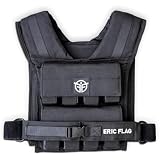
The ERIC FLAG 40 lb Weighted Vest is the pick for the rucker who has already decided that long, heavy walks are the point. It carries up to 40 lb using 16 removable iron weights, which matters more than it sounds: 16 pieces means the increments are fine, so you can add two or three pounds at a time instead of jumping a whole 10 lb band. That is the difference between a progression you can actually follow and one that keeps forcing you back to the weight you already outgrew.
Key specifications
- Stated capacity: adjustable from 0 to 40 lb
- Weight hardware: 16 removable iron weights
- Fit: unisex adjustable shoulder and torso straps
- Build class: heavy-duty, rucking-oriented carrier with broad shoulder padding
- Best use: long rucks, heavy loaded walks, hill work
- Price tier: premium
Where this vest earns its premium is in how the weight sits. A 40 lb load distributed across many small packets in a broad yoke behaves very differently from 40 lb concentrated in four big pockets. The many-small-packets approach lets the carrier spread mass around the torso instead of pooling it in one spot on the upper back, and it reduces the pendulum effect that makes cheap vests slap against the spine at walking pace. For rucking specifically, that translates into fewer adjustment stops and less shoulder fatigue in the second half of a long walk.
The fine granularity also gives you a real warm-up option. Starting a ruck at 10 lb and adding weight mid-route is practical here in a way it is not with a four-pocket design, and it is a useful way to handle cold mornings or the first weeks back after time off. As with any weighted vest, build up gradually and stop if you feel joint or back pain rather than pushing through it; if you have an existing back, knee or cardiovascular condition, talk to a physiotherapist or physician before adding load.
On durability, the removable iron packets are an advantage rather than a liability. Iron holds its shape and its weight indefinitely, does not absorb sweat, and does not compact the way sand-filled pouches can over years of use. The failure points to watch are the same as any carrier: strap stitching, buckle hardware and the fabric channels the weights slide into. Because the weights come out, you can wash the shell — which is more than you can say for a sealed vest — and that alone extends service life considerably, since salt and sweat are what actually kill most vest fabrics.
Pros
- 0–40 lb with fine increments thanks to 16 separate iron weights
- Excellent weight distribution for long-distance rucking
- Removable weights allow proper washing and easy inspection
- Heavy-duty build aimed at people who ruck regularly rather than occasionally
Cons
- Premium price for the same nominal 40 lb capacity as cheaper vests
- More individual pieces to keep track of and store
- Heavier and bulkier than a light walking vest when worn empty
- Overkill if you only ever ruck at 10–15 lb
How it compares with the nearest alternative in this list. The MVRK 35 lb Weighted Vest is the closest rival: also premium, also built around removable iron weights, also aimed at heavy-duty use. The difference is the ceiling and the intent. ERIC FLAG goes to 40 lb with finer steps, which suits a pure rucking progression; MVRK stops at 35 lb and leans more toward calisthenics and mixed training, where you take the vest off and put it back on between sets. If rucking distance is the goal, ERIC FLAG’s extra headroom and finer increments are the more useful package.
3. ZELUS Weighted Vest – Best for Fixed-Weight Walking and Light Rucking

The ZELUS Weighted Vest is the straightforward option: you pick a weight, you get that weight, and you get on with your walk. It is sold in a ladder of fixed sizes from 6 lb up to 30 lb, which makes it easy to match a vest to a specific person or a specific purpose rather than fiddling with removable packets. It suits walkers who want a consistent load, people building up to rucking from ordinary walking, and anyone who wants a vest that can be handed to a family member without reconfiguration.
Key specifications
- Stated weights: 6 lb, 8 lb, 12 lb, 16 lb, 20 lb, 25 lb, 30 lb
- Adjustability: fixed load per model, adjustable straps for fit
- Safety feature: reflective stripe for low-light visibility
- Build class: padded shoulder straps, sealed weight fill
- Best use: walking, light rucking, incline treadmill work
- Price tier: mid-range
The reflective stripe is not a gimmick. Rucking tends to happen early in the morning or after work, which means low light and roadside pavements, and a vest that shows up in headlights is a genuine safety improvement over a plain black carrier. That single detail is the reason ZELUS keeps appearing on shortlists for people whose rucking is really brisk walking on public routes.
The fixed-weight design has one clear benefit and one clear cost. The benefit is that nothing moves: no packets to shift, no pockets to open, no closures to wear out. The vest feels the same on day one and day two hundred, and there is nothing to lose or misplace. The cost is that you cannot progress without buying another vest. If you start at 12 lb and eventually want 25 lb, you are buying twice — which is why the fixed-weight route only makes financial sense when you are confident about the load you want, or when you are buying for a specific person whose needs will not change much.
Build quality at this tier is competent rather than exceptional. The sealed fill means you cannot wash the vest in a machine without risking the fill, so maintenance is spot cleaning, air drying and keeping it out of prolonged direct sun. The padded straps are comfortable at walking pace and for the lighter weights; at 25–30 lb over a long distance, a fixed vest with a single shoulder-strap design tends to concentrate load in the same two spots, which is the point at which a broader-yoke carrier starts to feel worth the extra money.
Pros
- Seven fixed weights, so matching a vest to a person or purpose is simple
- Reflective stripe adds real low-light visibility for road and pavement walks
- Nothing removable means nothing to lose, shift or misplace
- Comfortable and unobtrusive at the lighter end of the range
Cons
- No load progression without buying a second vest
- Sealed fill cannot be machine washed
- Load concentrates on two shoulder points at the heavier end
- Not intended for running at high load
How it compares with the nearest alternative in this list. The Zeerun Weighted Vest is the budget version of the same idea, with an even wider ladder of fixed weights and a similar reflective-stripe design. The ZELUS costs a little more and generally reads as the better-finished of the two — better strap padding, tidier stitching, a more substantial shell — while Zeerun wins on price and on the number of weight options. If the vest is going to be used several times a week for years, ZELUS is the more sensible of the pair; if you are testing whether rucking suits you at all, Zeerun is the cheaper experiment.
4. Sportneer Adjustable Weighted Vest – Best for Beginners and Fast Weight Changes

The Sportneer Adjustable Weighted Vest covers the awkward middle ground between a light walking vest and a serious rucking carrier. Its stated range is 2–18 lb, adjusted in small steps, and the marketing around it emphasises a fast, 16-in-1 adjustment system — meaning you can change load quickly rather than unpacking the whole vest. That combination suits beginners who are still finding their working weight, and it suits anyone who wants to shift load between exercises within a single session.
Key specifications
- Stated range: 2–18 lb
- Adjustment: fast-adjust system with multiple weight configurations
- Care: washable outer construction
- Build class: slim profile with padded straps
- Best use: beginner rucking, walking, home workouts, rehab-style progressions
- Price tier: mid-range
The washable construction is the standout practical feature. Most vests in this category cannot be washed, and the result is that they spend their lives slightly damp, slightly salty and slowly rotting from the inside. A vest you can actually launder lasts substantially longer, smells better, and is far more pleasant to put on in winter when it has been sitting in a cold hallway. For a beginner vest worn daily, that matters more than an extra few pounds of capacity.
The 2 lb starting point is the other reason this vest is a good first purchase. Many ruckers start too heavy, feel it in their knees and lower back, and quit before the habit forms. A vest that starts at 2 lb lets you do the honest thing — walk at a load you barely notice, add a pound or two a week, and let your joints adapt. General guidance in the rucking world is to begin around 10% of body weight and build slowly from there, and a 2–18 lb adjustable vest fits that progression almost perfectly for a smaller or newer rucker. If you have any existing joint, back or heart condition, check with a medical professional before you start loading.
The limitation is the ceiling. At 18 lb this is not a vest for a 40 lb heavy ruck, and the slim profile that makes it pleasant at low load is not designed to stabilise a very heavy mass. It is also a small-packet design, which means more pieces to track and more pockets to check before every session — a two-minute habit that prevents the unpleasant discovery of a half-empty vest at mile three.
Pros
- Starts at 2 lb, which is genuinely useful for gradual progression
- Washable outer extends service life and keeps the vest hygienic
- Fast adjustment makes mid-session load changes practical
- Slim and comfortable for walking and beginner rucking
Cons
- 18 lb ceiling rules out heavy rucking
- Many small weights to keep track of
- Slim harness is not built for very heavy loads
- Less low-light visibility than vest models with reflective striping
How it compares with the nearest alternative in this list. The APEXUP Adjustable Weighted Vest (4–10 lb, 12–18 lb, 20–32 lb) is the closest competitor on the budget side, and the two take different approaches to the same problem. Sportneer gives you one vest with a wide 2–18 lb range and a washable shell; APEXUP splits its range into three separate size bands, each with its own weight ceiling and a large pocket. If you want one purchase that covers a long beginner-to-intermediate arc, Sportneer is the more efficient buy. If you want to go past 18 lb eventually, the APEXUP 20–32 lb band gets you there for less.
5. APEXUP 40 lb Adjustable Weighted Vest – Best for Running With a Heavy Load

The APEXUP 40 lb Adjustable Weighted Vest targets the hardest version of this activity: running with meaningful load. Running in a weighted vest is not rucking with a faster pace — the impact forces are much higher, the vest moves far more, and any weakness in the harness shows up immediately as bounce, chafe or a vest that rides up around your ears. APEXUP’s positioning is a 40 lb adjustable vest for running, which means the design has to solve stabilisation first and capacity second.
Key specifications
- Stated capacity: up to 40 lb, adjustable
- Load type: removable packet weights in a close-fitting carrier
- Fit: adjustable shoulder and torso straps for a snug, locked-down fit
- Build class: premium running-oriented harness
- Best use: weighted running, hill repeats, short heavy intervals
- Price tier: premium
What you are paying for here is control. A vest that can hold 40 lb close to the torso during a run has to be cut differently from a gym vest: tighter to the body, with more anchor points and less free fabric to swing. That same geometry is what makes it comfortable on a heavy ruck as well, because the mechanism is identical — the closer the mass sits to your centre of gravity, the less your shoulders and lower back have to work to keep you upright.
It is worth being realistic about the running part. Weighted running is a demanding activity and the load is not the only variable; pace, surface and distance all multiply the stress on knees, shins and ankles. A common approach is to keep weighted running short and treat it as a strength stimulus, using a much lighter load than you would carry on a ruck — often half or less — and to keep the heavy work for walking. Anyone with a history of joint problems, stress fractures or cardiovascular conditions should speak to a clinician before starting weighted running, and nobody should jump straight from a 10 lb walking vest to a 40 lb run.
On durability, a running vest lives a hard life: constant flexing, heavy sweat, frequent washing. The wear points are the same as elsewhere in this category — stitching at the shoulder junctions, hook-and-loop closures, and the fabric channels holding the weights — but they arrive sooner because the vest moves more. Buying premium here is partly about the shell and stitching being able to take that cycle, and partly about the harness keeping its shape after hundreds of sessions rather than sagging into a shape that no longer fits anyone.
Pros
- 40 lb capacity in a harness designed to stay put at speed
- Close-fitting geometry reduces bounce and chafe during running
- Adjustable load allows a lighter setting for running and a heavier one for rucking
- Premium build aimed at high-frequency use
Cons
- Premium price for a specialist use case
- Tight fit is less pleasant for casual walking than a relaxed carrier
- Overkill for anyone who only rucks at walking pace
- Weighted running itself demands a careful, conservative progression
How it compares with the nearest alternative in this list. The RUNFast 40 lbs Pro Weighted Vest is the direct competitor: same 40 lb ceiling, same mid-to-premium positioning, same movement-first intent, at a lower price tier. RUNFast is the value option for run-ruck work; APEXUP is the more refined harness with a heavier-duty build and a stronger premium claim. If you run in a vest once a week, RUNFast covers it. If the vest is central to your training and gets used four or five times a week, the APEXUP is the one that will still fit properly in a year.
6. MVRK 35 lb Weighted Vest – Best for Heavy-Duty Calisthenics and Rucking

The MVRK 35 lb Weighted Vest is built for people who treat the vest as equipment rather than an accessory. It carries up to 35 lb using removable iron weights in a heavy-duty adjustable carrier, which puts it in the same construction class as the premium rucking vests while stopping slightly short of their maximum load. It suits hybrid athletes: someone who does pull-ups and dips in a vest on Monday and a 6-mile ruck on Wednesday, and does not want to own two different carriers.
Key specifications
- Stated capacity: adjustable from 0 to 35 lb
- Weight hardware: removable iron weights
- Fit: heavy-duty adjustable straps for a wide range of body sizes
- Build class: premium, reinforced carrier
- Best use: calisthenics, loaded carries, rucking, mixed training
- Price tier: premium
Iron weights are the right choice for this kind of use. They do not compress, they do not absorb moisture, and they hold their stated mass indefinitely — which matters when you are using the vest as a measuring tool for progression and need 35 lb to mean 35 lb two years later. Sand-filled pouches are cheaper and can settle, shifting the load downward and changing how the vest sits. For a vest used across multiple disciplines, iron removes that variable.
The 35 lb ceiling is a deliberate choice rather than a shortcoming. Vests in the 30–35 lb band tend to be more stable than their 40 lb cousins because the carrier does not have to be engineered to the absolute limit; there is more margin in the harness, the stitching and the fabric. If your training tops out around 30 lb, which is a common ceiling for ruckers who are not training for a specific selection standard, the MVRK gives you a more comfortable margin than a vest constantly running at maximum capacity.
Maintenance is straightforward and worth doing properly. Take the iron weights out after every session or two, wipe the inside of the carrier, and let the whole thing air dry before the weights go back in. Iron does not absorb sweat but it does trap it against the fabric, and a vest stored damp with weights in place will develop odour and eventually corrode the coating on the weights themselves. Hanging the vest empty is the single best habit you can build for longevity.
Pros
- Removable iron weights hold their mass and do not settle
- 35 lb ceiling keeps the harness stable rather than running at its limit
- Premium reinforced build suited to daily or near-daily use
- Works across calisthenics, carries and rucking without compromise
Cons
- Cannot reach 40 lb for those training toward heavier standards
- Premium price for a mid-capacity vest
- Heavier and bulkier than a light walking vest when unloaded
- Iron weights add shipping and storage weight considerations
How it compares with the nearest alternative in this list. The ERIC FLAG 40 lb Weighted Vest is the nearest alternative and the closest call in this roundup. Both use removable iron weights in heavy-duty carriers at a premium tier. ERIC FLAG gives you 40 lb and finer increments, which favours a pure rucking progression. MVRK gives you a more stable 35 lb package and a carrier that handles being taken on and off constantly during a workout. Pick ERIC FLAG if your goal is distance at increasing load; pick MVRK if your goal is strength work with rucking mixed in.
7. Zeerun Weighted Vest – Best Budget Option for Starting to Ruck

The Zeerun Weighted Vest is the cheapest sensible entry point in this roundup, and it is sold in the widest ladder of weights here: 6, 8, 10, 12, 15, 18, 20, 24 and 30 lb. That breadth matters because it lets you buy the load you actually need rather than the nearest available option. It suits first-time ruckers, walkers who want to add resistance to a daily route, and households where two people of very different sizes both want a vest without spending much.
Key specifications
- Stated weights: 6, 8, 10, 12, 15, 18, 20, 24 and 30 lb
- Adjustability: fixed load per model, adjustable straps
- Safety feature: reflective stripe
- Build class: budget construction, padded shoulder straps
- Best use: walking, light-to-moderate rucking, home workouts
- Price tier: budget
The practical case for Zeerun is that it lets you answer the important question cheaply: do you actually enjoy rucking? Plenty of people buy a premium vest, use it four times, and leave it in a cupboard. At a budget price, that mistake costs very little, and if you do stick with it you will have learned exactly what load and what fit you want before spending serious money on the vest you keep for years.
The reflective stripe is a welcome feature at this price and puts Zeerun on a level footing with mid-range vests for low-light visibility. The padded straps are adequate for walking pace and the lighter weights; at 24–30 lb the budget construction becomes more obvious, with more movement in the carrier and less refined padding than a premium vest. That is not a defect so much as a boundary — the design is honest about what it is for.
Durability expectations should be set accordingly. A budget vest with sealed fill cannot be machine washed, so cleaning is spot treatment and air drying. The stitching and the strap anchors are the parts that will show age first, particularly if the vest is stored hanging by one strap. Hanging it by both straps, or laying it flat, costs nothing and adds meaningful life. If you ruck three or more times a week for years, this vest will be the one you replace; if you ruck twice a week at walking pace, it will last a long time.
Pros
- Nine weight options, the widest selection in this roundup
- Lowest cost of entry for testing whether rucking suits you
- Reflective stripe for visibility on early and evening walks
- Light and unobtrusive at the lower weights
Cons
- Fixed weight means no progression without a second purchase
- Budget carrier moves more at heavier loads
- Sealed fill cannot be machine washed
- Not designed for running or for very long distances at 30 lb
How it compares with the nearest alternative in this list. The Poudee Weighted Vest 12 lb is the other budget fixed-weight option, and the comparison is mostly about range. Poudee sells a single 12 lb model with a reflective stripe and a slim profile, which is ideal for a light walking vest or a first rucking vest for a smaller person. Zeerun covers 6 lb through 30 lb, so it can serve a beginner and then a heavier rucker in the same household. If you already know you want around 12 lb, Poudee is the tidier choice; if you want room to grow within a budget, Zeerun is the better buy.
8. RUNFast 40 lbs Pro Weighted Vest – Best for Ruck Intervals and Run-Ruck Hybrids

The RUNFast 40 lbs Pro Weighted Vest sits in a useful gap: it carries a full 40 lb, but it is cut like a running vest rather than a gym vest. That combination suits people whose rucking involves pace changes — walk-run intervals, hill repeats, or a fast-finish ruck where the last mile is at a jog. It also suits anyone who wants 40 lb of capacity without paying a premium price for it.
Key specifications
- Stated capacity: up to 40 lb
- Load type: weight packets in a close-fitting carrier
- Fit: adjustable shoulder and torso straps
- Build class: mid-range running-oriented harness
- Best use: ruck intervals, run-ruck hybrids, fast loaded walks
- Price tier: mid-range
The reason this vest is comfortable at speed is the same reason it is comfortable on a long walk: it keeps the load close. A close-fitting carrier reduces the vertical bounce that turns a 40 lb load into a series of impacts, and it reduces the lateral swing that rubs the shoulder straps against the neck. Ruckers who have only used loose, gym-style vests often describe the first session in a close-fitting carrier as a revelation, and it is mostly about that one geometry decision rather than any single feature.
What you give up at mid-range is refinement at the extremes. The harness is good, but it is not engineered to the same standard as premium carriers, and the difference shows after a few hundred sessions in how well the padding retains its shape. The shell and stitching are also more likely to need attention sooner than on a premium vest, particularly around the shoulder anchors, which is where load concentrates every time you lift the vest over your head.
For most people, this is the sensible compromise: full 40 lb capacity, running-capable geometry, and a price that leaves room for the accessories that make rucking more pleasant — better socks, a light that clips to the vest, a spare reflective band. If you ruck twice a week and occasionally run in the vest, this covers everything you need. If you ruck five times a week and run in it too, the premium carriers in this list will outlast it.
Pros
- Full 40 lb capacity at a mid-range price
- Close-fitting harness reduces bounce during intervals and jogging
- Good all-rounder for walk-run rucking
- Leaves budget for other rucking gear
Cons
- Padding and stitching are mid-range rather than premium grade
- Less refined fit adjustment than the premium running vests
- Snug cut can feel restrictive on casual walks
- Not the longest-lasting option for very high-frequency use
How it compares with the nearest alternative in this list. The APEXUP 40 lb Adjustable Weighted Vest is the nearest rival: same capacity, same running focus, one price tier higher. APEXUP’s advantage is build quality and harness refinement, which shows up over years rather than weeks. RUNFast’s advantage is value — you get the same headline capacity and a similar running-oriented fit for less. Buy RUNFast if rucking is one part of a broader fitness routine; buy APEXUP if weighted running is the routine.
9. Poudee Weighted Vest 12 lb – Best Budget Light Vest for Walking

The Poudee Weighted Vest is a single-purpose item: 12 lb, slim, with a reflective stripe. It is not trying to be a rucking platform and does not pretend otherwise. It suits walkers who want a small, consistent load on a daily route, people who want a gentle strength stimulus while walking, and anyone who has tried a heavier vest and found it too much. It also works well as a second vest — the light one for recovery days, the heavy one for ruck days.
Key specifications
- Stated weight: 12 lb
- Adjustability: fixed load, adjustable straps
- Safety feature: reflective stripe
- Build class: slim profile, budget construction
- Best use: daily walking, light rucking, incline treadmill sessions
- Price tier: budget
Twelve pounds is a more useful number than it looks. It is roughly in the range that general rucking guidance suggests for a lighter adult starting out — commonly described as around 10% of body weight, adjusted for comfort and experience. At 12 lb, the vest is light enough that a daily walker can wear it on consecutive days without feeling beaten up, and heavy enough that a 45-minute walk feels meaningfully different from an unloaded one. For anyone who is not training for a specific standard, this is a sustainable load.
The slim profile is the other advantage. A 12 lb vest that sits close to the body does not interfere with arm swing, does not catch on a jacket, and can be worn under a light shell in cold weather without looking absurd. Heavier vests are bulkier by necessity; a light vest can be genuinely unobtrusive, and unobtrusive gear gets used more.
The limitation is obviously the ceiling. There is no progression here, so if you improve quickly you will be shopping again. Sealed fill also means no machine washing. Both of those are acceptable trade-offs at a budget price for a vest that is meant to be a daily walking companion rather than a training tool. As with any added load, build up gradually and stop if something hurts; if you have a joint, back or heart condition, get medical advice before adding weight to your walks.
Pros
- 12 lb is a sustainable daily load for most walkers
- Slim enough to wear under a jacket and to ignore while walking
- Reflective stripe for early-morning and evening visibility
- Very low cost of entry
Cons
- No progression — 12 lb is the only load
- Sealed fill cannot be machine washed
- Not intended for running or heavy rucking
- Budget hardware and stitching
How it compares with the nearest alternative in this list. The Zeerun Weighted Vest is the closest alternative and offers the same style of vest across a much wider weight ladder. The choice is simple: if you want a single light vest and have no intention of going heavier, Poudee’s 12 lb model is the tidier, lighter, easier-to-wear option. If you might want 20 lb in six months, buy Zeerun instead and avoid buying twice.
10. APEXUP Adjustable Weighted Vest – Best Budget Option for Growing Into Load

The APEXUP Adjustable Weighted Vest solves the budget rucker’s core problem: fixed-weight vests are cheap but inflexible, and adjustable vests are usually expensive. APEXUP splits its range into three size bands — 4–10 lb, 12–18 lb and 20–32 lb — each with six ironsand weights and a large pocket. The result is a budget-priced adjustable vest that can carry you from a first walk to a genuine ruck without a mid-journey upgrade.
Key specifications
- Stated size bands: 4–10 lb, 12–18 lb, 20–32 lb
- Weight hardware: six ironsand weights per vest
- Extra feature: large pocket for phone, keys or a light
- Fit: adjustable straps, unisex cut
- Best use: progressive rucking on a budget, walking, home workouts
- Price tier: budget
The band structure is the important detail. Because each vest covers a defined range rather than the whole spectrum, the carrier can be cut to suit the load it carries — a 4–10 lb vest is slim, and a 20–32 lb vest has more structure. That is a better engineering compromise than one vest trying to be comfortable at both 4 lb and 32 lb, which is where universal adjustable vests often feel either floppy at low load or strained at high load.
Six weights across a band means roughly 2 lb steps in the lighter bands and slightly larger steps in the heavy band. That is coarse compared with a 16-weight premium vest, but at a budget price it is a reasonable progression. Adding 2 lb a week takes you from 12 lb to 18 lb in three weeks, which is a sensible rate for a beginner, provided you are not also increasing distance sharply at the same time.
The large pocket is a small feature that changes daily use. Carrying a phone, keys and a small light inside the vest rather than in a pocket that swings or a hand that gets cold makes rucking much more practical, especially on dark winter walks. Combine it with the reflective elements many budget vests include and you have a workable commuting or evening-walk setup for very little money.
Budget construction is the honest caveat. Ironsand weights are heavier per unit of volume than solid iron packets and can settle over time, so check that the weights are seated properly before each session. The shell and stitching will not last as long as a premium carrier under daily heavy use. Used twice a week at moderate load, it will serve for years; used daily at 32 lb, it will be the vest you replace.
Pros
- Adjustable load at a budget price — rare combination
- Three bands let you pick a vest cut for your actual load
- Large pocket makes carrying essentials practical
- Low cost per pound of capacity
Cons
- Coarser weight increments than premium adjustable vests
- Ironsand weights can settle and need checking
- Budget shell and stitching under heavy daily use
- Band structure means you still outgrow the vest eventually
How it compares with the nearest alternative in this list. The Sportneer Adjustable Weighted Vest is the closest competitor, and the difference is scope. Sportneer offers one vest with a continuous 2–18 lb range and a washable outer; APEXUP offers three bands reaching up to 32 lb at a lower price point. If you want maximum flexibility in a single purchase and value washability, Sportneer is better. If you want the cheapest route to 30 lb with adjustable load, APEXUP’s 20–32 lb band is the answer.
11. Wolf Tactical Adjustable Weighted Vest – Best Overall for Rucking

The Wolf Tactical Adjustable Weighted Vest is the best all-round choice in this roundup for people who ruck regularly. It is built as a load-carriage system rather than a padded waistcoat with weights sewn in, which means the design decisions — where the mass sits, how the straps anchor, how the carrier is reinforced — all point at the same goal: making a heavy load tolerable over distance. It suits ruckers, CrossFit athletes and anyone whose training mixes loaded walking with bodyweight strength work.
Key specifications
- Load: adjustable, modular weight and plate compatibility depending on configuration
- Fit: adjustable shoulder and torso straps, unisex sizing
- Build class: premium carrier with reinforced stitching and load-bearing hardware
- Best use: rucking, running, walking, CrossFit and general loaded training
- Price tier: premium
Load-carriage design is the whole story here. In a proper carrier, the mass sits high and close to the spine, the shoulder straps are broad enough to spread pressure across the trapezius rather than digging into the neck, and there is enough structure in the back panel that the vest does not collapse into a rope shape under load. Those three properties are what separate a vest you can wear for ninety minutes from one you want off after twenty. Most cheap vests get one of the three right.
The modular approach also gives this vest a longer useful life than a fixed-weight model. Because the load is not baked into the fabric, you can change what you carry as your training changes — lighter for running, heavier for rucking, and a plate-style configuration if you want a flatter, denser load against the back. That flexibility means the vest does not become obsolete when your goals shift, which is the main reason to pay premium prices in this category at all.
Durability follows from the same design logic. Reinforced stitching at the load-bearing junctions, heavier hardware and a more substantial shell all mean the vest tolerates being used hard and often. The parts that will eventually wear are the closures and the strap webbing, not the carrier body — and those are the parts you can see failing in advance. Check the shoulder junctions and the closure bite once a month, and the vest