What's inside
As an Amazon Associate I earn from qualifying purchases. This post may contain affiliate links at no extra cost to you.
The best porch swings for outdoor use are usually powder-coated steel or recycled high-density polyethylene (HDPE) when year-round durability matters most, while a properly sealed cedar or teak swing offers the warmest appearance and can last for years with regular maintenance.
As an Amazon Associate we earn from qualifying purchases at no extra cost to you.


Our Top Picks
 Grepatio Outdoor Porch Swing with Canopy and Stand47.6 x 74 x 69.9 Inches81.57 poundsCheck on Amazon


Quick answer: which porch swing material should you choose?
Choose recycled poly for the lowest-maintenance option in wet, humid, or coastal climates. Choose powder-coated steel for a strong, relatively slim frame and a lower purchase price, provided you keep scratches and exposed fasteners protected. Choose wood when appearance, repairability, and a traditional porch feel outweigh the need for periodic sanding and sealing.
| Material | Typical 4-foot swing weight | Typical user capacity | Weather resistance | Maintenance | Typical market range |
|---|---|---|---|---|---|
| Cedar or treated wood | 45–85 lb | 400–600 lb | Good when sealed; vulnerable to moisture movement | Clean annually; reseal about every 1–3 years | $250–$800 |
| Hardwood such as teak | 60–110 lb | 450–700 lb | Very good; naturally moisture-resistant | Clean; oil is optional, not a substitute for cleaning | $500–$1,500+ |
| Powder-coated steel | 55–100 lb | 400–800 lb | Good until coating or welds are damaged | Wash; touch up chips and inspect rust points | $200–$700 |
| Recycled HDPE poly | 75–130 lb | 500–800 lb | Excellent against rot, rain, and insects | Soap-and-water cleaning; little refinishing | $500–$1,400 |
These are common ranges rather than guarantees. Always use the manufacturer’s stated capacity, because frame design, hanging hardware, and seat width can change the result substantially.
Wood vs. metal vs. recycled poly
Wood: best for traditional style and repairability
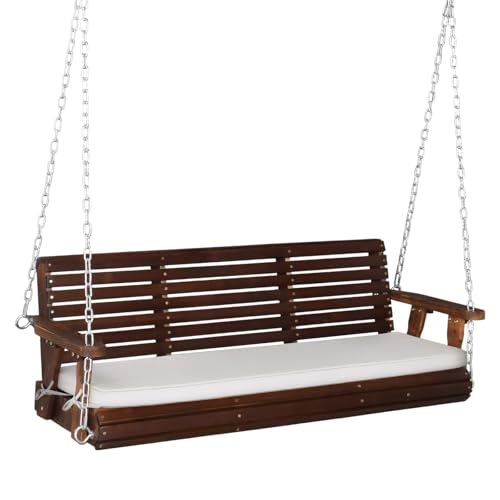
Wood swings feel comfortable in hot and cold weather, absorb less vibration than metal, and can be sanded or repaired when a board is damaged. Cedar is relatively light and naturally resistant to decay. Teak is denser and more moisture-resistant, but it costs more and creates a heavier installation.
The weak points are water retention and movement. End grain, screw holes, joints, and the underside of slats often deteriorate before the visible top surfaces. A swing left beneath dripping gutters or on an uncovered porch may need attention much sooner than one protected by a roof.
For long-term use, look for exterior-rated screws, rounded and sanded edges, drainage gaps between slats, and a finish intended for outdoor wood. Paint provides a more complete moisture barrier than a transparent finish, but it can hide early rot. Inspect beneath the seat rather than judging condition from the front.
Powder-coated steel: best for strength in a compact frame
Steel can support substantial loads without requiring thick arms or legs, making it useful where a visually lighter swing is preferred. A baked-on powder coating protects the steel surface and is generally more durable than ordinary spray paint.
Rust usually begins at chipped coating, weld seams, drilled holes, and the bottoms of tubular legs. Coastal salt, fertilizer residue, and trapped water accelerate corrosion. Rinse the frame with fresh water periodically in salty environments, dry it thoroughly, and repair chips before rust spreads underneath the coating.
Metal also transfers heat quickly. A dark steel seat can become uncomfortable in full sun, so cushions or a shaded location matter more than they do with some wood and poly designs. Check whether cushions are made with quick-drying foam and removable, washable covers; ordinary indoor foam can remain wet for too long.
Recycled poly: best for low maintenance and wet climates
Recycled HDPE poly lumber does not rot, splinter, or attract insects in the way untreated wood can. It is a strong choice for rainy regions, homes near the coast, and owners who do not want a recurring refinishing schedule. Color runs through much of the material, so small scratches are less conspicuous than scratches through painted steel.
Its trade-offs are weight, price, and thermal behavior. A poly swing may be difficult for one person to move, and dark colors can become hot in direct sun. The material can also expand and contract with temperature changes, so quality designs use appropriate fasteners and slotted holes rather than clamping every joint rigidly.
Do not confuse recycled poly lumber with thin plastic furniture. Look for solid, thick boards, stainless or corrosion-resistant hardware, reinforced arm and back joints, and a published weight capacity. A poly swing can be durable while its chain, hangers, or fasteners are not.
Decision matrix for common buying situations
| Your situation | Most suitable choice | Why | What to avoid |
|---|---|---|---|
| Lowest initial cost | Powder-coated steel or sealed cedar | Usually less expensive than premium poly or teak | Very thin tubing and unsealed softwood |
| Heavy rain or humid summers | Recycled HDPE poly | Does not rot and needs no paint or stain | Wood with horizontal surfaces that trap water |
| Coastal or salty air | Recycled poly; alternatively stainless-hardware steel | Poly avoids frame corrosion; steel requires careful protection | Uncoated steel and ordinary zinc-plated chain |
| Traditional covered porch | Cedar or hardwood | Natural appearance and comfortable temperature | Skipping end-grain sealing |
| Frequent use by three adults | 5-foot swing rated at least 600 lb | More shoulder room and capacity margin | Two-person swings rated near the expected load |
| Small porch or narrow balcony | 4-foot swing, or a compact two-seat model | Leaves room for entry, movement, and safe clearance | Buying by seat width alone |
Capacity and sizing: the numbers that matter
Seat width is only one measurement. Record the available wall-to-wall width, front-to-back depth, ceiling height, and the location of structural framing. A typical 4-foot swing needs approximately 52–60 inches of horizontal space once armrests and hanging points are included. A 5-foot swing commonly needs 64–72 inches. Confirm the exact outside dimensions before ordering.
Allow at least 30 inches of clear space in front of the swing and about 6 inches on each side, more if the swing will move freely. A swing that fits the porch on paper can still be impractical if its arc strikes a railing, column, planter, or wall.
For capacity, add the people’s body weights, cushions, and anything likely to be held while sitting. If two adults weigh 180 and 220 pounds, the working load is already 400 pounds. A 500-pound rating leaves only 100 pounds of margin; a 600-pound rating provides a more sensible buffer for movement and occasional extra load. Never treat a stated capacity as permission for standing, climbing, or rough swinging.
Installation determines durability
The strongest seat can fail if it is hung from decorative trim or an undersized eye screw. For a ceiling installation, attach each hanger to structural framing capable of carrying the swing and its occupants. If the joist spacing does not align with the swing’s hanging points, install a properly sized structural cross-member rather than relying on porch boards or thin fascia.
- Use two independent hanging points when the design calls for two chains or ropes.
- Select outdoor-rated chain, rope, carabiners, springs, and eye bolts as a system; the weakest component controls the load.
- Follow the supplied spacing and angle instructions instead of improvising a narrower suspension.
- Keep the seat level, then test it gradually with light pressure before full occupancy.
- Inspect the fasteners after the first few uses and again at the start of each outdoor season.
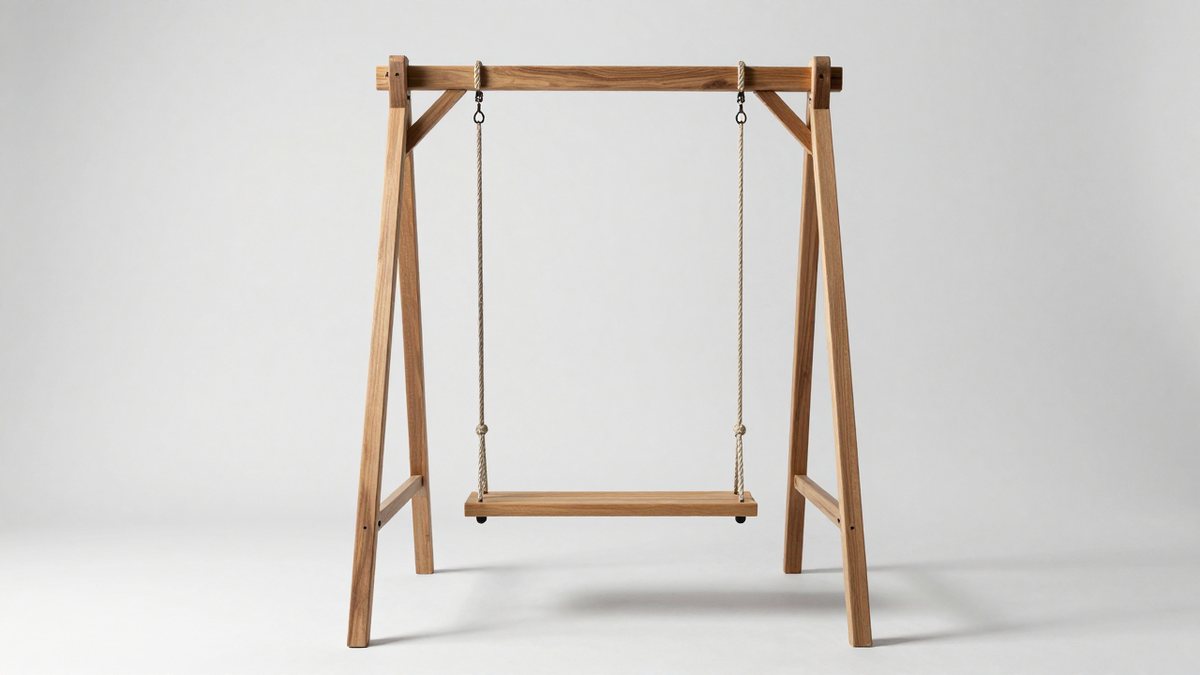
A freestanding swing stand avoids ceiling-framing work, but it needs a stable, level surface and may require anchoring in windy locations. Place its feet where water will not pool, and confirm that the stand’s capacity is at least as high as the swing’s capacity.
Maintenance and ownership realities
Wash any material with mild soap, water, and a soft brush. Avoid pressure-washing close to wood joints, powder coating, bearings, or cushions; high pressure can force water into cracks and remove finishes. Let cushions dry completely before storage.
- Wood: inspect end grain, joints, and the underside each spring. Sand rough areas and reseal before water penetrates.
- Steel: look for coating chips, bubbling paint, rust around welds, and blocked tube drain holes. Remove surface rust and apply a compatible exterior touch-up coating.
- Recycled poly: clean pollen and grime before they become slippery films. Check for loose fasteners and stress around joints even though the boards will not rot.
- All swings: examine chain links, rope fibers, springs, hooks, and eye bolts. Replace distorted, cracked, heavily rusted, or visibly worn hardware.
Covering a swing can extend the life of wood, steel, and cushions, but the cover must breathe. A waterproof cover wrapped tightly around damp furniture can trap condensation and speed corrosion or mildew. In severe winter weather, remove cushions and store them indoors; if the manufacturer permits, store the entire swing under cover rather than leaving it exposed to snow load.
Bottom line
For most year-round outdoor settings, recycled poly is the easiest recommendation because it combines high moisture resistance with minimal refinishing. Powder-coated steel is the value-oriented choice when you want a strong frame and can monitor coating damage. Sealed cedar or hardwood is the right choice when natural appearance and repairability are priorities. Whichever material you select, verify the complete hanging system, not just the seat’s advertised capacity, and size the swing around both occupants and clearance.