What's inside
As an Amazon Associate I earn from qualifying purchases. This post may contain affiliate links at no extra cost to you.
Melamine panels cut cleanly only when the blade is matched to the material. The hard resin surface chips easily, while the particleboard or MDF core can tear out underneath it. A track saw helps because the guide keeps the cut straight and supports the panel, but the blade still determines whether the finished edge is furniture-ready.
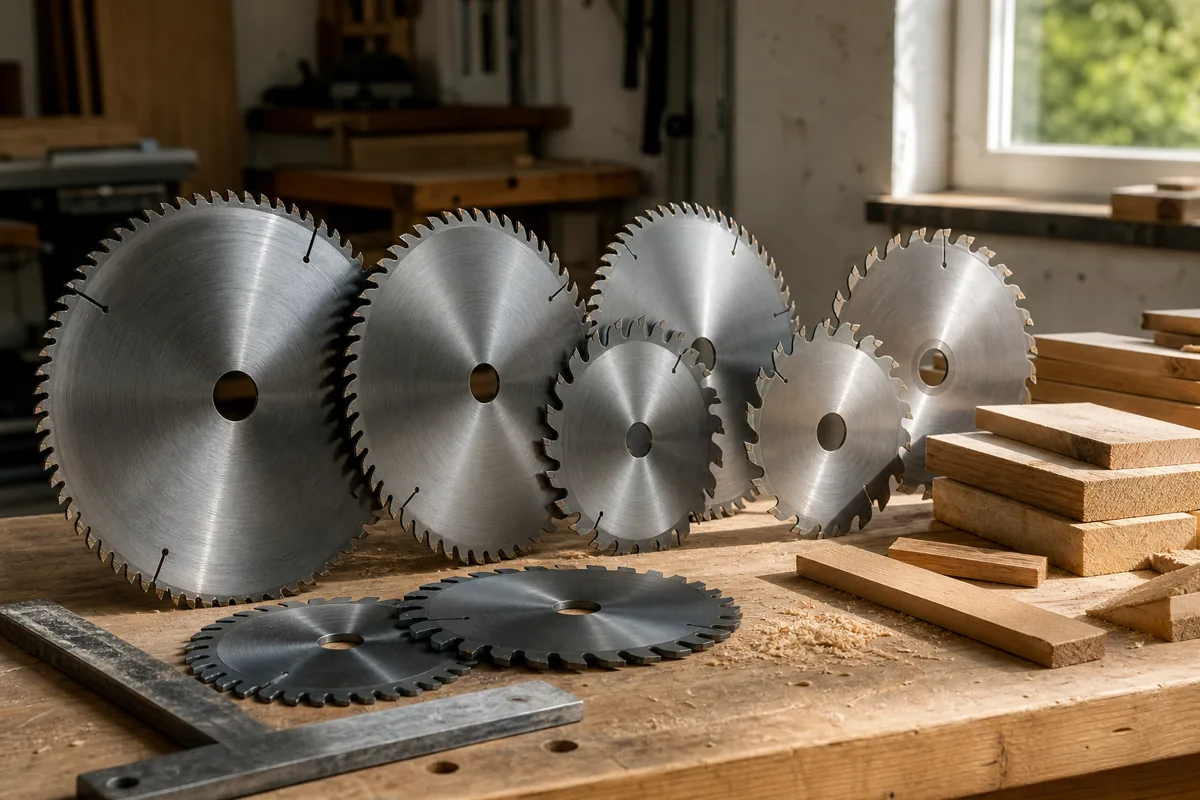
For most melamine cutting, the best choice is a sharp, carbide-tipped blade with 48 to 60 teeth, a moderate hook angle, and a thin kerf suited to your saw. Tooth count matters, but tooth shape, blade sharpness, cutting speed, and panel support matter just as much.
As an Amazon Associate we earn from qualifying purchases at no extra cost to you.


Our Top Picks
 Diablo Track Circular Saw Blade for Laminate6-1/2" Dia x 52 TCG - Track10.45 x 8.4 x 0.3 inches0.6 PoundsCheck on Amazon


The blade specifications that matter
A 6-1/2-inch track saw blade with 48 teeth is a strong general-purpose choice. On an 8-1/4-inch saw, look for roughly 56 to 60 teeth. These blades make a good compromise: they cut melamine more cleanly than a 24-tooth framing blade, but they do not feed as slowly or generate as much heat as an ultra-fine finishing blade.
| Blade type | Typical tooth count | Best use | Main drawback |
|---|---|---|---|
| Framing or general-purpose | 18–24 | Fast rough cuts in construction lumber | Heavy chipping on melamine |
| Fine-finish crosscut | 40–60 | Most melamine and laminate panel cuts | Slower feed rate; can heat up if dull |
| Ultra-fine laminate blade | 60–80+ | Visible finished edges and brittle laminates | Higher cost and greater sensitivity to feed speed |
| Melamine-specific negative-hook blade | 60–80 | Low-chip cuts on coated sheet goods | Not as versatile for ordinary lumber |
For the lowest chipping, prioritize a blade with an alternating top bevel (ATB) tooth pattern or a high-alternating-top-bevel design. The angled tooth tips score the surface rather than striking it flat. A triple-chip grind can also work well, especially on hard laminates, but it is not automatically better for every track saw.
A negative or low hook angle reduces the blade’s tendency to grab the panel and lift the coating. That is useful on melamine, though it makes the cut feel less aggressive. Check your saw’s manual before buying: the arbor diameter, maximum blade diameter, kerf, and blade speed must all match.
Which blade should you buy?
For a cabinet project or occasional shelving work, a 6-1/2-inch 48-tooth fine-finish track saw blade is the sensible starting point. It should leave a clean edge on both sides of a supported cut and remains useful for plywood, veneered panels, and solid wood.
If the cut edge will be highly visible, or you are working with brittle white melamine that chips at the corners, step up to a 6-1/2-inch 60-tooth melamine blade. The extra teeth can reduce breakout, but only if you keep the blade sharp and feed steadily. A dull 60-tooth blade is worse than a sharp 48-tooth blade: it rubs, overheats, and can burn the resin surface.
For an 8-1/4-inch saw, choose an 8-1/4-inch 60-tooth melamine or laminate blade. Do not substitute a blade simply because the tooth count matches. A blade that is too thick for the saw’s riving knife or too large for its guard can create a safety problem.
The cheaper option is fine when you are making hidden cuts, trimming cabinet sides that will be covered by edge banding, or cutting inexpensive panels for shop fixtures. In those cases, a reputable 40-tooth general-purpose finish blade usually gives enough quality without paying for a specialized laminate blade.
How to prevent chipping during the cut
Set the blade depth so the teeth extend only about 1/8 inch, or 3 to 4 millimeters, below the panel. Excessive tooth exposure increases the angle at which the teeth exit the bottom surface and encourages tear-out. It also makes the saw harder to control.
Use the track’s splinter guard, but remember that it only supports one side of the cut. Place the good face upward if your saw’s blade exits upward into the panel; on most track saws, the visible top surface is the side most likely to chip. Make a short scoring pass first if the blade or saw allows it, then complete the cut at normal depth.
Support the entire panel on rigid foam insulation or a sacrificial sheet. Letting the offcut sag near the end of a cut twists the panel and can produce a long chip even with an excellent blade. Clamp the track firmly, especially when cutting narrow strips.
Feed at a steady rate. A 48-tooth blade in melamine often cuts best at a controlled pace rather than a crawl. Feeding too slowly lets the teeth rub and heat the coating; pushing too quickly overloads the blade and increases breakout. If the saw bogs down, stop and inspect the blade instead of forcing it.
Common failures and practical fixes
Chipping only at the beginning or end usually points to poor support or a lifted panel corner. Add a sacrificial strip under the entry and exit areas, and keep the track flat until the blade has completely cleared the panel.
Chipping along the entire cut often means the blade is dull, the splinter guard is worn, or the track is not seated tightly. Replace a damaged guard; it cannot support the laminate once the gap becomes too wide. If the cut wanders or the saw vibrates, check that the blade is seated cleanly on the arbor and that the arbor nut is tight.
Burn marks indicate friction rather than insufficient tooth count. Clean resin buildup from the blade, slow the saw only slightly, and use a sharper blade. Repeated burns on both sides can also mean the blade is the wrong kerf for the saw or the motor is being pushed beyond its comfortable feed rate.
When the edge must be perfect, make the track-saw cut 1 to 2 millimeters oversized and trim it with a router and straightedge. That adds a step, but it is more reliable than trying to make a worn blade produce a flawless cabinet edge.
The practical buying verdict
Buy a sharp 48-tooth finish blade for general melamine work, and choose 60 teeth when visible edges and low chipping matter more than speed. A specialized negative-hook laminate blade is worthwhile for repeated cabinet production, but it is unnecessary for occasional shelves or hidden cuts. Spend the remaining budget on proper panel support, a fresh splinter guard, and a track that stays clamped; those accessories often prevent more defects than another dozen teeth.