What's inside
As an Amazon Associate I earn from qualifying purchases. This post may contain affiliate links at no extra cost to you.
Our Top Picks


Welding Machine Prices: What to Expect at Every Budget
A welding machine price typically ranges from about $150 for a basic hobby inverter to $2,000 or more for a capable multiprocess shop unit, but the machine is only part of the cost: plan for roughly $100–$600 in essential gear and more if your electrical supply needs upgrading.
These are broad U.S. market ranges for 2026; prices vary with output, duty cycle, included accessories, and local availability. Before comparing a welding machine with price, match the process and power requirements to the work you’ll actually do.
As an Amazon Associate we earn from qualifying purchases at no extra cost to you.


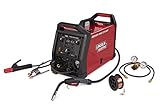
Typical machine prices by process
| Machine type | Typical machine price | Common capability | Additional costs to budget |
|---|---|---|---|
| Stick (SMAW) | $150–$700 | About 100–200 A; many compact units run on 120 V or 240 V | Electrode holder and ground clamp may be included; budget $30–$100 for electrodes and $40–$150 for a helmet |
| Flux-core wire (FCAW) | $200–$800 | About 90–180 A; often suitable for home repairs and mild steel | Wire, contact tips, and nozzles; typically $40–$150 initially |
| MIG with gas (GMAW) | $300–$1,200 | About 120–210 A; better control for sheet metal and general steel fabrication | Regulator, gas cylinder, gas, and wire can add $150–$500 or more |
| TIG (GTAW) | $400–$1,800 | Often 120–200 A; AC/DC models handle a broader range of metals | Tungsten, collets, cups, filler rod, gas, and torch parts: about $100–$350 to get started |
| Multiprocess | $500–$2,000+ | One unit may support stick, MIG, flux-core, and sometimes TIG | Process-specific torch, pedal, regulator, and consumables may not be included |
These capabilities are representative, not guarantees: check the machine’s rated output and duty cycle at the voltage you can supply. A compact 120 V unit may advertise high peak amperage but deliver less sustained output than a 240 V machine.
Choose by job, space, and experience
| Your situation | Practical starting choice | Why it fits—and what to watch |
|---|---|---|
| Occasional repairs, tight budget, beginner | 120 V stick or flux-core inverter, roughly $150–$400 | Lower entry cost and simple setup. Stick takes practice on thin metal; flux-core makes more smoke and spatter. |
| Garage projects, mostly mild steel | 120/240 V MIG or flux-core machine, roughly $350–$900 | More versatile as projects grow. Confirm whether the package includes a spool gun, regulator, or gas-ready fittings before counting them as included. |
| Thin sheet, clean finish, or aluminum work | MIG with suitable spool gun, or AC/DC TIG, roughly $700–$1,800 | Better process control, but accessories and practice add cost. Aluminum capability depends on the machine and torch setup. |
| Frequent shop use across different jobs | 240 V multiprocess or dedicated shop machine, roughly $900–$2,000+ | More output and process flexibility. Check duty cycle, service support, and the cost of replacement torches and parts. |
What ownership costs beyond the machine
The price of a welding machine is easiest to underestimate when a low-cost package is missing safety gear or process-specific parts. A realistic starter budget includes a properly rated welding helmet, gloves, jacket or other protective clothing, a wire brush or grinder, clamps, and a fire-safe work area. Depending on what you already own, basic protective and setup gear can add about $100–$300. Do not treat protective equipment as an optional upgrade.
- Consumables: Stick electrodes, MIG wire, flux-core wire, TIG tungsten, filler rod, contact tips, nozzles, and liners wear or run out. Keep spares appropriate to your process; poor storage can also ruin moisture-sensitive electrodes and wire.
- Shielding gas: MIG and TIG commonly require gas, while self-shielded flux-core does not. Cylinder purchase or rental, regulator, refills, and gas type affect the total. Local cylinder rules and refill availability matter.
- Power: A 120 V machine can often use an appropriate household circuit, but welding at high output may require a dedicated circuit. Many stronger machines need 240 V. A new circuit, outlet, or electrician’s work can add several hundred dollars or more; verify the machine’s input current and circuit requirements rather than relying on an extension cord.
- Process upgrades: A spool gun for aluminum MIG, TIG foot pedal, better torch, longer leads, cart, or larger gas cylinder can add roughly $50–$500 each, depending on compatibility and quality.
Worked budget: a home MIG setup
Suppose a beginner chooses a gas-capable MIG machine priced at $500. A regulator and cylinder setup might add $200, basic helmet and protective gear $150, and initial wire, tips, and gas $75. The practical starting total is about $925, before any electrical work or grinder. If the garage needs a new 240 V circuit, the complete project can pass $1,200. Conversely, a flux-core setup may avoid the gas expense, though it will still need safety gear and wire.
This is why a “wire welding machine price” search should distinguish gas MIG from flux-core: both feed wire automatically, but their shielding method, finish, outdoor suitability, and ongoing costs differ.
When a low price becomes an expensive choice
A low-cost hand welding machine—usually a compact stick inverter—can be a sensible repair tool if its output suits the electrode and material thickness. It is less suitable if you expect effortless welding on thin sheet or long production runs. Likewise, “automatic welding machine price” can refer to very different equipment: a basic wire-feed welder automates wire delivery, while industrial robotic or dedicated automated systems are a separate category and can cost thousands to tens of thousands of dollars once fixtures, controls, and installation are included.
For any machine, compare rated output, duty cycle, input voltage, included torch and cables, and warranty or parts availability. The duty cycle is especially important: a rating of 20% at a stated amperage means the machine is designed to weld for two minutes in a ten-minute period at that output, followed by cooling time.
Where wear and maintenance show up first
On wire-feed machines, contact tips and nozzles are routine replacements; clogged spatter, a worn liner, or dirty drive rolls can cause erratic feeding. Keep the wire path clean, use the correct roll groove and wire size, and store wire dry. On stick machines, cables, electrode holders, and ground clamps take abuse. TIG setups add consumable tungsten and torch parts that need clean handling.
Don’t buy more amperage than your work or power supply can use, but avoid choosing solely by the lowest sticker price. For occasional repairs, a basic inverter and realistic safety budget often make sense. For regular fabrication, paying more for suitable voltage, stable wire feeding, a useful duty cycle, and readily available consumables can cost less than replacing an undersized machine.