What's inside
As an Amazon Associate I earn from qualifying purchases. This post may contain affiliate links at no extra cost to you.
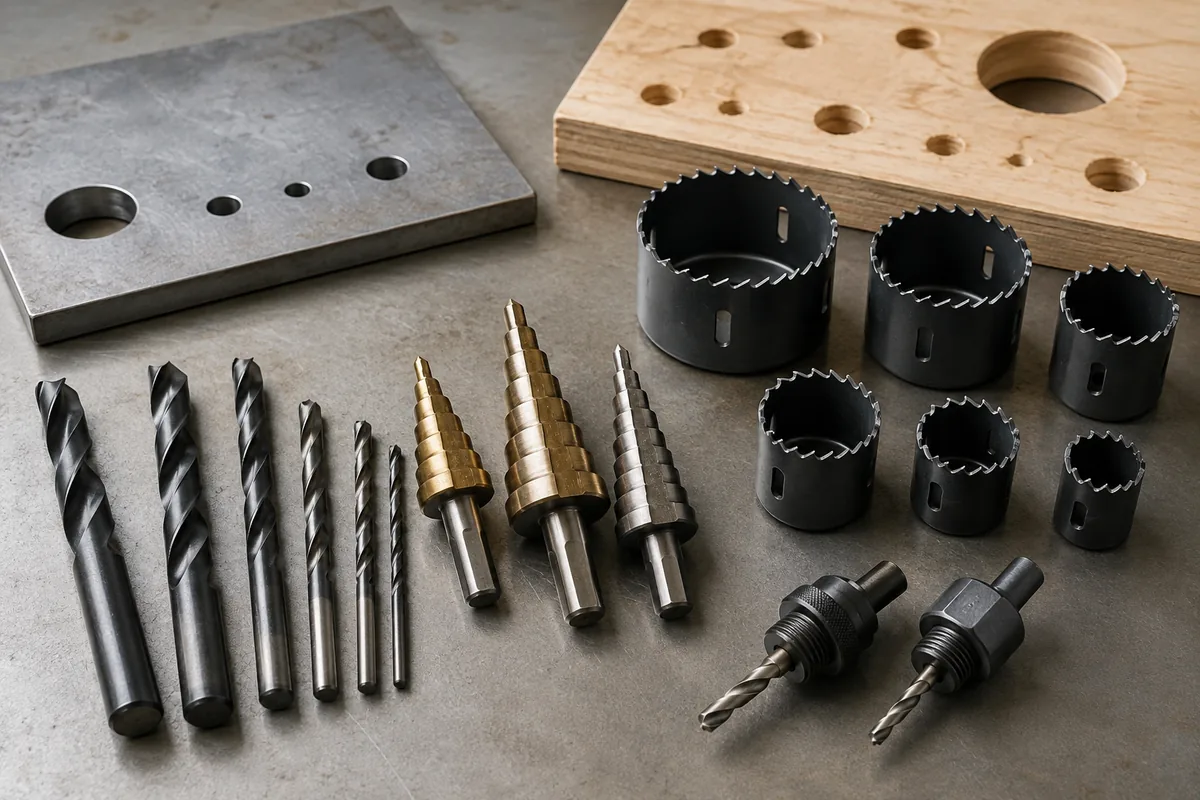
Cast iron is hard, abrasive, and brittle. A hole saw can cut it, but the wrong blade or too much pressure can burn teeth, wander across the surface, or crack the workpiece. For most clean, occasional holes in cast iron, a carbide-tipped hole saw is the safer choice. A bi-metal saw can work for small holes and light-duty jobs, but it is easier to overheat and wear out.
As an Amazon Associate we earn from qualifying purchases at no extra cost to you.



Our Top Picks
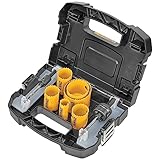
 DEWALT DWACM1802 Metal Cut Carbide Holesaw SetOne Size11.45 x 1.65 x 11 inches1.7 PoundsCheck on Amazon


Quick comparison
| Factor | Carbide-tipped hole saw | Bi-metal hole saw |
|---|---|---|
| Best use in cast iron | Most holes, especially larger or repeated cuts | Small, occasional holes in thinner sections |
| Cutting edge | Hard carbide teeth | High-speed-steel teeth on a flexible steel body |
| Heat and wear | Generally holds an edge better in abrasive material | Can dull quickly if run too fast or pressed too hard |
| Impact tolerance | Carbide teeth can chip if they snag or strike a hard inclusion | More forgiving of vibration, but the teeth still wear in cast iron |
| Cost | Usually higher | Usually lower |
Which saw should you buy?
Choose a carbide-tipped hole saw if you need a clean, round hole in a cast-iron pipe, fitting, machine part, or thick panel, or if you have several holes to make. Its teeth are better suited to the abrasive work, so it is less likely to go blunt midway through the job. Compare sizes and arbor compatibility when shopping for a carbide-tipped hole saw for cast iron.
A bi-metal saw is reasonable for one small hole in relatively thin cast iron when you already own the saw and can control speed and feed. It costs less, and a sharp bi-metal blade may get through. But do not assume that a blade rated for steel will last equally well in cast iron. Cast iron’s abrasive structure and hard spots can wear the teeth quickly. If the hole matters or the workpiece is expensive, the carbide upgrade is usually worth considering.
Neither type is a good choice for a thick, heavy section if the saw’s stated cutting depth is too shallow. Check the saw’s usable depth, not just its diameter. For a hole deeper than the cup can cut, you may need to remove the plug partway through or use a different method.
Speed, setup, and cutting technique
Use a variable-speed drill, not an impact driver. Keep the workpiece firmly supported, and clamp it whenever possible. A handheld drill can twist violently if the saw catches, so use a side handle and avoid a setup where your wrist or body is in the line of rotation. For holes in pipe, secure the pipe so it cannot roll or flex.
Run the saw slowly. The correct speed depends on diameter, saw instructions, and the drill, but large hole saws generally need much lower rpm than small ones. As a cautious starting point, a 1-inch saw might be run around 200–300 rpm, while a 2-inch saw may call for roughly 100–150 rpm. Treat those as starting ranges, not universal specifications; follow the manufacturer’s guidance and reduce speed if the teeth are squealing or heating rapidly.
Mark the center and use the pilot bit to keep the saw from skating. Apply steady, moderate pressure—enough to keep the teeth cutting, but not enough to stall the drill. Lift the saw briefly every few seconds to clear chips and let the cut cool. Cast iron is commonly cut dry, and cutting fluid can make its fine dust cling into a messy paste. Follow the saw maker’s instructions if it specifies a lubricant or a particular cutting method.
When possible, start from a flat surface. On a curved pipe, the saw may contact only a few teeth at first and jump across the surface. A guide, a securely attached template, or a small pilot hole can help establish the cut. Do not force the saw to cut through a curved wall at high speed.
Common failure modes
A bi-metal saw that stops making progress, rubs instead of cutting, or produces excessive heat is likely dull or being run too fast. Continuing to press harder will not restore its teeth; it can overheat the blade, damage the drill, or make the saw bind. Stop, let the tool cool, clear debris, and inspect the teeth. If they are worn, replace the saw rather than leaning harder on it.
Carbide teeth can chip if the saw catches, chatters, or is forced into an uneven surface. That is why low speed, solid support, and even pressure matter even with a more durable blade. A missing or damaged tooth can make the saw cut roughly and vibrate. Stop if vibration suddenly increases.
Cast iron can fracture, especially near an edge, a thin wall, or an existing crack. Leave adequate material around the hole, avoid hammering or levering against the cut, and do not use a hole saw on a part that cannot be safely supported. Wear eye protection and a suitable dust mask: cast-iron cutting creates fine, gritty debris. Keep the area clear of combustible dust and protect nearby surfaces from sharp chips.
Before you buy
Match the saw diameter to the actual fitting or clearance needed, and confirm that the arbor fits your drill. Check maximum cutting depth and whether the package includes a pilot bit. A pilot bit can wear or loosen independently of the cup, so replacement availability is useful. If you are comparing a lower-cost bi-metal hole saw for occasional use with a carbide option, consider the cost of a second saw if the first dulls before finishing.
For a single small hole, the bi-metal saw you already own may be the sensible choice. For repeated cuts, larger diameters, or a job where a failed cut would spoil the part, choose carbide and take the same care with speed, support, and chip clearing. The blade material helps, but technique and a stable workpiece are what keep the cut controlled.