What's inside
As an Amazon Associate I earn from qualifying purchases. This post may contain affiliate links at no extra cost to you.
Our Top Picks
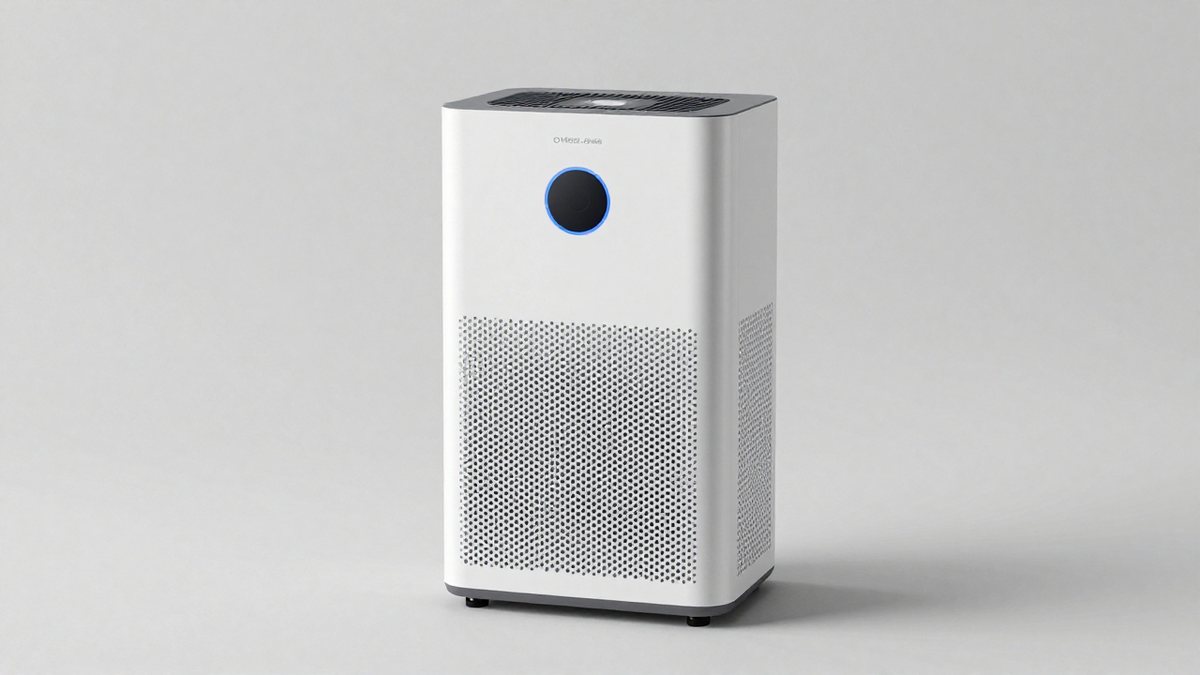
 DAYETTE Air Purifiers for Home Large Room Up10*6*14.5inch6 x 10 x 14.5 inches5 poundsCheck on Amazon
 Medify MA-112 Air Purifier V3.0 with HEPA FilterXlarge Room28 x 16 x 15 inches32 PoundsCheck on Amazon

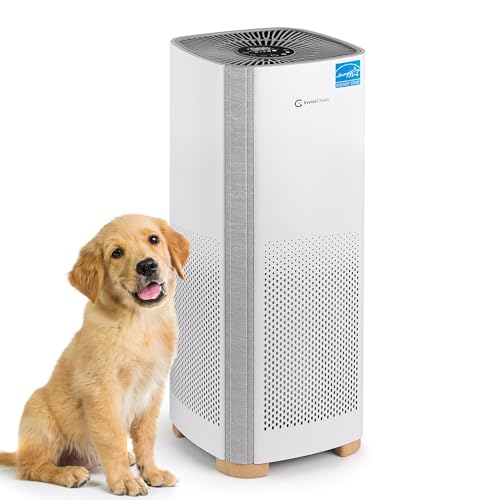
Best Medical-Grade HEPA Air Purifiers for Smoke: Which One Fits Your Room?
For smoke, choose a purifier with independently verified HEPA filtration, a substantial activated-carbon filter, and enough clean-air delivery to circulate your room’s air about five times per hour; among established options, the IQAir HealthPro Plus is a strong pick when gas and odor filtration matter, while the Coway Airmega 400 is a practical choice for larger rooms when upfront cost and easy operation matter more.
What “medical-grade” should mean for smoke
“Medical-grade” is not a consistent consumer-product certification. Look instead for a clearly stated HEPA standard, a published clean-air delivery rate (CADR), and transparent details about the carbon filter. True HEPA commonly refers to a filter rated to capture at least 99.97% of 0.3-micron particles under specified test conditions. It can capture smoke particles, but it does not remove smoke gases and odors by itself.
As an Amazon Associate we earn from qualifying purchases at no extra cost to you.


Activated carbon adsorbs many gases and odor compounds. How much carbon the purifier contains matters: a thin carbon-coated sheet is not equivalent to a deep bed of carbon. Manufacturers do not all publish carbon weight or comparable gas-removal test results, so treat claims such as “odor removal” cautiously when there is no quantified capacity or replacement schedule.
CADR is useful for comparing particle-cleaning performance, but it is not a direct measure of gas removal. Room-size claims also vary by the air-change rate assumed. The estimates below use the common target of five air changes per hour and a typical 8-foot ceiling, where a rough room-area estimate is CADR × 1.55 square feet. Actual performance depends on placement, airflow settings, leaks, and ceiling height.
Smoke-focused comparison
| Model | Particle filter and CADR | Coverage at about 5 air changes/hour | Carbon approach | Noise and ownership notes |
|---|---|---|---|---|
| IQAir HealthPro Plus | HyperHEPA; manufacturer lists 300 cfm CADR | About 465 sq ft by the estimate above | V5-Cell gas-and-odor filter; a more substantial filtration stage than a thin carbon sheet | Large and relatively costly; replacement filters are a significant ongoing expense. Published noise depends on fan speed. |
| Coway Airmega 400 | True HEPA Max2 filter; manufacturer lists smoke CADR of 328 cfm | About 510 sq ft by the estimate above | Activated-carbon component is integrated with the particle filter | Two-filter design is straightforward to maintain; high-speed operation is louder than low-speed use. |
| Blueair Classic Pro CP7i | HEPASilent filtration; manufacturer lists smoke CADR of about 455 cfm | About 705 sq ft by the estimate above | SmokeBlock filter combines particle filtration with activated carbon | High airflow suits larger spaces; replacement filter costs and noise at higher speeds should be checked before purchase. |
| Levoit Core 400S | HEPA-grade particle filtration; manufacturer lists smoke CADR of 260 cfm | About 400 sq ft by the estimate above | Carbon layer is intended for odors, but is not a deep carbon bed | More accessible price tier; filter replacement is generally less expensive than premium large-room systems, though costs vary by seller and filter type. |
Specifications and filter configurations can change by region or product revision. Confirm the current model’s manual and replacement-filter listing before buying. CADR figures are not perfectly comparable across every testing method, and none of the figures above guarantees a particular reduction in a real home.
Choose by the smoke problem you need to solve
- Frequent smoke or persistent odor in a bedroom or living room: Favor a model with a meaningful carbon stage, such as the IQAir HealthPro Plus. Check the cost and availability of both particle and gas-filter replacements, not just the initial unit price.
- A large open-plan room, with particle cleanup as the priority: Compare the Coway Airmega 400 and Blueair Classic Pro CP7i by CADR, usable placement, and replacement-filter cost. Higher airflow can clean particles faster, but does not automatically mean stronger gas removal.
- Occasional smoke in a smaller room on a tighter budget: The Levoit Core 400S can be a sensible particle-focused option. Its thinner carbon layer makes it a weaker fit if substantial odor or gaseous pollutants are the main concern.
- Smoke affecting several closed rooms: One oversized purifier in a hallway is usually less useful than appropriately sized units in the rooms where people spend time. Air does not move evenly through doorways and around corners.
Estimate the real room coverage before buying
Use the smoke CADR rather than the largest advertised room-size number, then check whether the result fits your floor plan. For example, a 300-cfm unit gives a rough five-air-changes-per-hour estimate of 300 × 1.55 = 465 square feet with an 8-foot ceiling. A 500-square-foot room would therefore be slightly beyond that estimate; a smaller room or a higher fan setting may be needed to reach the same cleaning rate.
For ceilings higher than 8 feet, reduce the estimated coverage in proportion to ceiling height. A 10-foot ceiling has about 25% more air volume than an 8-foot ceiling, so the same purifier would cover roughly 20% less floor area at the same air-change target. If the purifier is too loud at the speed needed, a larger unit run at a lower speed may be a better daily fit.
Filter costs and maintenance that affect ownership
Replacement expenses vary by model, filter bundle, and sales channel. As a broad market guide, smaller replacement filters may cost roughly $30–$100, while large or multi-stage premium replacements can run $100–$300 or more. These are general ranges, not a promise of current pricing. Check the manufacturer’s stated interval and local availability; smoke-heavy use can load filters faster than light household use.
To compare annual ownership cost, add the price of every filter scheduled for replacement during a year. For example, if a particle filter costs $80 and is replaced annually, while a $120 gas filter is replaced every two years, the simple average filter budget is $80 + ($120 ÷ 2) = $140 per year. This estimate excludes electricity and assumes the intervals in the manual are appropriate for your conditions.
- Vacuum or wash only prefilters that the manufacturer says are cleanable. Do not wash HEPA or carbon filters unless the manual explicitly allows it.
- Keep the inlet and outlet unobstructed and leave the manufacturer’s recommended clearance around the unit.
- Replace filters based on the manual, indicator, and actual use—not just appearance. A carbon filter can lose useful odor capacity without looking dirty.
- Do not run a purifier where it can draw smoke directly from an active fire or become wet. A purifier is not a substitute for eliminating the source or following local air-quality guidance.
Bottom line
For the best smoke-focused balance, match CADR to the room first, then choose the strongest practical carbon stage you can afford to maintain. The IQAir HealthPro Plus is the more compelling fit when gas and odor filtration are central; the Coway Airmega 400 and Blueair Classic Pro CP7i offer higher particle-cleaning capacity for larger rooms, while the Levoit Core 400S is better suited to smaller spaces and more limited budgets. For smoke exposure that causes symptoms or raises concerns about a specific pollutant, consult a qualified health professional or local public-health authority; a consumer purifier cannot diagnose or treat health conditions.