What's inside
As an Amazon Associate I earn from qualifying purchases. This post may contain affiliate links at no extra cost to you.
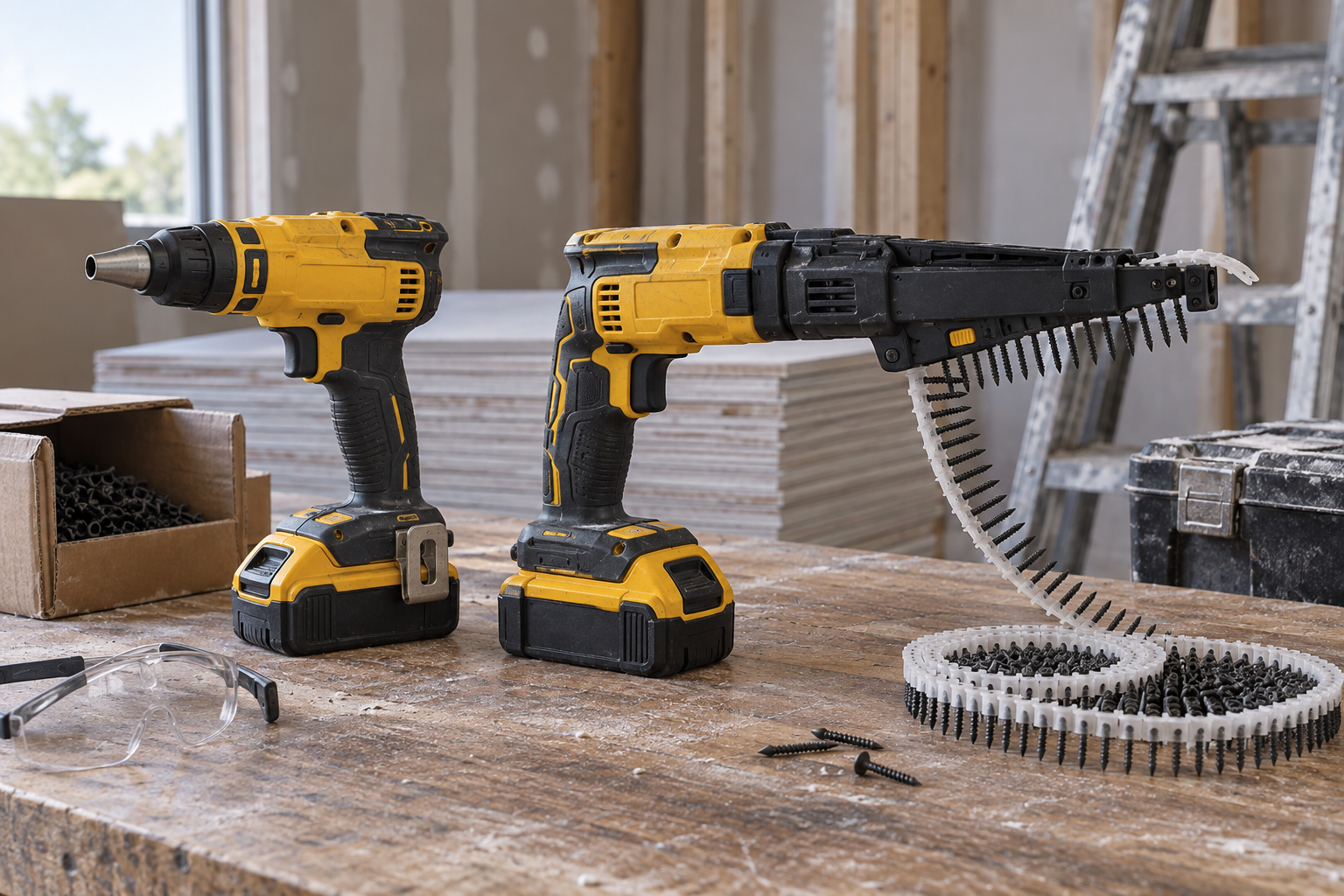
For hanging drywall on ceilings, the best collated screw attachment is one that feeds reliably overhead, fits your screw gun, and lets you set screw depth consistently. A collated attachment can save time on a large ceiling, but it is not automatically better than loose screws: loading strips, correcting jams, and working around edges can erase the speed advantage on a small room.
As an Amazon Associate we earn from qualifying purchases at no extra cost to you.


Our Top Picks
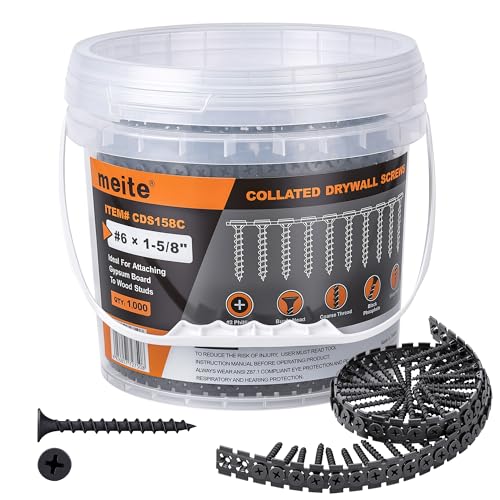 meite Collated Drywall Screw #6 x 1-5/8 inch#6 x 1-5/8 inch0.83 x 8.27 x 0.55 inches5.3 poundsCheck on Amazon
 SENCO DuraSpin #6x1-1/4 Collated Drywall to Wood Screw1 pack7.5 x 7.5 x 8 inches5.16 PoundsCheck on Amazon
 SENCO Duraspin #6x1-5/8 Collated Drywall to Wood Screw#6 x 1-5/8 inch (Pack of 1)1.63 x 0.18 x 0.18 InchesCheck on Amazon
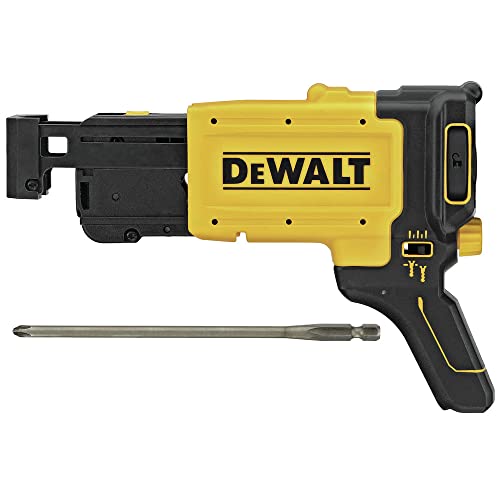 DEWALT Drywall Screw Gun Collated AttachmentOne Size6.38 x 2.63 x 9.25 inches1.4 PoundsCheck on Amazon

Quick pick
For a full ceiling or several rooms, choose a collated attachment made for your screw gun, with depth adjustment and support for the screw lengths you need. If you already own a compatible screw gun, start by checking whether its manufacturer offers a matching attachment; compatibility is more dependable than buying a generic feeder based on appearance alone.
For a single small ceiling, or a job with lots of corners and short runs, a loose-screw drywall gun is usually the sensible choice. If you do not own either tool, compare the cost of a collated attachment plus a compatible gun against a purpose-built collated screw gun. Do not assume an attachment fits a standard drill or every drywall gun.
Collated attachment versus loose screws
| Setup | Best for | Trade-off |
|---|---|---|
| Collated drywall screw attachment | Large ceilings and repeated fastening | Faster feeding, but requires compatible tooling and collated strips |
| Drywall gun with loose screws | Small rooms, edges, and varied fastening | Slower to reload by hand, but simpler and more flexible |
| Drill with drywall depth-stop bit | Occasional repairs or very limited work | Lowest extra cost, but less consistent depth and easier to damage paper |
A collated attachment does not make a drill behave like a drywall gun. A drywall gun is designed to drive screws at controlled depth; a drill’s speed and clutch behavior can make it easier to overdrive screws or leave heads proud. If using a drill for a few repairs, use a drywall depth-stop bit and check each screw rather than relying on feel alone.
Check compatibility before buying
Confirm the attachment is specified for your exact gun or drive system. Check the tool’s model number, the attachment maker’s fit list, and the required nose or chuck arrangement. Two attachments that look similar can differ in how they lock on, how the gun drives them, or which screw strips they accept. If compatibility is unclear, ask the seller or manufacturer before ordering.
Then check screw length, shank and head type, and strip orientation. Ceiling board is often 1/2 inch thick, while some installations use 5/8-inch board. Screw length depends on the board and framing material; follow the board and fastener manufacturer’s guidance and local requirements. A strip that feeds the wrong length or style may bind, sit crooked, or fail to countersink cleanly.
Features worth paying for
Reliable feeding matters more than extra adjustments. A good attachment advances one screw at a time without double-feeding or leaving the next screw half-positioned. Look for a clear depth adjustment that stays put during use, plus a nosepiece that is easy to clean. Fine dust and paper debris can build up around the feed and cause missed drives.
Consider overhead handling. The attachment adds length and weight to the front of the tool. That can make the gun tiring when you hold it above shoulder height, especially while working from a ladder. A belt hook or usable extension setup can help, but a longer reach is not always easier to control. If possible, handle the assembled tool before buying.
Choose a supported consumable. Compare the price and availability of compatible screw strips, not just the attachment’s purchase price. A low-cost feeder is poor value if its strips are difficult to find or prone to separating in storage. Keep strips dry and straight; bent strips are more likely to feed badly.
For a large ceiling, browse collated drywall screw gun attachments, then verify fit and screw-strip compatibility against your tool’s documentation. If you are buying the drive tool too, compare collated drywall screw guns with the combined cost of a gun and attachment.
Set depth before fastening overhead
Test the setup on scrap drywall over scrap framing. Adjust the nose so the screw head finishes just below the surface of the paper, forming a shallow dimple without tearing it. Run several screws, not just one: the first may be correct while the tool drifts deeper or shallower as you change pressure or angle.
Overdriven screws tear the paper and weaken the board’s hold at that point. A torn head should not be treated as a properly set fastener; add a correctly driven screw nearby in accordance with the board manufacturer’s fastening guidance. Proud screws can interfere with finishing and may need to be driven slightly deeper. Do not force the gun at an angle to correct a bad feed—reposition it square to the board.
Keep the nose flat against the ceiling and let the tool do the driving. Pressing too hard can overdrive the screw, while too little pressure can leave it proud or prevent consistent feeding. If the attachment misfeeds, stop and clear it according to the instructions rather than repeatedly pulling the trigger; that can damage a strip or drive a screw into the wrong spot.
Who should buy one
A collated attachment is worth considering when you have a large, open ceiling, many sheets to fasten, and a compatible gun already on hand. It is less compelling for one small room, patch work, or a ceiling broken up by fixtures and tight edges, where loose screws are easy to place and feeding interruptions cost time.
If you are also deciding on fasteners, compare collated drywall screws for ceiling work with the attachment’s approved sizes before purchasing. Buy the tool around the job you actually have: for a small ceiling, a basic drywall gun and loose screws are often the cheaper, less fussy option; for repeated ceiling work, dependable feeding and a correct depth stop are the features that earn their keep.